Bird flu viruses can sometimes be found in raw milk, but their survival heavily depends on the milk’s acidity level. If the milk has a higher pH (less acidic), the virus may survive longer, increasing potential health risks. As milk becomes more acidic through fermentation or bacterial activity, the virus is less likely to stay viable. To understand how pH influences virus inactivation and how to keep your milk safe, keep exploring these factors.
Key Takeaways
- Higher pH (less acidic) raw milk can prolong bird flu virus survival.
- Acidic environments in milk, created by fermentation or bacterial activity, inhibit virus viability.
- Proper storage and refrigeration maintain milk acidity, reducing virus persistence.
- Pasteurization effectively inactivates bird flu viruses regardless of milk pH.
- Monitoring milk pH and acidity during outbreaks helps assess and minimize health risks.
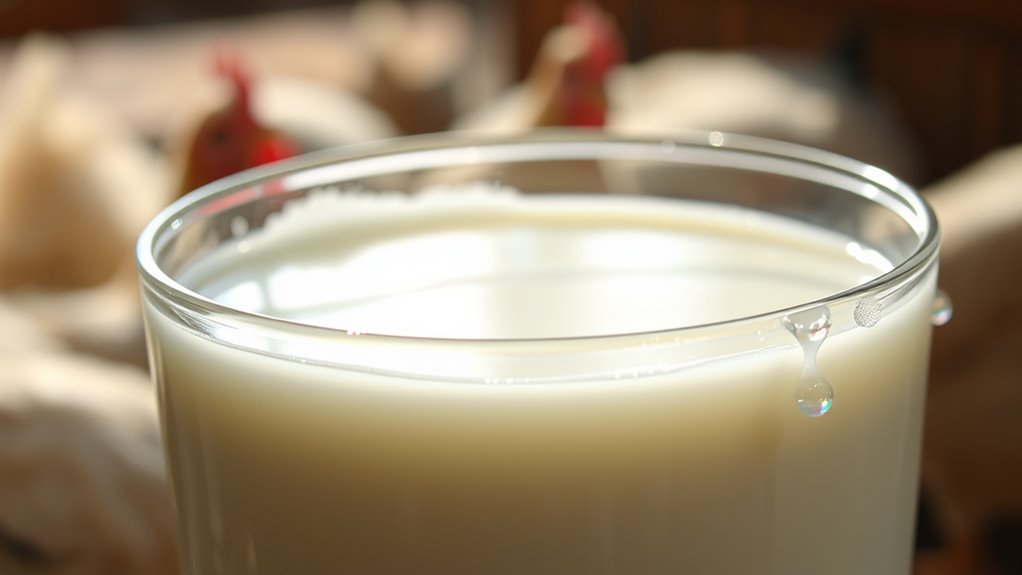
Recent reports have raised concerns about the presence of bird flu viruses in raw milk, prompting questions about food safety and health risks. While it’s not common for bird flu to be transmitted through dairy, recent studies suggest that under certain conditions, the virus can survive in raw milk. The key factor influencing its survival is the acidity level of the milk, which determines whether the virus remains viable or is inactivated. Understanding this relationship is vital because it helps you assess the potential danger of consuming raw milk during outbreaks or in regions where the virus is prevalent.
Bird flu viruses tend to prefer specific environments to stay alive. When raw milk has a higher pH level—meaning it’s less acidic—the virus can survive longer because the environment isn’t hostile to its stability. Conversely, if the milk’s acidity is higher, the virus struggles to persist, often getting inactivated faster. This is why the pH level of raw milk plays such a significant role. Freshly drawn milk from healthy animals usually has a pH around 6.5 to 6.7, which is mildly acidic, but this can vary depending on factors like storage time, temperature, and the health of the animals. When milk becomes more acidic—say, through natural fermentation or bacterial activity—the environment becomes less hospitable for the virus, decreasing its chances of survival.
If you’re consuming raw milk, it’s important to weigh these factors, especially during bird flu outbreaks. Raw milk that’s stored at warmer temperatures or has undergone fermentation could have different pH levels, affecting virus survival. For example, milk that has started to sour naturally becomes more acidic, which could inactivate the virus. However, if the milk is stored improperly or kept at temperatures that slow down bacterial activity, the virus might survive longer, increasing your risk. Hence, understanding the acidity of your raw milk and how it’s stored can help you make safer choices. Ensuring proper refrigeration and considering pasteurization are effective ways to minimize health risks associated with potential viral contamination.
Ultimately, while raw milk can carry various pathogens, the acidity level is a pivotal factor in determining if bird flu viruses can survive in it. If you want to reduce your risk, opt for pasteurized milk, especially during times of increased avian influenza activity. Proper handling, storage, and processing are your best defenses against potential infection from bird flu or other viruses in dairy products. Being aware of these factors empowers you to make informed decisions about raw milk consumption and safeguard your health.
Frequently Asked Questions
Can Cooking Eliminate Bird Flu From Raw Milk?
Yes, cooking can eliminate bird flu from raw milk. When you heat milk to at least 165°F (74°C) for 15 seconds or more, it effectively destroys the virus, ensuring it’s safe to consume. Be sure to bring the milk to a gentle boil and maintain that temperature for proper pasteurization. This process reduces the risk of infection, so always cook raw milk thoroughly before drinking.
Are Certain Milk Types More Prone to Virus Survival?
Certain milk types are more prone to virus survival, especially if they have higher pH levels and lower acidity. You might think all raw milk carries the same risk, but milk with lower acidity can provide a more hospitable environment for viruses like bird flu. To stay safe, always opt for pasteurized milk, which effectively kills viruses regardless of the milk’s type or acidity.
How Quickly Does Acidity Affect Virus Viability?
You’ll find that acidity rapidly impacts virus viability in raw milk, often within a few hours. As the pH drops, the virus’s survival rate declines considerably, especially if the milk becomes more acidic. If you’re monitoring raw milk for safety, maintaining a low pH through proper storage or processing can help deactivate harmful viruses quickly, reducing the risk of transmission.
Is Pasteurization the Only Effective Method to Kill Bird Flu?
Pasteurization is the most effective way to kill bird flu in milk, acting like a fortress against the virus. You shouldn’t rely solely on acidity, as it can only reduce, not eliminate, the risk. When you heat milk to the proper temperature, typically 161°F for 15 seconds, you destroy harmful pathogens, including bird flu. So, always opt for pasteurization to guarantee your milk is safe and virus-free.
What Are the Symptoms of Bird Flu in Humans?
You might experience fever, cough, sore throat, and muscle aches if you catch bird flu. Some people also develop eye infections, diarrhea, or respiratory issues. In severe cases, it can lead to pneumonia, acute respiratory distress, or multi-organ failure. If you notice these symptoms, especially after exposure to birds or raw poultry, seek medical attention promptly. Early treatment can improve your chances of recovery and prevent complications.
Conclusion
So, next time you’re pouring raw milk, remember that acidity might just be the secret to whether bird flu survives or not. It’s a coincidence how a simple tweak in pH levels can impact virus survival, making your choice more essential than you think. Keep an eye on those subtle changes—sometimes, the smallest details can make all the difference in protecting your health without you even realizing it.