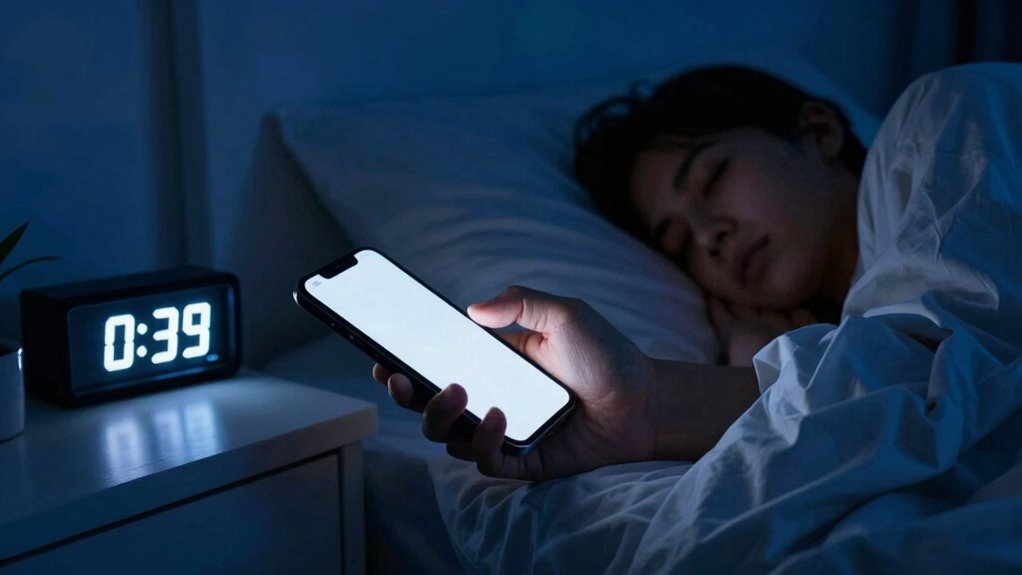

When you use screens in the evening, blue light penetrates your eyes and signals your brain that it’s daytime, disrupting your natural sleep cycle. It suppresses melatonin, the hormone that makes you feel sleepy, making it harder to fall asleep and reducing sleep quality. This can lead to feeling tired and groggy the next day. If you want to understand how to protect your sleep, keep going—you’ll find practical tips to help.

Get the latest gadgets delivered free — and shop member deals
- Fast, free delivery on millions of items
- Access to Prime Big Deal Days deals on October 6–7
- Prime Video, Amazon Music and more included
Key Takeaways
- Blue light from screens suppresses melatonin, delaying sleep onset and reducing sleep quality.
- Evening screen exposure tricks the brain into perceiving it’s daytime, disrupting circadian rhythms.
- Reduced melatonin impairs immune function and cellular repair, impacting overall health.
- Blue light exposure leads to lighter, less restorative sleep with frequent awakenings.
- Using filters or limiting screen time before bed helps preserve melatonin levels and improve sleep.
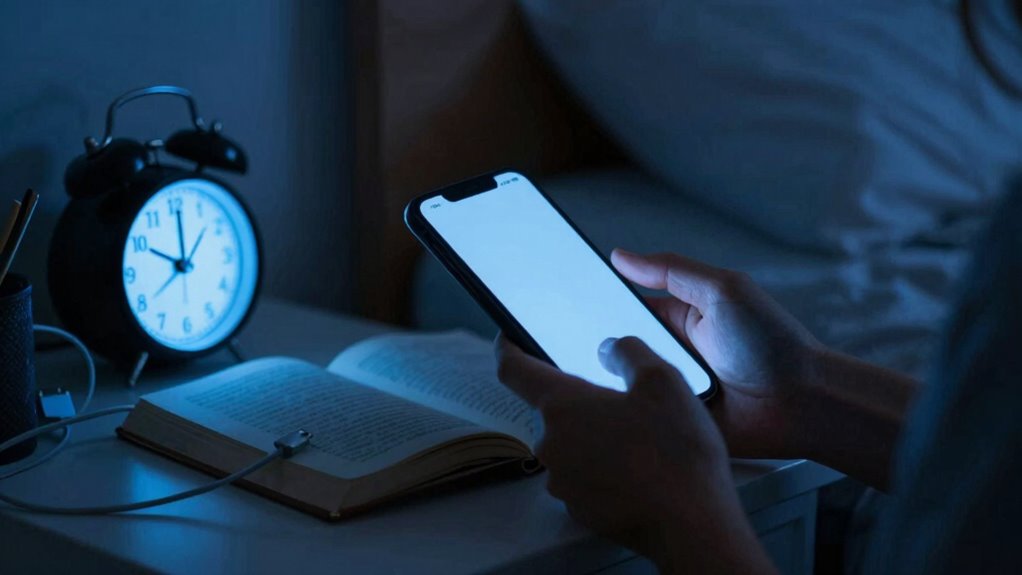
Have you ever noticed how scrolling through your phone or watching TV late at night affects your sleep? It’s a common experience, but understanding why can help you make better choices about your evening habits. The primary culprit is blue light, a type of light emitted by screens that disrupts your body’s natural sleep cycle. When you look at your devices in the evening, blue light penetrates your eyes and signals your brain that it’s daytime, even if it’s late. This interference triggers melatonin suppression, a process where your brain reduces the production of the hormone responsible for making you feel sleepy. Without enough melatonin, falling asleep becomes more difficult, and your sleep quality declines.
Your body relies on melatonin to regulate your sleep-wake cycle, also known as your circadian rhythm. Normally, melatonin levels rise in the evening, signaling to your body that it’s time to wind down. But exposure to blue light from screens tricks your brain into thinking it’s still daytime, preventing melatonin from reaching its most effective levels. This delay not only makes it harder for you to fall asleep but also affects the depth of your sleep once you do drift off. You might find yourself waking up more frequently or experiencing lighter, less restorative sleep. Over time, this disrupted rhythm can leave you feeling groggy, less alert, and less refreshed in the morning.
The effects go beyond just making it tough to fall asleep. Reduced melatonin levels can also interfere with other important processes, such as immune function and cellular repair, which typically occur during deep sleep stages. Microplastics in dust and other pollutants can also impact overall health, including sleep quality. Consistently exposing yourself to blue light before bed can gradually throw your internal clock off balance, leading to longer-term sleep problems and even affecting your overall health. Additionally, sleep deprivation has been linked to various health issues, emphasizing the importance of good sleep hygiene. Research also suggests that engaging in calming activities like mindfulness meditation before bedtime can help mitigate some of these effects. Incorporating air purifiers with proper maintenance can also improve the sleep environment by reducing airborne pollutants and allergens that might disturb sleep or compromise health. It’s helpful to be aware that light pollution from artificial sources can further contribute to sleep disturbances, especially in urban areas. That’s why it’s vital to limit screen time at least an hour before bed or use tools like blue light filters and glasses to minimize exposure.
Being mindful of your evening screen habits can have a significant impact on your sleep quality. Instead of scrolling or binge-watching, try winding down with relaxing activities that don’t involve screens—like reading a physical book, practicing meditation, or doing gentle stretches. These habits help your body restore its melatonin levels naturally, making it easier to fall asleep and enjoy a more restful night. Ultimately, understanding the role of blue light and melatonin suppression empowers you to take control of your sleep health, ensuring you wake up feeling more refreshed and energized each day.
blue light blocking glasses for sleep
As an affiliate, we earn on qualifying purchases.
As an affiliate, we earn on qualifying purchases.
Frequently Asked Questions
Does Blue Light From Screens Affect Melatonin Production?
Yes, blue light from screens affects melatonin production. It suppresses melatonin, the hormone responsible for regulating your sleep-wake cycle. When you’re exposed to blue light in the evening, it tricks your brain into thinking it’s daytime, making it harder to fall asleep. To protect your sleep quality, try limiting screen time before bed or use blue light filters on your devices.
Can Using Screens in Bed Cause Long-Term Sleep Issues?
Using screens in bed can cause long-term sleep issues by leading to ongoing sleep disruption and eye strain. When you stay on screens late, the blue light hampers melatonin production, making it harder to fall asleep and stay asleep. Over time, this can disrupt your sleep cycle, leaving you tired and less alert. Plus, eye strain from prolonged screen use can cause discomfort, further disturbing your rest and overall sleep quality.
Are There Any Benefits to Evening Screen Use?
Evening screen use isn’t all bad; it can help you unwind and connect with loved ones, making it feel like a lifesaver after a long day. However, excessive technology addiction can lead to eye strain and overstimulation. If used mindfully, screens can boost your mood or provide relaxation. Just remember, moderation is key—too much can disrupt your sleep and cause more harm than good.
How Does Screen Time Impact Sleep for Children Versus Adults?
You might notice that screen time affects children and adults differently. For children, excessive use can lead to screen addiction, making it harder to wind down and fall asleep. Adults, meanwhile, often experience eye strain and disrupted melatonin production from late-night screen exposure. Both groups risk reduced sleep quality, but children are more vulnerable to behavioral impacts, while eye strain and hormonal disruption are common issues for adults.
What Are the Best Alternatives to Screen Time Before Bed?
You can improve sleep hygiene by choosing alternative activities before bed, like reading a book, practicing relaxation techniques, or listening to calming music. These activities help your mind wind down without the blue light emitted by screens. Engaging in a consistent pre-sleep routine promotes better sleep quality, making it easier to fall asleep and stay asleep throughout the night. Prioritizing these alternatives supports healthier sleep habits overall.
As an affiliate, we earn on qualifying purchases.
Conclusion
So, next time you reach for your phone before bed, remember: while screens promise connection, they often steal your peace. The glow of your device may seem harmless, but it can turn your tranquil night into restless hours. Unlike the quiet embrace of darkness, screens keep your mind alert and your sleep elusive. Choosing to disconnect in those final moments isn’t just about avoiding eye strain — it’s about reclaiming the restful sleep you deserve.
As an affiliate, we earn on qualifying purchases.
As an affiliate, we earn on qualifying purchases.
Fall Picks
fall essentials
As an affiliate, we earn on qualifying purchases.