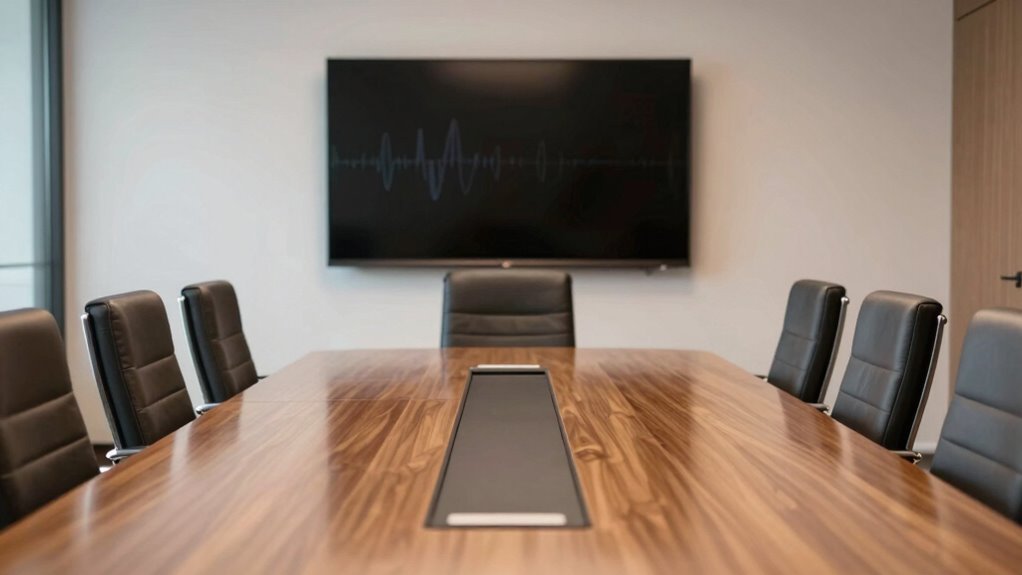

Most conference room audio issues come from echo and reverberation, not faulty microphones. When sound bounces around the room, it creates muddled speech and overlaps, making communication hard. Upgrading equipment won’t fix these problems alone; you need to improve room acoustics. Simple solutions like sound-absorbing panels or strategic room design can make a big difference. Want to uncover more ways to prevent these issues? Keep exploring to find out how to create clearer, more effective meetings.

Get the latest gadgets delivered free with Prime
- Fast, free delivery on millions of items
- Prime Video, Amazon Music and more included
- Member-only deals all year
Key Takeaways
- Room acoustics, such as echo and reverberation, often cause audio issues more than faulty microphones.
- Sound reflections bounce around, muddying audio and reducing clarity during meetings.
- Acoustic treatments like panels and ceiling clouds effectively minimize echoes.
- Upgrading microphones rarely resolves echo-related problems without addressing room acoustics.
- Proper room design and acoustic management are essential for clear conference room audio.
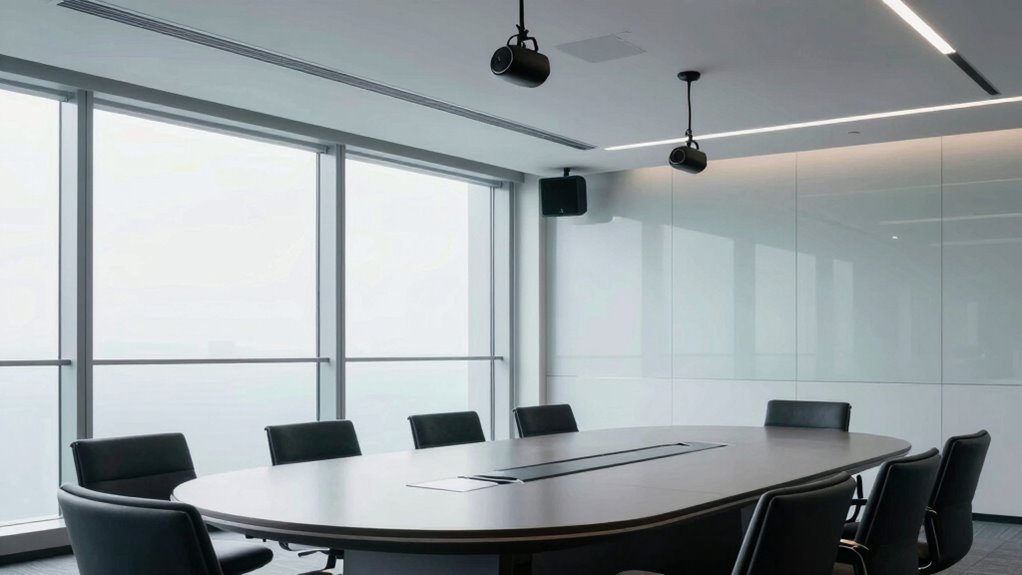
Conference room audio fails are more common than you might think, and they can seriously disrupt important meetings. Often, the root cause isn’t necessarily the microphones themselves but the acoustics of the space. You might blame wireless microphone issues or malfunctioning hardware, but more often than not, the problem stems from poor sound quality caused by echoes and reverberation. When sound reflections bounce around a room, it creates a confusing, muddled audio experience that makes it hard for everyone to hear clearly. This problem isn’t always solved by upgrading or replacing microphones; instead, addressing the room’s acoustic properties can make a huge difference.
Many people assume that bad mics are the main culprit when audio cuts out or sounds distorted, but the truth is that echo and sound reflections are more common culprits. Wireless microphone issues tend to be straightforward—if the device isn’t connecting properly or the battery dies, you notice right away. However, if the microphones are working fine, yet you still struggle to understand speakers, the issue is likely related to how sound behaves in the space. Echoes can amplify background noise and cause speech to overlap, making it difficult for participants to follow conversations. That’s where acoustic treatment solutions come into play. Properly addressing room acoustics can help mitigate these issues before they escalate.
In addition to installing sound-absorbing panels, ceiling clouds, or carpeting, understanding the room’s acoustic properties allows you to select the most effective treatments tailored to your specific space. Properly treating the room ensures that sound isn’t bouncing chaotically, which means your wireless mics can pick up voices more cleanly and accurately. Additionally, recognizing how sound reflections impact audio quality can help you make more informed decisions about room design. This reduces the chances of audio fails during critical presentations or remote collaborations. So, before you spend money on new microphones or sound systems, consider the room’s acoustics. A well-designed space with appropriate acoustic treatment can make all the difference in ensuring your meetings are clear, effective, and free of frustrating audio fails caused by echo rather than bad mics. Addressing room acoustics is the key to long-term audio success.
sound-absorbing panels for conference rooms
As an affiliate, we earn on qualifying purchases.
As an affiliate, we earn on qualifying purchases.
Frequently Asked Questions
How Can I Reduce Echo Without Changing the Microphone?
To reduce echo without changing your microphone, you can add soundproof curtains or acoustic panels to the room. Soundproof curtains absorb sound waves and prevent echoes from bouncing around, while acoustic panels strategically placed on walls reduce sound reflection. Both options improve room acoustics, making conversations clearer and minimizing echo issues. Implementing these simple solutions can considerably enhance your conference room’s audio quality without the need for new microphones.
What Room Materials Contribute Most to Echo Problems?
Wall treatments and ceiling acoustics contribute most to echo problems in a conference room. Hard, reflective surfaces like bare walls or ceilings cause sound waves to bounce, creating echo. To reduce this, you should add wall treatments such as acoustic panels or fabric coverings, and improve ceiling acoustics with suspended tiles or acoustic clouds. These modifications absorb sound, minimizing reflections and making speech clearer without changing your microphone setup.
Are Certain Microphone Types Better for Echo-Prone Rooms?
Think of your microphone as a brave explorer steering echo’s maze. Shotgun microphones excel in echo-prone rooms because their directional nature focuses on voices, ignoring reflections. Proper microphone placement is key—position it close to speakers to cut through the reverberation. Pair this with acoustic treatment like panels to tame the room’s natural bounce, making your audio crisp and clear, even in challenging spaces.
How Does Room Size Impact Audio Quality During Meetings?
Room size greatly impacts your audio quality during meetings. Larger rooms with poor acoustics can cause echo and sound reflection, making voices hard to understand. Small, echo-prone rooms benefit from sound absorption materials like panels or carpets to reduce reflections. Properly managing room acoustics helps guarantee clear communication, so consider both size and sound absorption solutions to optimize your audio experience during conferences.
Can Audio Processing Software Fix Echo Issues Effectively?
Did you know that up to 80% of echo issues can be resolved with effective software solutions? Audio processing software, especially those with echo suppression features, can substantially improve sound clarity during meetings. By actively reducing reflected sound, these tools make communication smoother. While not foolproof, relying on advanced echo suppression technology offers a practical way to fix echo issues quickly, often without needing costly room modifications.
As an affiliate, we earn on qualifying purchases.
Conclusion
Remember, fixing the echo issue often solves more problems than just replacing microphones. It’s easy to blame bad gear, but acoustic treatment and room setup play a huge role in sound quality. Don’t let your conference calls turn into a game of broken telephone. Sometimes, it’s not about throwing money at new tech but making the most of what you’ve got. After all, a little effort can turn a leaky room into a sound sanctuary.
conference room soundproofing solutions
As an affiliate, we earn on qualifying purchases.
As an affiliate, we earn on qualifying purchases.
office acoustic treatment panels
As an affiliate, we earn on qualifying purchases.
As an affiliate, we earn on qualifying purchases.
Halloween Picks
halloween
As an affiliate, we earn on qualifying purchases.