Investing in industrial label printers makes sense only when workflow inefficiencies are the real bottleneck, not just the printing process itself. If your current system handles tasks smoothly, upgrading printers won’t boost productivity much. Assess your entire workflow first—identify where delays happen before committing to new equipment. Smart maintenance and feature upgrades help, but only if workflow issues are addressed. Keep exploring to find out how to determine if your bottleneck truly lies elsewhere.

Get the latest gadgets delivered free — and shop member deals
- Fast, free delivery on millions of items
- Access to Prime Big Deal Days deals on October 6–7
- Prime Video, Amazon Music and more included
Key Takeaways
- Investing in industrial label printers benefits only if workflow inefficiencies are the main obstacle.
- Proper workflow assessment ensures printing is the true bottleneck before investing in high-performance printers.
- High-speed, reliable printers improve productivity when labeling significantly delays processes.
- Addressing non-printing bottlenecks, like packing or shipping, prevents unnecessary equipment expenses.
- Smart maintenance and workflow analysis maximize ROI by targeting actual process inefficiencies.
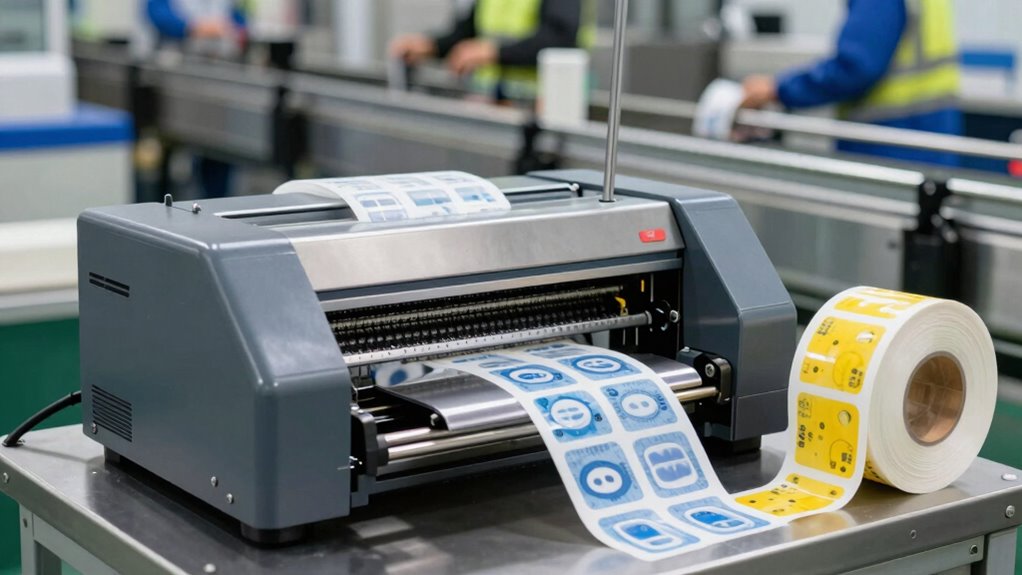
Industrial label printers are essential tools for manufacturing, warehousing, and logistics operations that require durable, high-quality labels. They guarantee your products are correctly identified, tracked, and compliant with industry standards. However, simply investing in top-tier printers doesn’t guarantee improved efficiency unless your workflow actually demands it. Before making a purchase, it’s important to assess whether these printers will genuinely streamline your processes or if they’ll sit idle most of the time.
Industrial label printers are vital but only boost efficiency if your workflow demands high-quality, durable labels.
If your operations are already running smoothly, adding an industrial label printer might not deliver the expected return on investment. Instead, it could just add unnecessary expense. But if labeling is a frequent, time-consuming bottleneck—such as during high-volume packaging or complex inventory management—then a well-chosen printer can substantially boost productivity. Here, the concept of smart maintenance becomes essential. Modern industrial printers are equipped with sensors and software that monitor their health in real-time, alerting you to potential issues before they cause downtime. This proactive approach minimizes disruptions and keeps your workflow moving seamlessly. By implementing smart maintenance strategies, you reduce the need for costly emergency repairs and extend the lifespan of your equipment, which is a key aspect of effective cost analysis. Additionally, understanding your content formats and research topics can help you optimize your labeling solutions for specific applications.
Furthermore, selecting printers with high print speeds and versatile media handling capabilities can significantly enhance your operational efficiency, especially during peak periods. Investing in equipment with reliable connectivity can also streamline data management and reduce errors, further improving productivity. Proper workflow analysis can help identify the true points of inefficiency and ensure your investment targets the right areas. When considering the financial implications, it’s tempting to focus solely on the upfront costs of the printers. However, a thorough cost analysis should include long-term savings from increased efficiency, reduced errors, and decreased downtime. If your workflow is the bottleneck, investing in high-performance printers with features like fast printing speeds, versatile media handling, and reliable connectivity can pay off quickly. They allow your staff to complete labeling tasks faster and more accurately, freeing up resources for other essential activities.
On the other hand, if your current labeling process is not holding up your operations, investing in these printers won’t necessarily improve overall productivity. It’s essential to identify whether the bottleneck lies in the printing process itself or in other areas like order processing, packaging, or shipping. Only then can you determine if the investment is justified.
high-speed industrial label printer
As an affiliate, we earn on qualifying purchases.
As an affiliate, we earn on qualifying purchases.
Frequently Asked Questions
How Do Industrial Label Printers Compare in Speed to Desktop Models?
Industrial label printers are markedly faster than desktop models, especially when it comes to handling large volumes. They excel in high-speed printing, maintaining excellent color accuracy and high print resolution even during rapid production. You’ll notice quicker turnaround times, making them ideal for demanding workflows. Desktop models, on the other hand, are more suited for smaller jobs with less emphasis on speed, color precision, and resolution.
What Maintenance Is Required for Industrial Label Printers?
You need to perform regular maintenance routines like cleaning print heads and replacing worn parts to keep your industrial label printer running smoothly. Calibration procedures are also essential; you should regularly check and adjust settings to guarantee accurate printing. Following the manufacturer’s recommended maintenance schedule helps prevent downtime, extends the printer’s lifespan, and maintains print quality. Staying on top of these tasks keeps your workflow efficient and minimizes unexpected issues.
Are Industrial Label Printers Suitable for Small-Scale Operations?
You might think industrial label printers are too big for small business, but they can be worth it if your volume justifies the investment. A thorough cost analysis shows they save time and reduce errors, making your workflow smoother. While initial costs are higher, their durability and efficiency can boost productivity, especially when labeling needs grow. So, if your small business is scaling, industrial printers can be a smart choice.
What Are the Typical Costs Associated With Industrial Label Printers?
You should consider the initial purchase cost, which can range from several thousand to tens of thousands of dollars, depending on features. Ongoing expenses include maintenance, supplies like labels and ink, and potential upgrades. Conducting a thorough cost analysis helps determine ROI, ensuring the investment justifies the productivity gains. Typically, industrial label printers pay off when they streamline workflows, reducing labor costs and minimizing errors over time.
How Do Industrial Label Printers Handle Variable Data Printing?
You might wonder how industrial label printers handle variable data printing, and the answer lies in their sophisticated variable data management systems. They precisely manage complex data sets, ensuring each label’s content is unique and accurate. This process guarantees printing accuracy even with rapidly changing information. As the data flows seamlessly through the system, you gain confidence in producing personalized, error-free labels at high speed, transforming your labeling workflow.
industrial label printer with smart maintenance
As an affiliate, we earn on qualifying purchases.
As an affiliate, we earn on qualifying purchases.
Conclusion
Ultimately, investing in industrial label printers makes the most sense when your workflow truly needs the boost. If your process flows smoothly, adding new equipment might just be a gentle nudge rather than a game-changer. But when bottlenecks start to whisper, it’s worth considering whether a well-chosen printer could help you find that sweet spot. Sometimes, a subtle upgrade can seamlessly keep your operations humming along, turning small pauses into steady progress.
As an affiliate, we earn on qualifying purchases.
versatile media handling industrial printer
As an affiliate, we earn on qualifying purchases.
As an affiliate, we earn on qualifying purchases.
Fall Picks
fall essentials
As an affiliate, we earn on qualifying purchases.