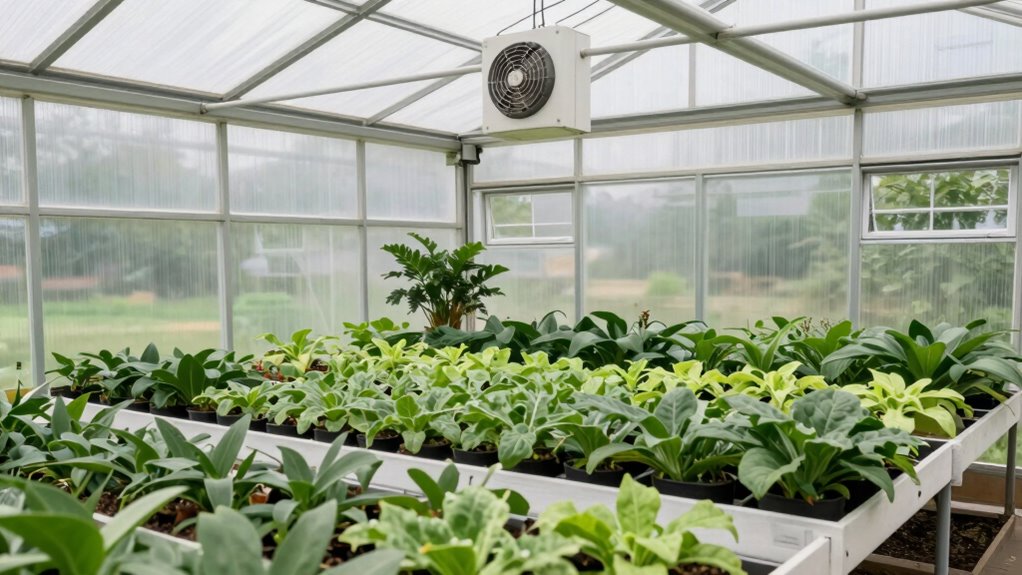

You might find that your greenhouse kit needs more ventilation planning than you initially thought. Proper airflow is essential to regulate temperature and humidity, preventing issues like mold, pests, and plant stress. You’ll need to carefully position vents and use sensors for real-time environment control. Good ventilation isn’t a one-time setup—it’s an ongoing process that impacts your plants’ health and yield. Keep exploring to understand how to optimize airflow for your greenhouse success.

Get the latest gadgets delivered free — and shop member deals
- Fast, free delivery on millions of items
- Access to Prime Big Deal Days deals on October 6–7
- Prime Video, Amazon Music and more included
Key Takeaways
- Proper ventilation is essential to prevent mold, pests, and diseases caused by excess humidity in greenhouse kits.
- Automated systems with sensors help maintain optimal temperature and humidity, reducing the need for manual adjustments.
- Strategic placement and sizing of vents and fans are crucial for effective air exchange and environmental stability.
- Seasonal changes require ongoing planning and fine-tuning to ensure proper airflow and climate control.
- First-time growers often underestimate ventilation complexity, risking plant health without thorough planning.

Proper ventilation is essential for maintaining healthy plant growth and ideal environmental conditions inside your greenhouse kit. When you’re setting up your space, it’s easy to underestimate how crucial good airflow is for regulating plant humidity and temperature control. Many first-time growers assume that simply installing vents or fans will suffice, but the reality is that ventilation planning requires careful thought and ongoing adjustments. Without it, your plants can suffer from excessive humidity, leading to mold, disease, and stunted growth, or from poor air circulation, which hampers photosynthesis and overall health.
Plant humidity plays a significant role in your greenhouse environment. If your greenhouse isn’t properly ventilated, moisture from watering or transpiration can accumulate, creating a humid atmosphere that fosters fungal diseases and pests. You need to guarantee that your ventilation system can exchange stale, moist air with fresh, drier air from outside. This exchange prevents excessive humidity buildup and keeps the environment balanced. Many growers overlook the importance of monitoring humidity levels regularly and fail to design a ventilation system that can adapt to changing conditions, especially during hot or humid seasons. Additionally, air exchange is vital for maintaining overall air quality and reducing the buildup of potentially harmful gases inside the greenhouse. Proper ventilation also involves understanding the interconnectedness of humidity and temperature, and how they influence each other. Incorporating sensor technology can help automate this process and respond to environmental shifts more efficiently. An understanding of watt-hours and capacity is essential when selecting fans and ventilation equipment to ensure they are appropriately sized for your greenhouse’s needs. Recognizing the energy efficiency of your ventilation setup can help reduce operational costs over time.
Temperature control is equally critical. If your greenhouse gets too warm, your plants may experience heat stress, which stunts growth and affects flowering or fruiting. Conversely, if it’s too cold, your plants can become dormant or suffer from slow development. Ventilation helps regulate temperature by allowing hot air to escape and cooler air to enter, maintaining a stable, ideal range. You’ll need to contemplate how your ventilation system can be automated or manually adjusted depending on the weather. Without proper planning, temperature swings become common, forcing you to intervene constantly and risking inconsistent plant development.
Many first-time growers underestimate how interconnected plant humidity and temperature control are, and how they depend on a well-designed ventilation system. It’s not just about installing fans or vents—it’s about positioning them correctly, choosing the right size, and ensuring they work together to create a balanced environment. You’ll also want to think about the placement of intake and exhaust vents, possibly incorporating sensors that monitor humidity and temperature in real-time. This way, your system can respond dynamically to environmental changes, reducing your workload and giving your plants a stable, healthy environment.
In essence, ventilation planning for your greenhouse kit isn’t a one-and-done task; it’s an ongoing process that demands attention and fine-tuning. When you prioritize proper airflow, you’re giving your plants the best chance to thrive by maintaining ideal humidity and temperature control. It’s a smart investment that pays off with healthier plants, higher yields, and fewer problems down the line.
As an affiliate, we earn on qualifying purchases.
Frequently Asked Questions
How Often Should Greenhouse Vents Be Cleaned or Maintained?
You should clean your greenhouse vents at least once a month to guarantee proper airflow. Regular ventilation filter maintenance prevents dust buildup and promotes healthy plant growth. Additionally, you need to calibrate your fans during routine checks—about every three to six months—to keep airflow consistent. Properly maintained vents, filters, and fans help prevent overheating and improve overall climate control, making your greenhouse more efficient and productive.
What Are the Best Ventilation Options for Small Greenhouses?
Imagine your small greenhouse, teeming with life, but the air feels heavy and stagnant. To prevent this, opt for simple yet effective ventilation options like adjustable roof vents and sidewall openings. Focus on a thoughtful ventilation design that promotes consistent air circulation, preventing hotspots and humidity buildup. These choices keep your plants healthy and thriving, turning your small greenhouse into an efficient, well-ventilated haven.
How Do External Weather Conditions Affect Ventilation Needs?
External weather conditions considerably influence your ventilation needs by affecting airflow dynamics. When the external climate is hot or humid, you’ll need more active ventilation to prevent overheating and maintain proper humidity levels. Conversely, cold weather requires strategic ventilation to avoid drafts while still providing fresh air. Monitoring external conditions helps you adjust your ventilation system effectively, ensuring ideal airflow and a stable environment inside your greenhouse.
Can Automated Ventilation Systems Save Energy Costs?
Automated ventilation systems can definitely save energy costs, balancing climate control with efficiency. While automation benefits include precise airflow regulation, reducing unnecessary heating or cooling, it also minimizes energy waste. Instead of manual adjustments, you gain consistent environment management, which optimizes energy efficiency. This means you spend less on utilities and create a stable growing space, making automation a smart investment for long-term savings and healthier plants.
What Are Common Ventilation Mistakes to Avoid?
To optimize airflow and improve your greenhouse environment, avoid common ventilation mistakes like underestimating airflow needs or using poor ventilation design. Guarantee your system provides consistent air exchange without creating drafts that can stress plants. Regularly check and adjust vents, fans, and automated controls to maintain proper airflow. By focusing on airflow optimization and thoughtful ventilation design, you’ll promote healthier plants and a more efficient growing space.
automated greenhouse climate control system
As an affiliate, we earn on qualifying purchases.
As an affiliate, we earn on qualifying purchases.
Conclusion
Remember, proper ventilation is essential for a healthy greenhouse environment, especially if you’re just starting out. Don’t overlook the importance of planning your airflow early on; it can make all the difference in your plants’ growth and your success. Are you ready to take the extra step to guarantee your greenhouse breathes as well as it should? With thoughtful ventilation planning, you’ll create a space where your plants thrive and your gardening journey becomes even more rewarding.
As an affiliate, we earn on qualifying purchases.
humidity and temperature sensors for greenhouse
As an affiliate, we earn on qualifying purchases.
As an affiliate, we earn on qualifying purchases.
Fall Picks
fall essentials
As an affiliate, we earn on qualifying purchases.