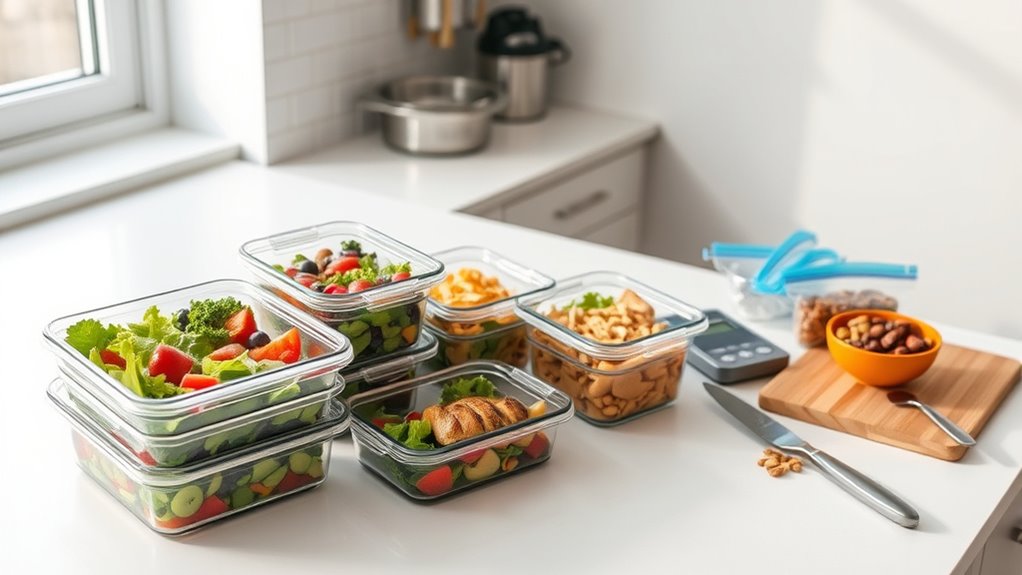

Meal prepping can save you time during busy weeks by allowing you to cook and portion meals in advance, reducing daily cooking hassle. It helps keep your ingredients organized, controls portion sizes, and minimizes waste by planning thoughtfully. Plus, it makes sticking to your health goals easier without relying on last-minute takeout. By setting up a simple routine and smarter shopping habits, you’ll find ways to maximize your efficiency and reduce waste. Keep going to discover how to make this work for you.
Key Takeaways
- Plan simple, versatile recipes and create detailed shopping lists to streamline shopping and minimize impulse buys.
- Dedicate specific time weekly for meal prep to save time and establish a consistent routine.
- Use airtight containers and label meals to ensure freshness and proper portioning throughout the week.
- Incorporate leftovers into new meals to reduce food waste and diversify your diet.
- Set up a well-lit, organized kitchen environment to make meal prep efficient and promote sustainable eating habits.
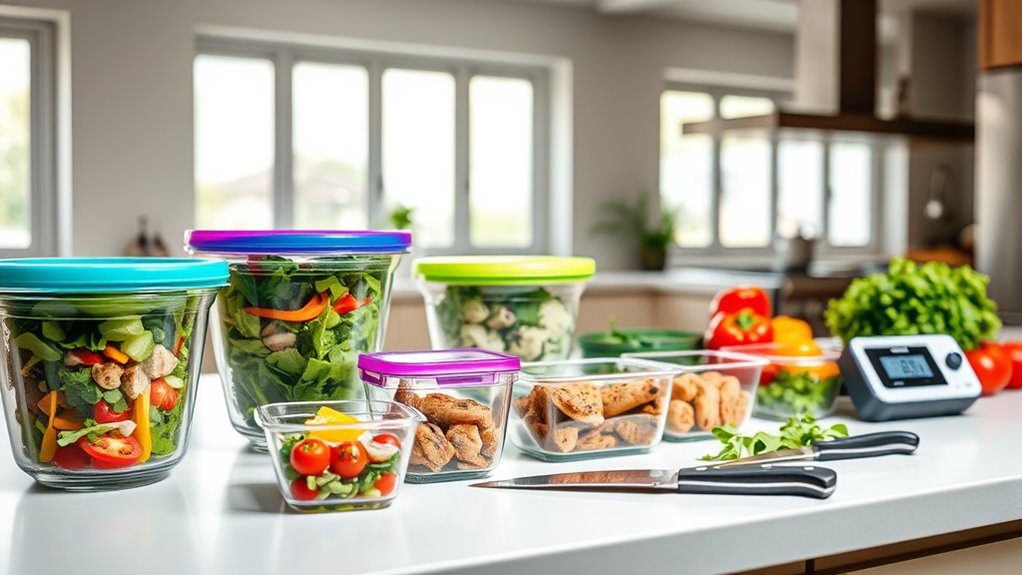
Balancing a busy schedule can make it challenging to eat healthy meals consistently. Between work commitments, meetings, and personal responsibilities, finding time to prepare nutritious food often feels impossible. That’s where meal prepping becomes your best ally. By dedicating a little time upfront, you can set yourself up for success, saving time and reducing waste throughout the week. The key is planning ahead, so you’re not scrambling for last-minute options or resorting to takeout. When you prep meals in advance, you gain control over ingredients, portion sizes, and overall nutrition, helping you stick to your health goals without sacrificing convenience.
Start by choosing simple recipes that store well and can be made in bulk. Think about dishes like roasted vegetables, grilled chicken, or grain bowls. These meals are versatile, allowing you to mix and match ingredients throughout the week, which keeps your menu interesting and prevents boredom. When you shop, create a detailed list based on your weekly menu, so you only buy what you need — this minimizes impulse purchases and reduces food waste. Stick to your list to stay organized and efficient during your grocery trip.
Choose simple, versatile recipes like roasted vegetables and grilled chicken to keep meals easy and interesting all week.
Once you have your ingredients, set aside a specific time—perhaps Sunday afternoon or a quiet evening—to cook and portion out your meals. Use airtight containers to keep everything fresh and easy to grab on busy mornings or during quick lunch breaks. Label your containers with the date to ensure you consume items while they’re still good. When you portion your food, think about your daily calorie needs and meal sizes, which helps prevent overeating and keeps your diet on track. This way, you’ll have balanced meals ready to go in the fridge or freezer, making it effortless to eat healthily even on your busiest days.
Meal prepping also notably reduces food waste. When you plan your meals carefully, you buy only what you need and use leftovers creatively. For example, roasted vegetables from one night can be added to salads or wraps the next day, and leftover grilled chicken can turn into a quick stir-fry or taco filling. This approach minimizes uneaten food piling up in your fridge and saves money in the long run. Plus, by knowing exactly what you’re eating and how much, you’re less likely to throw away unused ingredients or cooked food. Additionally, understanding the importance of contrast ratio in your kitchen setup can help ensure your meal prep environment is well-lit and comfortable, making the process more enjoyable and efficient.
In the end, meal prepping isn’t just about saving time; it’s about creating a sustainable routine that supports your health and financial goals. With a little effort upfront, you’ll find it much easier to make nutritious choices, stay organized, and reduce waste — all essential for thriving amid a hectic schedule.
Frequently Asked Questions
What Are the Best Containers for Meal Prepping?
You should choose containers that are durable, leak-proof, and microwave-safe for meal prepping. Glass containers are ideal because they don’t stain or retain odors and are eco-friendly. BPA-free plastic containers are lightweight and convenient, but guarantee they’re microwave-safe and free of harmful chemicals. Consider stackable containers to save space and compartments to keep different foods separate. These choices make prepping, storing, and reheating meals easier and more efficient.
How Can I Meal Prep for Picky Eaters?
To meal prep for picky eaters, you should focus on their favorite ingredients and involve them in planning. Keep meals simple and familiar, like pasta or chicken nuggets, and offer a variety of healthy sides. Use separate containers to keep flavors distinct and make meals visually appealing. Gradually introduce new foods alongside favorites, encouraging them to try new flavors without pressure. This approach helps picky eaters stay interested and satisfied.
What Are Quick Breakfast Options for Meal Prepping?
Imagine you’re rushing out the door, and you grab a jar of overnight oats. They’re quick to prep ahead of time—just mix oats, milk, and your favorite toppings, then refrigerate overnight. You wake up to a nutritious, ready-to-eat breakfast. For variety, try make-ahead egg muffins or smoothie packs. These options save time, reduce morning stress, and guarantee you start your day with a healthy meal.
How Do I Store Prepped Meals Safely?
You should store prepped meals in airtight containers to keep them fresh and prevent contamination. Label each container with the date so you know when to eat them. Keep perishable foods in the refrigerator at 40°F (4°C) or below, and use a freezer for longer storage. Always reheat leftovers thoroughly to 165°F (74°C). Proper storage helps maintain safety and flavor, reducing waste and ensuring you’re eating healthy.
What Are Budget-Friendly Meal Prepping Tips?
You can save money by planning your meals around sales and seasonal produce, buying in bulk, and sticking to simple recipes. Use affordable ingredients like rice, beans, and frozen vegetables to maximize your budget. Prep large portions to portion out for multiple meals, and avoid pre-cut or convenience items that cost more. By shopping smart and keeping things simple, you’ll make meal prepping both budget-friendly and efficient.
Conclusion
So, here’s the irony: by spending a little time meal prepping, you actually save hours, money, and stress in the long run. Instead of rushing through takeout or scrambling for last-minute options, you get to enjoy nutritious meals and reclaim precious time. It’s almost funny how a simple habit can turn hectic days into smooth sailing. Embrace meal prepping — because sometimes, the best way to save time is to plan ahead and outsmart your busy schedule.