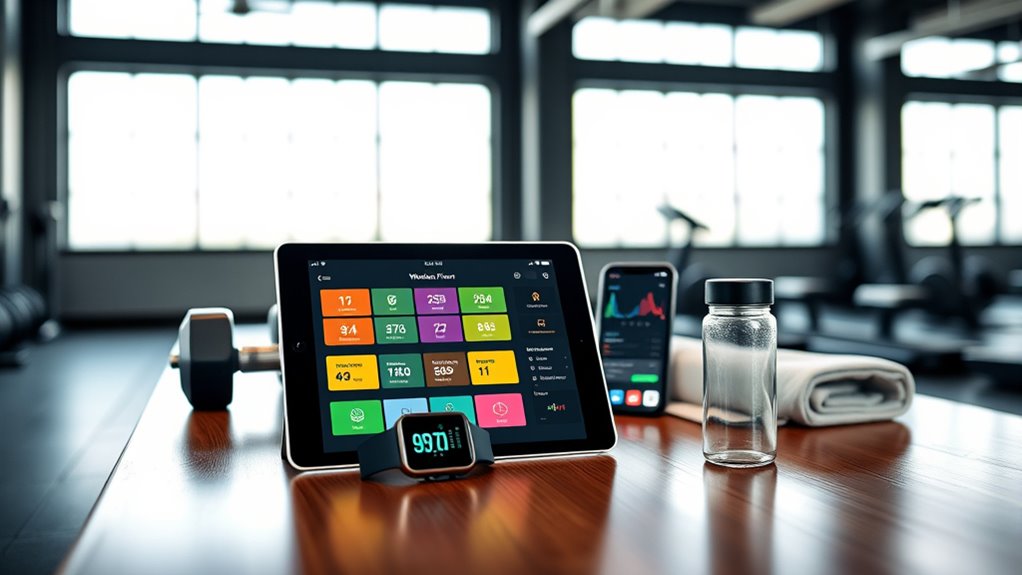

Personalized fitness plans use your data to craft workouts that match your unique goals, strengths, and preferences. By analyzing information from wearable devices and health apps, you can develop routines tailored to your fitness level and lifestyle, helping you avoid injuries and plateaus. These plans continually adapt as you improve, keeping you motivated and on track. Staying aligned with your personal needs is key—keep exploring to discover how data can maximize your results.
Key Takeaways
- Data-driven analysis helps identify individual strengths, weaknesses, and fitness levels for customized workout plans.
- Incorporating wearable device data allows for precise adjustments to workout intensity and type.
- Personal preferences and lifestyle factors guide the selection of enjoyable and feasible exercises, improving adherence.
- Tracking progress with measurable benchmarks enables ongoing goal setting and plan adjustments.
- Personalized routines reduce injury risk and optimize performance by aligning exercises with individual physiology and goals.

Have you ever wondered why generic workout routines often fall short of your fitness goals? The truth is, everyone’s body responds differently to exercise, and a one-size-fits-all approach rarely delivers *ideal* results. When you follow a standard plan designed for the masses, you might find yourself hitting plateaus, feeling frustrated, or risking injury because the routine doesn’t align with your specific needs. That’s where personalized fitness plans, driven by data, come into play. By tailoring your workouts based on detailed insights, you give yourself a better shot at achieving meaningful progress efficiently and safely.
Using data to craft a personalized plan means collecting information about your current fitness level, strengths, weaknesses, and even your goals. This can include data from wearable devices, fitness trackers, or health apps that monitor your heart rate, sleep patterns, activity levels, and more. When you analyze this data, you start to see patterns and identify areas where you excel and areas that require improvement. For example, if your heart rate data shows that you recover quickly after high-intensity intervals, your plan can incorporate more of those to maximize your cardiovascular gains. Conversely, if your sleep data indicates you’re sleep-deprived, your plan might prioritize recovery and lower-intensity workouts to prevent overtraining.
Collect your fitness data to personalize workouts that target your strengths and address your weaknesses effectively.
This tailored approach also accounts for your personal preferences and lifestyle constraints. If you dislike running or gym workouts, your plan can focus on activities you enjoy, making it more likely you’ll stick with it long-term. Plus, by understanding your schedule and energy peaks, you can schedule workouts at times when you’re most likely to perform well, ensuring consistency. Incorporating efficient training methods based on your data can further enhance results and reduce time spent working out. Data-driven plans also adapt over time; as your fitness level improves, your plan evolves based on ongoing feedback. This prevents stagnation, keeps you motivated, and ensures continual progress.
Another advantage of using data is the ability to set realistic, measurable goals. Instead of vague aspirations like “get in shape,” you can target specific outcomes, such as increasing your squat weight by 20 pounds in three months or reducing your running mile time. Tracking your progress against these benchmarks keeps you accountable and allows for adjustments if you’re not meeting targets. This real-time feedback mechanism empowers you to make informed decisions about your training, diet, and recovery strategies.
In essence, personalizing your fitness plan with data transforms a generic routine into a strategic, dynamic program designed specifically for you. It recognizes your unique physiology, preferences, and goals, giving you a significant advantage over cookie-cutter workouts. By leveraging data, you make smarter choices, avoid unnecessary injuries, and stay motivated as you see tangible results. It’s a powerful way to turn your fitness ambitions into reality, one tailored step at a time.
Top picks for "personaliz fitnes plan"
Open Amazon search results for this keyword.
As an affiliate, we earn on qualifying purchases.
Frequently Asked Questions
How Often Should I Update My Fitness Plan Based on Data?
You should update your fitness plan every 4 to 6 weeks. As you track your progress through data, look for plateaus or signs of fatigue, which indicate it’s time for a change. Regular updates help you stay motivated and avoid stagnation. Keep an eye on your performance metrics, recovery, and goals. Adjust exercises, intensity, and volume accordingly to continue making progress and stay aligned with your fitness journey.
What Types of Data Are Most Effective for Personalization?
You should focus on fitness fundamentals like frequency, intensity, time, and type (FITT). Track data such as heart rate, workout duration, calorie burn, and progress photos. Monitoring sleep quality and nutrition also supplies valuable insights. This data helps you fine-tune your fitness plan, fueling progress and preventing plateaus. Regularly reviewing and updating your data-driven details guarantees your workouts stay effective, engaging, and aligned with your evolving goals.
Can Personalized Plans Adapt to Injuries or Health Changes?
Yes, personalized plans can adapt to injuries or health changes. When you update your health data, your fitness app or coach adjusts your workouts to avoid strain or aggravation. You might see modifications like lower-impact exercises or rest days. Consistently tracking your health guarantees your plan remains safe and effective, helping you stay active while preventing setbacks from injuries or new health issues.
How Secure Is My Personal Health Data During Tracking?
Your personal health data is generally secure when tracked through reputable apps and devices that use encryption and comply with privacy laws like HIPAA. However, always check the app’s privacy policy to understand how your information is stored and shared. Avoid sharing sensitive details unnecessarily, and keep your device’s software updated. Taking these steps helps protect your data from unauthorized access during tracking.
Are There Specific Apps Recommended for Tailored Workout Plans?
Ever wonder if the right app can be your fitness fairy godmother? Popular choices like MyFitnessPal, Fitbit, and Nike Training Club offer tailored workout plans based on your goals and data. These apps analyze your inputs to craft personalized routines, making your fitness journey more effective. Just guarantee you review their privacy policies, so your health data stays secure while you chase those gains!
Conclusion
By now, you see that personalized fitness plans are your secret weapon, turning your workouts into a finely tuned machine. Just like a skilled tailor crafts a suit to fit perfectly, your data helps craft a program that fits your body and goals. Embrace this tailored approach, and watch your progress soar like an eagle in flight. With the right data, your fitness journey becomes not just effective, but a journey you truly enjoy.