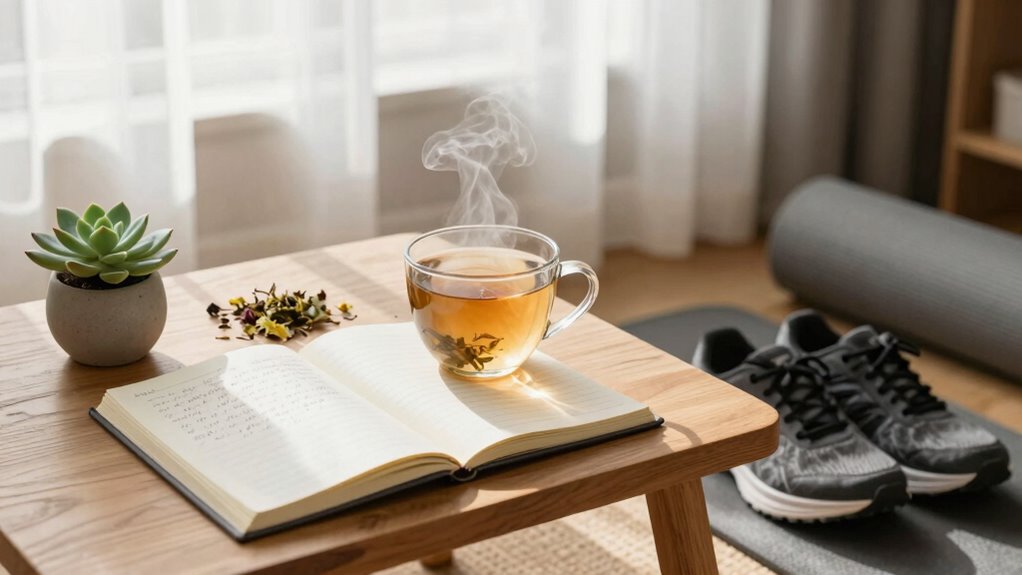

You’ll find that rituals matter more than motivation because habits create consistent routines that become automatic, helping you stick with healthy behaviors even when motivation wanes. Motivation can be fleeting, but daily rituals build repetition, rewiring your brain and reducing reliance on willpower. They provide emotional stability and act as safety nets during tough times. Keep exploring how establishing these routines can transform your habits for good—it’s easier than you think.

Get the latest gadgets delivered free — and shop member deals
- Fast, free delivery on millions of items
- Access to Prime Big Deal Days deals on October 6–7
- Prime Video, Amazon Music and more included
Key Takeaways
- Rituals create consistent routines that sustain habits beyond fluctuating motivation levels.
- Repetition of rituals rewires brain pathways, making healthy behaviors automatic over time.
- Rituals provide emotional stability and safety nets during setbacks, ensuring ongoing progress.
- Environmental cues linked to rituals reinforce habits and improve adherence.
- Relying on rituals reduces dependence on willpower, supporting long-term behavior change.

While motivation can spark your initial interest, it’s the daily rituals you establish that truly drive long-term progress. Motivation tends to be fleeting; one day you’re inspired, and the next, you might feel unmotivated and stuck. That’s where habit formation comes in. When you develop consistent routines, they become automatic, reducing the need for constant motivation. Instead of relying on willpower, your habits create a stable foundation that keeps you moving forward, even when your enthusiasm wanes.
To make this work, you need to understand your emotional triggers. These are the cues that prompt your habits, often rooted in your daily environment or feelings. For example, feeling stressed might trigger you to reach for comfort foods, or boredom might lead you to scroll social media. Recognizing these triggers gives you the power to replace negative habits with positive ones. If you habitually snack when stressed, you can create a ritual like taking a short walk or practicing deep breathing instead. Over time, these new behaviors become ingrained, helping you build resilience against emotional triggers that derail your progress.
The key is consistency. When you perform your rituals daily, they become part of your identity. Instead of waiting for motivation to strike, you rely on these ingrained patterns to carry you through. For instance, if your goal is to exercise regularly, scheduling a specific time each day and sticking to it turns exercise into a non-negotiable part of your routine. This repetition rewires your brain, making the activity feel natural rather than burdensome. The more you repeat, the less mental effort it takes, and the more automatic the habit becomes.
Rituals also provide emotional stability. When faced with setbacks or days when motivation dips, your established routines serve as a safety net. They anchor your efforts, making it easier to stay on track. Instead of relying solely on motivation—which can be unpredictable—you lean on your rituals to keep you aligned with your goals. Over time, these rituals shape your behavior and mindset, transforming your approach from one driven by fleeting feelings to one rooted in disciplined habit formation. Additionally, incorporating home environment cues can reinforce these habits and make them more sustainable.
In essence, while motivation can start the fire, it’s your rituals—those carefully crafted routines and awareness of emotional triggers—that keep it burning steadily. Building these habits takes time, but once they’re in place, they become powerful tools for maintaining healthy behaviors, regardless of your fluctuating motivation levels.
As an affiliate, we earn on qualifying purchases.
Frequently Asked Questions
How Do Rituals Help Sustain Long-Term Healthy Habits?
Rituals help you sustain long-term healthy habits by reinforcing habit formation through consistent actions. They create a sense of automaticity, making behaviors feel natural rather than forced. By implementing consistency strategies, such as specific routines or cues, you reduce reliance on motivation alone. This consistency builds momentum, making it easier to stick with habits over time, even when motivation wanes. Rituals turn healthy choices into ingrained parts of your daily life.
Can Rituals Replace Motivation Entirely?
Rituals can’t fully replace motivation, but they considerably support habit formation by creating consistent cues that make behaviors automatic. In motivational psychology, rituals help you bypass the need for constant willpower, turning actions into daily routines. While motivation sparks initial change, rituals embed habits deep within your routine, ensuring long-term consistency. So, rituals complement motivation, making your healthy habits more sustainable over time.
What Are Simple Rituals for Starting New Habits?
Starting new habits works best with simple rituals like habit stacking and cue-based routines. You can link a new habit to an existing one, like doing a quick stretch after brushing your teeth. Use cues, such as placing workout clothes by your bed, to trigger the behavior. These small, consistent rituals help your brain associate cues with actions, making new habits easier to adopt without relying solely on motivation.
How Do Rituals Influence Brain Chemistry and Behavior?
Rituals influence your brain chemistry by promoting neurotransmitter regulation, which helps stabilize mood and motivation. When you consistently perform a ritual, it reinforces your habit loop, making the behavior automatic over time. This reinforcement strengthens neural pathways, reducing reliance on motivation alone. As a result, your brain becomes more efficient at maintaining healthy habits, making it easier to stick with them without needing constant willpower.
Are Rituals Effective for Overcoming Setbacks in Habits?
Rituals act like a sturdy bridge over habit barriers, making setbacks less intimidating. When you focus on ritual consistency, you create a reliable anchor that pulls you back on track, even after slip-ups. Instead of relying solely on motivation, which can wane, rituals help you stay steady. They rewire your behavior, turning setbacks into opportunities to reinforce your habits and keep progress sailing smoothly.
As an affiliate, we earn on qualifying purchases.
Conclusion
Think of your habits as a garden. Motivation is the rain—stunning but fleeting. Rituals are the roots, anchoring your growth through every season. When you prioritize rituals over fleeting motivation, you cultivate a resilient garden that thrives no matter the weather. Your healthy habits become a steady, unwavering part of your life, rooted deep enough to withstand any storm. Embrace rituals, and watch your wellness flourish like a well-tended landscape.
As an affiliate, we earn on qualifying purchases.
As an affiliate, we earn on qualifying purchases.
Fall Picks
fall essentials
As an affiliate, we earn on qualifying purchases.