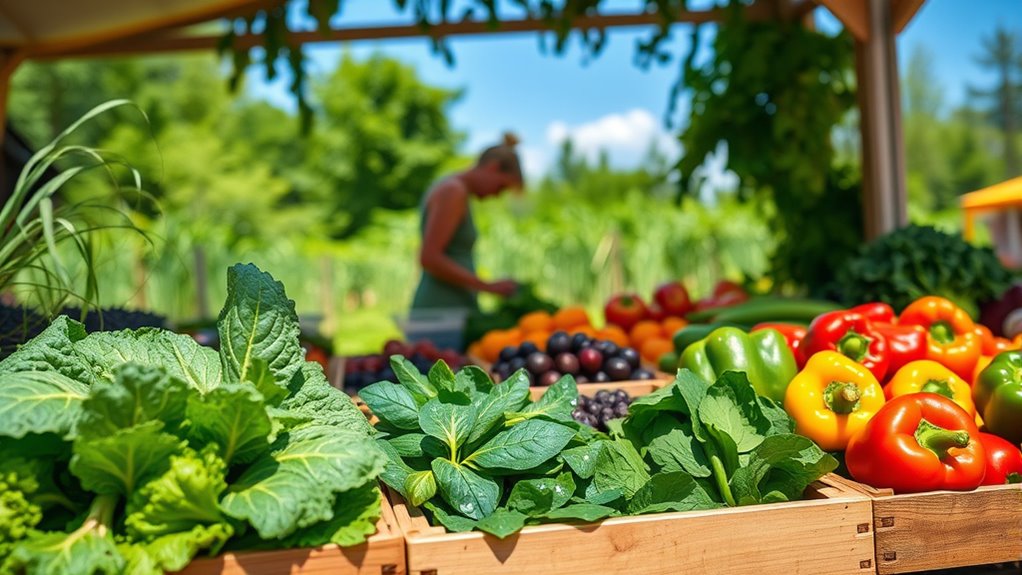

Choosing a plant-based and climate-friendly diet considerably lowers your environmental impact by reducing greenhouse gas emissions, water use, and land degradation. Incorporating more vegetables, legumes, and plant proteins like tofu helps you enjoy diverse, flavorful meals while supporting sustainability. Opting for local, seasonal foods and avoiding excess packaging further boosts your positive influence. By making mindful food choices, you inspire others and contribute to a healthier planet. Keep exploring to discover practical tips for adopting your eco-friendly eating journey.
Key Takeaways
- Shifting to plant-based foods reduces greenhouse gas emissions and water usage, making diets more climate-friendly.
- Incorporating vegetables, beans, lentils, and tofu enhances diet diversity while supporting sustainability.
- Choosing locally produced, seasonal foods minimizes transportation emissions and preserves environmental resources.
- Reducing reliance on heavily processed foods and packaging lessens environmental impact and waste.
- Individual dietary changes can inspire community-wide adoption of sustainable, climate-conscious eating habits.

Have you ever contemplated how your food choices impact the planet? Every meal you eat has a ripple effect on the environment, from greenhouse gas emissions to water usage and land degradation. Choosing a sustainable diet means being mindful of how your food impacts the Earth and making conscious decisions to reduce that impact. One of the most effective ways to do this is by shifting toward plant-based foods. Plant-based diets require substantially fewer resources than traditional meat-heavy diets. Producing vegetables, grains, fruits, and legumes consumes less water and generates fewer greenhouse gases compared to raising livestock. When you opt for plant-based meals, you’re helping to lower the demand for resource-intensive animal agriculture, which is a major contributor to climate change.
Switching to a more plant-focused diet doesn’t mean giving up all your favorite foods. It’s about finding balance and incorporating more plant-based options into your daily routine. You can start by adding more vegetables to your plates, trying out meatless recipes, or substituting plant-based proteins like beans, lentils, and tofu for meat. These choices not only reduce your carbon footprint but also offer health benefits, such as better heart health and increased fiber intake. As you make these changes, you’ll notice that your meals become more diverse and flavorful, encouraging you to explore different cuisines and ingredients. Additionally, embracing high-efficiency projectors in your home entertainment setup can further reduce energy consumption and environmental impact.
Embrace balance by adding more plant-based meals for health and environmental benefits.
Climate-friendly eating also involves being mindful of the sourcing and packaging of your food. Whenever possible, choose locally produced, seasonal produce. Local foods typically require less transportation, reducing emissions. Avoiding heavily processed foods and packaging can further lessen your environmental impact. Shopping at farmers’ markets or joining community-supported agriculture (CSA) programs can connect you directly with local growers, supporting sustainable farming practices and ensuring fresher, less environmentally damaging produce.
Adopting a sustainable diet isn’t just about individual choices; it’s about contributing to a broader movement toward environmental stewardship. Your decisions can influence others around you, inspiring friends and family to consider their own food habits. Small changes, like reducing meat consumption a few days a week or choosing eco-friendly products, add up over time. Remember, every mindful meal you make is a step toward a healthier planet. By embracing plant-based and climate-friendly eating, you play a crucial role in combating climate change, conserving resources, and preserving the planet for future generations. Your food choices have power—use them wisely to create a more sustainable world.
Frequently Asked Questions
How Can I Ensure Sufficient Protein Intake on a Plant-Based Diet?
You can guarantee sufficient protein intake on a plant-based diet by including a variety of protein-rich foods like beans, lentils, tofu, tempeh, nuts, seeds, and whole grains. Incorporate these into your meals regularly and combine different sources to get a complete amino acid profile. Planning balanced meals helps you meet your protein needs, supports muscle health, and keeps you energized throughout the day.
What Are the Best Plant-Based Sources of Essential Nutrients?
Imagine you’re planning meals and want to maximize nutrient intake. Leafy greens like spinach provide iron, calcium, and vitamins. Legumes such as lentils offer protein, fiber, and folate. Quinoa is a complete protein with essential amino acids. Incorporate colorful vegetables, nuts, seeds, and fortified foods to cover all essential nutrients. By diversifying your plant-based foods, you guarantee balanced nutrition and support your health sustainably.
How Do Sustainable Diets Impact Local Economies?
Sustainable diets boost local economies by encouraging the consumption of regional, seasonal foods, which supports local farmers and reduces transportation costs. When you choose plant-based options from nearby sources, you help create jobs and promote economic resilience in your community. Additionally, these diets often foster innovation in local agriculture and markets, ensuring a positive economic impact while also benefiting the environment. Your choices directly contribute to a stronger, more sustainable local economy.
Can Sustainable Eating Habits Be Affordable for Everyone?
Yes, sustainable eating habits can be affordable for everyone. While organic or specialty plant-based foods sometimes seem costly, you can save money by choosing seasonal, local produce and cooking at home. Juxtapose this with eating out or buying processed foods—sustainable choices often cost less and benefit your health. Small changes, like swapping meat for beans or shopping at farmers’ markets, make eco-friendly eating accessible and budget-friendly.
What Strategies Help Transition to a Plant-Based Lifestyle Smoothly?
To shift smoothly to a plant-based lifestyle, start gradually by adding more plant foods to your meals and reducing meat intake over time. Plan your grocery shopping around affordable staples like beans, lentils, and seasonal vegetables. Experiment with simple recipes and find plant-based alternatives you enjoy. Joining local or online groups can offer support and tips, making the shift easier and more enjoyable.
Conclusion
By choosing plant-based and climate-friendly foods, you’re planting seeds for a healthier planet and future. Every meal becomes a small but powerful step, like turning a tiny pebble into a ripple that spreads far and wide. Your choices can be the wind that shifts tides toward sustainability. So, embrace this journey—you hold the power to make a meaningful impact, one delicious, eco-friendly bite at a time.