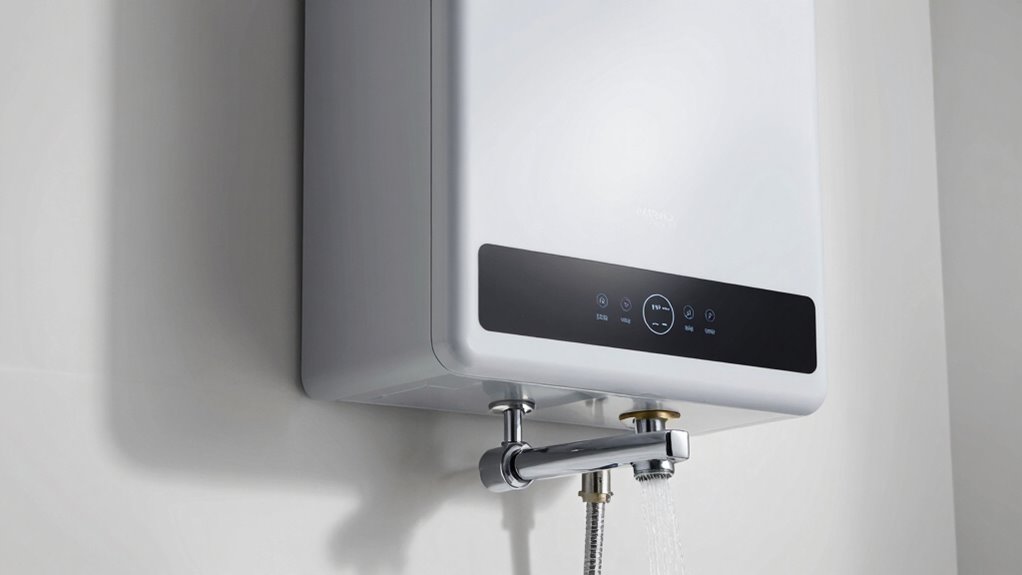

Tankless water heaters do save space, making them perfect for smaller areas. However, their flow rate limits how much hot water you can use at once. If your household has multiple fixtures running simultaneously, you could experience decreased water temperature or inadequate supply. To maximize their benefits, you need to choose the right size for your needs. Want to know how to select the best unit for your home? Keep exploring to find out more.

Get the latest gadgets delivered free with Prime
- Fast, free delivery on millions of items
- Prime Video, Amazon Music and more included
- Member-only deals all year
Key Takeaways
- Tankless heaters save space with their compact design, ideal for limited areas.
- Their flow rate limits hot water availability during simultaneous fixture use.
- High demand may require multiple units or larger capacity models.
- Proper installation and system capacity are crucial to prevent performance issues.
- Understanding household water needs helps select the right tankless system.

Tankless water heaters, also known as on-demand water heaters, provide hot water only when you need it, eliminating the waste associated with traditional storage tanks. This setup offers a significant advantage in energy efficiency because you’re not constantly heating and reheating a large tank of water. Instead, the heater activates only when you turn on a tap, which can lead to lower utility bills and a smaller environmental footprint. However, while the space-saving design is appealing, you need to be aware of potential installation challenges that can impact overall performance and efficiency.
One of the key benefits of tankless units is their compact size, which allows you to free up valuable space in your utility closet or basement. This makes them especially attractive for homes with limited room or for those wanting a cleaner, more organized look. But, despite their space-saving nature, installing a tankless water heater isn’t always straightforward. The process can be complex, especially if your home’s existing plumbing and electrical systems are outdated or not prepared for the new unit’s requirements. You might need to upgrade your electrical panel or install larger gas lines, which can add to the cost and time of installation. These installation challenges can be a hurdle if you’re not working with experienced professionals who understand the intricacies of proper setup.
Flow rate is another critical factor that caps the effectiveness of tankless water heaters. While they excel at providing hot water efficiently, their flow rate — the amount of water they can heat at once — can be a limiting factor. If you have multiple fixtures running simultaneously, like a shower, dishwasher, and washing machine, you might find that the water temperature drops or the unit struggles to keep up. This is especially true for larger households or homes with high hot water demands. To combat this, you may need to install multiple units or a larger capacity model, which can increase costs and add to installation challenges. Additionally, understanding flow rate limitations is essential for selecting the right system for your household’s needs.
As an affiliate, we earn on qualifying purchases.
Frequently Asked Questions
How Long Do Tankless Water Heaters Typically Last?
Tankless water heaters typically last around 20 years, but durability concerns can affect their lifespan. Regular maintenance helps extend their life, but you should be aware of potential replacement costs as parts wear out over time. If you notice reduced efficiency or frequent repairs, it might be time to contemplate replacing your unit. Proper care ensures you get the most out of your investment and avoids unexpected expenses.
Are Tankless Water Heaters More Energy-Efficient Than Traditional Models?
Think of tankless water heaters as the sprinters of the heating world—they’re more energy-efficient than traditional models. You’ll notice lower energy consumption because they heat water only when needed, reducing waste. This not only cuts your energy bills but also lessens your environmental impact. By choosing a tankless unit, you’re making a smarter, greener choice that benefits both your wallet and the planet.
What Maintenance Is Required for Tankless Water Heaters?
You need to regularly flush your tankless water heater to prevent sediment buildup, which can reduce efficiency. Check and clean the filter screens annually. Also, guarantee proper ventilation requirements are met to avoid dangerous fumes and maintain safe operation. Inspect the venting system for blockages or leaks, especially after extreme weather or installation. These simple maintenance steps help prolong your unit’s lifespan and keep it running smoothly.
Can Tankless Water Heaters Be Installed Outdoors?
Yes, you can install tankless water heaters outdoors, but you need to guarantee proper weather protection. Outdoor installation is possible if you choose models specifically designed for exterior use, which are built to withstand weather conditions. You should also add insulation and a protective enclosure to shield the unit from rain, snow, and extreme temperatures. Proper weatherproofing helps the heater operate efficiently and prolongs its lifespan.
Do Tankless Water Heaters Work During Power Outages?
During power outages, tankless water heaters generally don’t work unless you have backup power solutions in place. They rely on electricity to operate, so in a power outage, their power outage resilience drops. To keep hot water flowing, consider installing backup generators or battery systems. These solutions guarantee your tankless system continues running smoothly, providing hot water even when the grid is down.
best tankless water heater for large households
As an affiliate, we earn on qualifying purchases.
As an affiliate, we earn on qualifying purchases.
Conclusion
Tankless water heaters do save space, but don’t forget—the real challenge lies in their flow rate. As you consider upgrading, ask yourself: will this unit keep up during peak times? Because if it doesn’t, you might find yourself waiting or sacrificing comfort. The space savings are impressive, but the flow rate could become your true limit. The question is, are you ready to face what lies beneath the surface? The answer might just surprise you.
As an affiliate, we earn on qualifying purchases.
tankless water heater installation kit
As an affiliate, we earn on qualifying purchases.
As an affiliate, we earn on qualifying purchases.
Halloween Picks
halloween
As an affiliate, we earn on qualifying purchases.