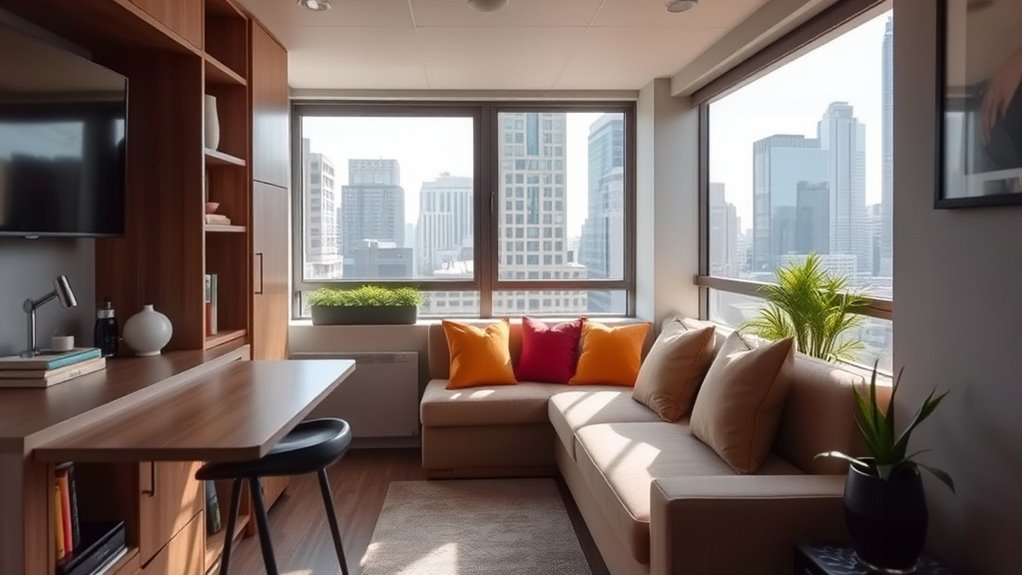

To design a comfortable city tiny home, focus on maximizing space with multi-functional furniture like fold-out beds and convertible tables. Use vertical storage options like wall shelves and hooks, and incorporate natural light through large windows and skylights to make the space feel open. Personalize your micro-area with colors, textures, and plants to create a cozy vibe. If you keep exploring, you’ll discover more tips for transforming small spaces into functional, inviting homes.
Key Takeaways
- Maximize space with multi-functional furniture and vertical storage solutions to create a spacious, efficient living environment.
- Enhance natural light through large windows and skylights to make the micro-space feel open and inviting.
- Incorporate flexible features like Murphy beds and open-plan kitchens to adapt to changing needs and routines.
- Use clever storage options such as under-bed compartments and wall-mounted shelves to keep clutter minimal.
- Personalize the space with decor, plants, and artwork to make the tiny home cozy and reflective of individual style.
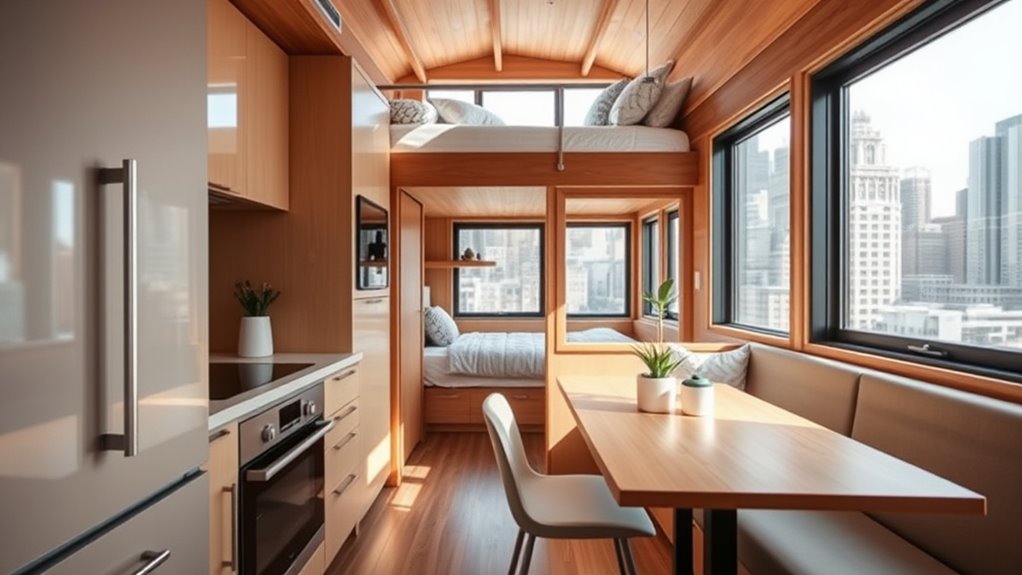
Tiny home living has become a popular choice for those seeking a simpler, more affordable lifestyle. You might be drawn to the idea of downsizing your space to reduce clutter, lower expenses, and gain more freedom to explore new locations or hobbies. The challenge is designing a micro-space that feels comfortable, functional, and personalized, despite its limited footprint. When you start planning your tiny home, focus on maximizing every square inch. Multi-functional furniture is your best friend—think fold-out beds, tables that double as workspaces, and storage ottomans. These pieces help you make the most of your space without sacrificing comfort.
Lighting plays a vital role in creating an inviting atmosphere. Natural light should be your top priority; large windows, skylights, and glass doors can make your tiny home feel more open and airy. Proper lighting not only enhances the visual appeal but also boosts your mood and productivity. Consider installing adjustable fixtures so you can tailor the ambiance for different activities. When it comes to storage, think vertically. Use wall-mounted shelves, hooks, and under-bed compartments to keep clutter off the floors and surfaces. Clever storage solutions allow you to maintain a clean, organized environment, which is essential in a small space.
Maximize natural light and vertical storage to create an open, organized tiny home environment.
Designing your tiny home with flexibility in mind helps adapt to your changing needs. For example, a Murphy bed or a sofa bed provides sleeping space at night and transforms into seating during the day. Compact kitchens with efficient layouts ensure you have all the essentials without taking up excessive room. Use open shelving instead of bulky cabinets to give a sense of openness and make items easily accessible. You should also consider your lifestyle and prioritize features that support your daily routines, whether that’s a small but functional workspace or a cozy nook for reading. Additionally, understanding emotional alignment can help create a harmonious living environment where you feel at peace and connected to your space.
Finally, personal touches are what truly make your tiny home feel like yours. Incorporate colors, textures, and decor that reflect your personality. Plants can bring life and warmth into your micro-space, and artwork or photos add a personal flair. Remember, living in a tiny home doesn’t mean sacrificing comfort—it’s about smart design choices that make small spaces work for you. By focusing on efficient layout, versatile furniture, and cozy details, you can create a micro-home that’s not only practical but also a warm, inviting place to live.
Frequently Asked Questions
How Do Tiny Homes Handle Outdoor Privacy and Security?
You can enhance outdoor privacy and security for your tiny home by installing fencing or hedges around your property, creating a clear boundary. Use outdoor lighting and security cameras to deter intruders and monitor activity. Adding privacy screens or curtains for windows also helps keep your space feeling secluded. Consider locking mechanisms on entry points and secure storage for valuables to further guard your outdoor area and guarantee peace of mind.
What Are the Best Storage Solutions for Tiny Homes?
You can maximize your tiny home’s storage by cleverly using multi-functional furniture, like beds with built-in drawers or fold-out desks. Vertical space is your best friend—install shelves up to the ceiling or hanging organizers. Hidden compartments under stairs or benches add extra storage without cluttering your space. Keep things tidy with wall-mounted hooks and magnetic strips, ensuring you have room for everything while maintaining a clean, comfortable living area.
How Do Tiny Homes Comply With Local Building Codes?
You make certain your tiny home complies with local building codes by researching specific regulations in your area, including zoning laws and safety requirements. You may need permits, adhere to size and utility standards, and follow fire safety guidelines. Consulting local authorities or a professional can help you navigate these rules. By doing so, you guarantee your tiny home is legal, safe, and ready for occupancy without any legal issues.
What Are the Costs Associated With Tiny Home Construction?
Building a tiny home is like planting a seed—you’ll see costs sprout from various sources. Expect to spend around $20,000 to $100,000, depending on size, design, and materials. You’ll pay for land, permits, and utilities, plus construction and interior finishes. DIY efforts can lower costs, but professional help might be necessary. Budget wisely, and remember, the true value lies in the freedom your cozy space offers.
How Can Tiny Homes Be Customized for Accessibility Needs?
You can customize tiny homes for accessibility by incorporating features like wider doorways, lowered countertops, and step-free entries to accommodate mobility devices. Installing grab bars, ramps, and adjustable fixtures guarantees safety and ease of use. Use lever handles instead of knobs, and place controls within reach. Designing open floor plans also provides more space for movement. Tailoring these details helps create a comfortable, functional living environment suited to your accessibility needs.
Conclusion
Living tiny is like fitting a whole universe into a cozy box—you gain freedom, simplicity, and a brighter outlook. Just ask Sarah, who downsized her apartment and found more time for passions and friends. Studies show that tiny home dwellers often report higher happiness and lower stress. So, embrace the challenge, design smartly, and discover that less truly is more. Your perfect city sanctuary awaits, one clever square foot at a time.