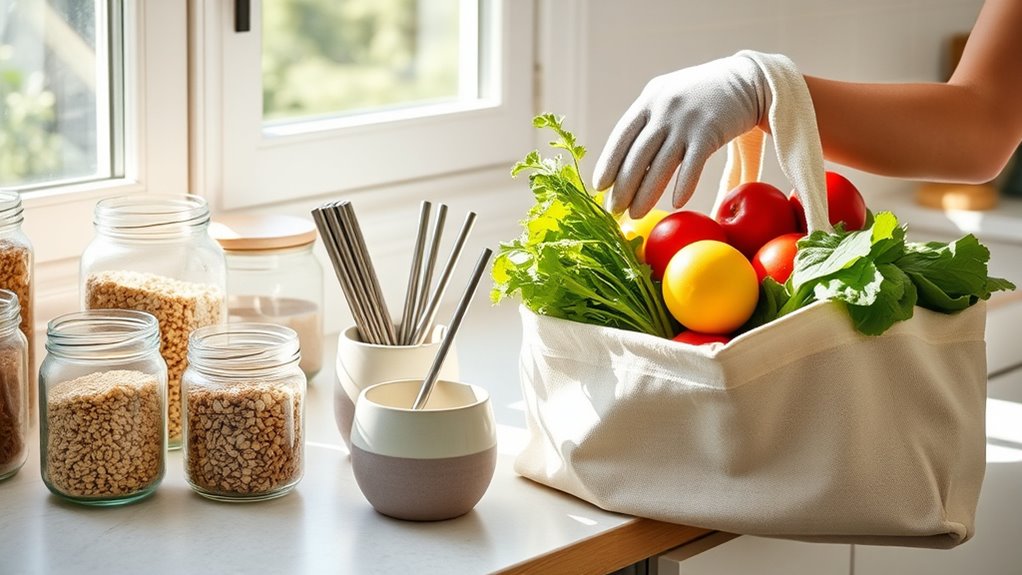

To go zero waste, start by becoming aware of your daily waste and making small changes like using reusable bags, bottles, and containers. Reduce packaging by choosing bulk items and switching to minimal or biodegradable packaging. Compost organic waste to support the environment and minimize landfill trash. Repair instead of discard items, buy secondhand, and support sustainable brands. Focus on progress, share tips with others, and keep learning how to improve your eco-friendly habits for a more sustainable lifestyle.
Key Takeaways
- Start small by recognizing waste habits and replacing disposable items with reusable alternatives.
- Reduce packaging by choosing bulk, biodegradable, or minimal packaging products and bringing personal containers.
- Compost organic waste to divert from landfills and enrich soil naturally.
- Repair and reuse items, shop secondhand, and support sustainable brands to minimize consumption impact.
- Educate yourself and others, engage in community efforts, and focus on continuous progress toward zero waste.
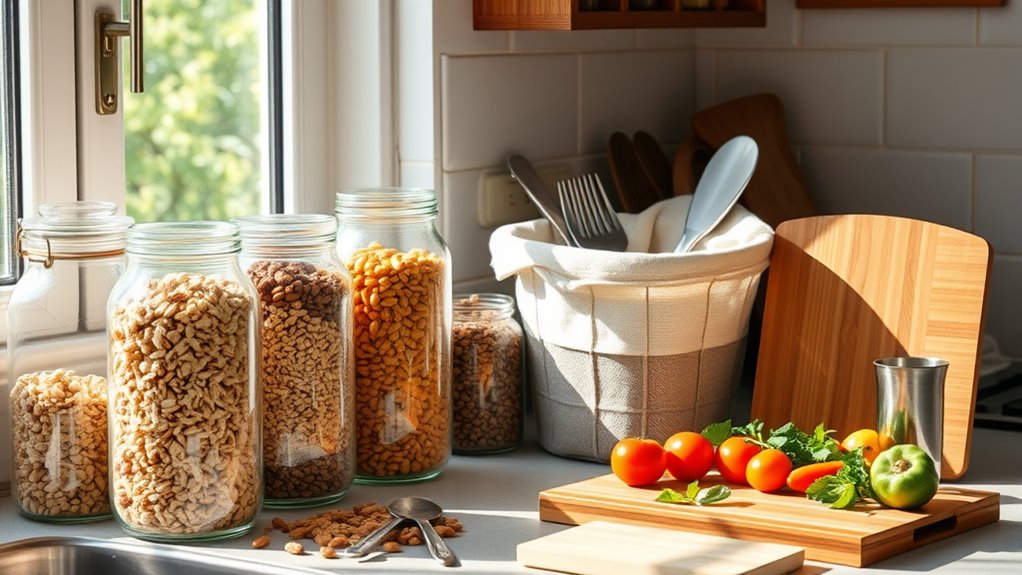
Are you ready to make meaningful changes for a more sustainable future? Embracing a zero waste lifestyle might seem overwhelming at first, but taking small, deliberate steps can markedly reduce your environmental impact. The journey begins with awareness—understanding how much waste you generate and identifying areas where you can cut back. Start by examining your daily habits and questioning whether you truly need single-use items. Switching out plastic bottles for a reusable water container or replacing disposable coffee cups with a personal mug can make an immediate difference. These small adjustments lay the foundation for more sustainable choices.
Next, focus on reducing plastic waste, which is one of the biggest contributors to pollution. Carry reusable bags when you shop, and opt for products with minimal or biodegradable packaging. When shopping, choose bulk items to cut down on packaging waste, and bring your own containers or jars for loose produce or grains. This practice not only minimizes trash but also encourages mindful consumption. Composting organic waste is another powerful step. By composting fruit peels, coffee grounds, and yard waste, you divert waste from landfills and create nutrient-rich soil for your plants. This reduces greenhouse gas emissions from decomposing waste and supports local ecosystems.
Another key aspect is rethinking your consumption habits altogether. Repair instead of replace—fix broken appliances or clothing rather than discarding them. When you do need new items, seek out secondhand stores or online marketplaces to give pre-loved goods a second life. This reduces demand for new manufacturing, lowering resource extraction and energy use. Additionally, consider supporting companies committed to sustainability and ethical production. Your purchasing choices can influence broader industry shifts toward more eco-friendly practices.
Furthermore, investing in home theatre projectors that are energy-efficient and have long-lasting bulbs can significantly decrease your carbon footprint. Finally, consider supporting companies committed to sustainability and ethical production. Your purchasing choices can influence broader industry shifts toward more eco-friendly practices.
Finally, educate yourself and others about zero waste principles. Share your experiences, swap tips, and inspire friends and family to join you. Community efforts amplify individual actions, making sustainable living more accessible and impactful. Remember, going zero waste isn’t about perfection; it’s about progress. Every small step counts and contributes to a larger movement toward a cleaner planet. Over time, these habits become second nature, transforming your lifestyle into one that respects and preserves the environment. By being intentional with your choices and committed to continuous improvement, you can considerably reduce your waste footprint and help pave the way for a healthier, more sustainable future.
As an affiliate, we earn on qualifying purchases.
Frequently Asked Questions
How Can I Start Zero Waste if I Live in a Small Apartment?
You can start zero waste in your small apartment by focusing on simple swaps. Use reusable bags, containers, and water bottles to cut down on plastic. Compost food scraps if possible, and buy in bulk to reduce packaging. Declutter and donate items you no longer need, and shop at local markets with minimal packaging. Small changes add up, making your lifestyle more eco-friendly without needing lots of space.
What Are Eco-Friendly Alternatives for Everyday Plastic Items?
You can swap plastic wrap for beeswax wraps, which are reusable and breathable. Use stainless steel or glass straws instead of plastic ones. Replace plastic bags with cloth or silicone alternatives for snacks and shopping. Opt for bar soap instead of liquid soap in plastic bottles. Choose bamboo or metal utensils over disposable plastic cutlery. By making these changes, you reduce plastic waste and embrace a more eco-friendly lifestyle effortlessly.
How Do I Handle Waste When Traveling or on Vacation?
Handling waste while traveling is like steering a river—you need a steady hand and a clear plan. Carry reusable bags, bottles, and utensils to cut down on single-use plastics. Seek out eco-friendly accommodations that prioritize waste reduction. When faced with unavoidable waste, dispose of it responsibly and recycle when possible. Staying mindful and prepared helps keep your eco-footprint small, no matter where your journey takes you.
What Is the Cost Difference Between Zero Waste and Conventional Lifestyles?
You might spend slightly more upfront adopting a zero waste lifestyle due to reusable products and bulk purchases. However, over time, you’ll save money by reducing packaging, disposable items, and ongoing costs. While some eco-friendly alternatives can be pricier initially, many zero waste choices are cost-effective long-term. Overall, your expenses may be comparable or even lower than a conventional lifestyle, especially as you develop sustainable habits that cut waste and save money.
How Can I Involve My Family or Community in Zero Waste Efforts?
They say “it takes a village,” and involving your family or community in zero waste efforts is no different. You can host fun workshops, share simple tips, or organize cleanup days. Lead by example and encourage open conversations about sustainability. When everyone pitches in, small actions add up. Make it a team effort, and soon, your community will see the positive impact, making zero waste a shared goal.
biodegradable food storage containers
As an affiliate, we earn on qualifying purchases.
As an affiliate, we earn on qualifying purchases.
Conclusion
By embracing these practical steps, you’re paving a path toward a greener, cleaner future. Small shifts, like swapping single-use for sustainable solutions, create a powerful, positive ripple. Remember, consistency is key—your commitment can catalyze change beyond your doorstep. So, stay steadfast, stay simple, and savor the sustainable. Your journey to zero waste isn’t just about reducing waste; it’s about reigniting your responsibility and reimagining a brighter, better world.
As an affiliate, we earn on qualifying purchases.
As an affiliate, we earn on qualifying purchases.