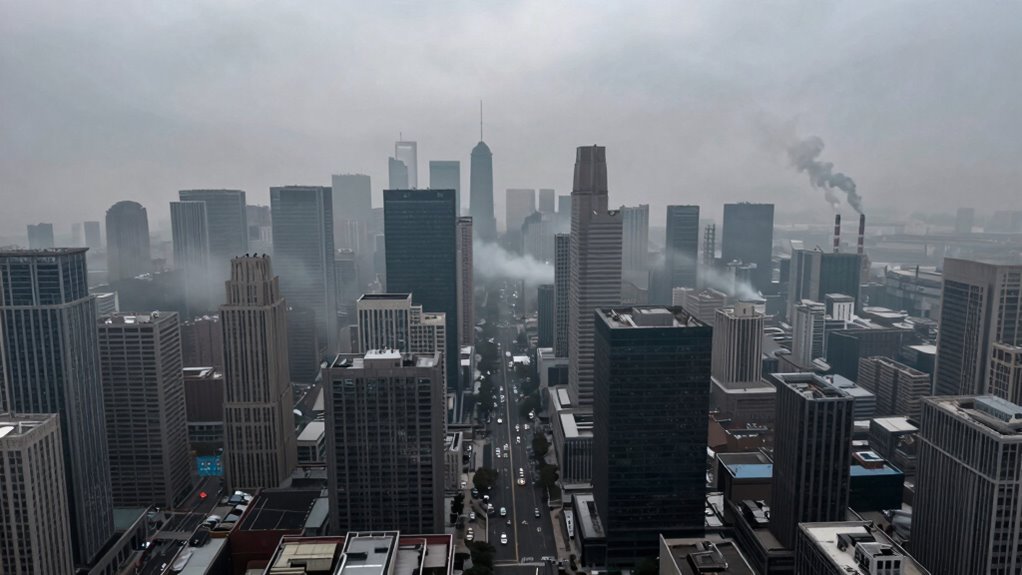

More cities see air pollution as an economic threat because it causes huge healthcare costs, reduces productivity, and lowers property values. People’s health suffers, leading to more sick days and higher insurance premiums. This cycle strains the economy and forces governments to spend more on health care and regulations. Recognizing these costs pushes cities to invest in cleaner tech and stricter policies. Stay with us to find out how these strategies can protect your community’s future.

Get the latest gadgets delivered free with Prime
- Fast, free delivery on millions of items
- Prime Video, Amazon Music and more included
- Member-only deals all year
Key Takeaways
- Cities recognize that industrial emissions increase healthcare costs and reduce workforce productivity, threatening economic stability.
- Addressing pollution proactively prevents costly healthcare expenses and economic losses from environmental degradation.
- Implementing stricter emission policies and green investments safeguards long-term financial growth.
- Poor air quality discourages tourism and lowers property values, impacting local economies.
- Public awareness campaigns promote preventive actions, making pollution control more cost-effective than remediation.
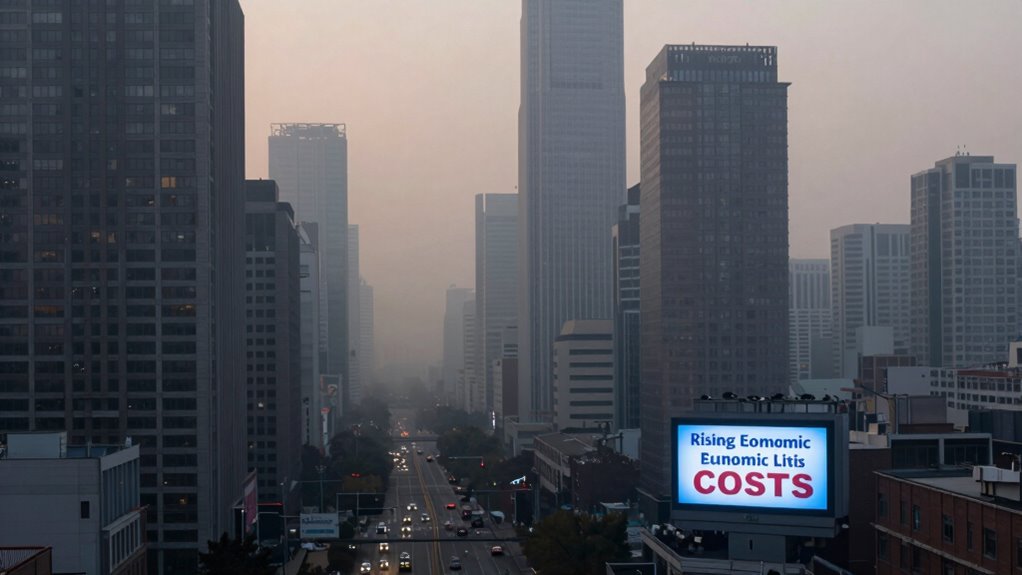
Air pollution isn’t just a health hazard; it also poses a significant threat to the economy. Cities around the world are recognizing that unchecked pollution can lead to soaring costs that impact everything from public health to local businesses. One of the main contributors to this economic strain is industrial emissions. When factories and power plants release pollutants into the air, they not only degrade environmental quality but also increase the burden on healthcare systems. These emissions often contain harmful chemicals and particulate matter that cause respiratory and cardiovascular diseases. As a result, healthcare costs skyrocket because more people require medical attention, medications, and hospital stays. These expenses don’t just fall on individuals; they strain public health budgets and insurance systems, diverting resources from other essential areas like education or infrastructure. Implementing regulatory compliance measures can help mitigate these costs by reducing emissions at the source.
You might see the economic impact most clearly when considering the costs associated with treating pollution-related illnesses. When cities ignore the effects of industrial emissions, they face higher healthcare costs that can balloon into billions annually. These costs are passed on to taxpayers and employers, who see more sick days and reduced productivity. As more workers fall ill due to air pollution, businesses experience decreased productivity and increased insurance premiums. This creates a cycle where pollution leads to economic losses, which then hinder efforts to improve air quality. Recognizing this, many city leaders now treat air pollution as an economic threat rather than just an environmental issue. They understand that preventing pollution can save money in the long run, making investments in cleaner technologies and stricter emission standards a financially sound decision. Additionally, urban planning strategies that promote green spaces and reduce traffic congestion can significantly lower pollution levels, further supporting economic stability. Moreover, addressing industrial emissions proactively can prevent these costs from escalating further.
Furthermore, the economic consequences extend beyond healthcare and industrial emissions. Reduced air quality discourages tourism, lowers property values, and hampers outdoor activities essential for local economies. When citizens and visitors breathe polluted air, cities risk losing revenue from these sectors. Plus, the health impacts can lead to a decreased workforce, as employees are forced to take more sick days or face early retirement due to chronic health problems. These financial strains push policymakers to adopt more aggressive measures against pollution, including stricter regulations on factories and incentives for cleaner energy sources. By treating air pollution as an economic threat, cities aim to protect their financial stability and ensure sustainable growth. It is also crucial to recognize that public awareness campaigns can play a significant role in encouraging community participation and behavior change. This strategic approach emphasizes prevention over costly remediation, recognizing that a healthier environment is directly linked to a stronger, more resilient economy.
Products Worth Considering

Samsung 27-Inch Odyssey QD-OLED G8 4K 240Hz Gaming Monitor

Bose SoundLink Flex Bluetooth Speaker (2nd Gen), Portable Waterproof Speaker, Black

Jackery Explorer 300 Portable Power Station, 292Wh
As an affiliate, we earn on qualifying purchases.
Frequently Asked Questions
How Do Cities Measure Air Pollution’s Economic Impact?
You measure air pollution’s economic impact through environmental valuation, which assigns monetary value to health and environmental damages. Cities use cost-benefit analysis to compare expenses of pollution control measures against the economic gains from cleaner air. By quantifying health care costs, productivity losses, and environmental damages, you can better understand the true economic burden, helping you prioritize policies that maximize benefits and minimize costs for a healthier, more sustainable city.
What Industries Are Most Affected by Air Pollution Regulations?
They say “where there’s smoke, there’s fire,” and air pollution regulations hit industries hard. You’ll find industrial emissions-heavy sectors, like manufacturing and power plants, most affected, facing stricter limits and costs. Transportation policies also play a role, impacting automotive and logistics industries with tighter emissions standards. These regulations push industries to innovate, but they can also increase operational expenses and reshape market dynamics.
How Do Air Pollution Costs Compare to Other Urban Expenses?
Air pollution costs often surpass other urban expenses, mainly because of rising industrial costs and tourism impacts. You might notice increased expenses for industries that face stricter regulations, which can raise product prices. Additionally, poor air quality discourages tourists, reducing revenue for local businesses and city economies. Overall, these environmental costs considerably strain city budgets, making air pollution a critical economic concern that demands proactive management.
What Role Do Public Health Costs Play in Economic Assessments?
Public health costs are the backbone of economic assessments, acting like a compass guiding policy decisions. You see, health insurance claims and productivity loss from air pollution add up fast, turning into a financial weight cities can’t ignore. These costs reveal the true price of pollution, showing that investing in cleaner air isn’t just good for health—it’s a smart economic move that saves money in the long run.
How Can Cities Balance Economic Growth and Pollution Control?
You can balance economic growth and pollution control by investing in urban planning that promotes sustainable development and integrating technological innovations like clean energy solutions. Prioritize green infrastructure and public transit to reduce emissions while fostering economic activity. By adopting forward-thinking policies, you create a city that thrives economically and remains environmentally healthy, ensuring long-term prosperity without compromising air quality.
Conclusion
As cities see air pollution as an economic threat, they’re planting seeds of change in the fertile soil of awareness. Picture the air clearing like a fog lifting from a bustling marketplace, revealing vibrant opportunities instead of choking smog. By tackling pollution head-on, you’re helping transform a looming threat into a bright horizon of prosperity and health. It’s like steering a sinking ship away from hidden icebergs—your actions steer communities toward a cleaner, safer future.