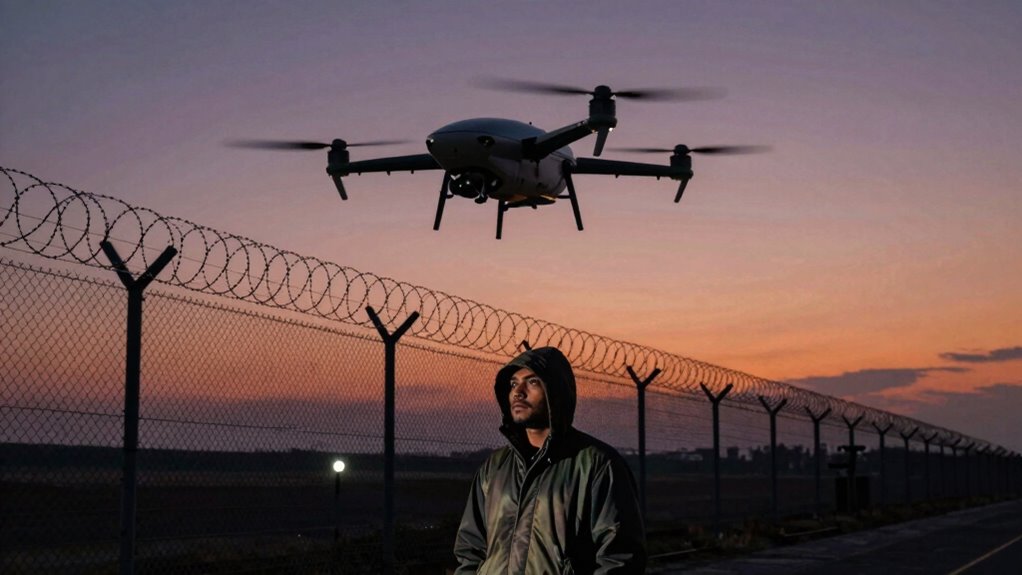

Border tech raises new human rights questions because it often prioritizes security over individual privacy and freedoms. Technologies like facial recognition and surveillance can lead to misuse, data breaches, and unwarranted profiling, especially impacting marginalized communities. They also challenge ethical boundaries around monitoring and consent. With laws lagging behind, there’s a risk of these tools becoming mass surveillance instruments. To understand how to balance security with rights protection, discover the full scope of these concerns.
Key Takeaways
- Advanced border technologies like facial recognition threaten privacy rights and can lead to unwarranted surveillance.
- Data collection from biometric and location info increases risks of misuse, profiling, and discrimination.
- Lack of transparency and legal safeguards allows potential infringement on individual freedoms.
- Deployment often prioritizes security, risking disproportionate impacts on marginalized communities.
- Insufficient oversight and ethical standards can turn security tools into mass surveillance systems.

Advancements in border technology, such as facial recognition and surveillance systems, raise urgent human rights concerns that demand careful scrutiny. As these tools become more widespread, it’s crucial to contemplate the implications for individual freedoms and societal values. You might wonder how these innovations impact your privacy and what ethical boundaries should guide their use. When border agencies deploy biometric identification or real-time monitoring, they often prioritize security without fully addressing the consequences for personal data privacy. This gap highlights the importance of surveillance ethics—questions about what’s acceptable in monitoring populations and how to balance security with respect for individual rights.
Border tech advancements raise urgent human rights concerns about privacy, ethics, and balancing security with individual freedoms.
You’re likely aware that data privacy is at the core of these debates. When your biometric information, location data, or personal identifiers are collected and stored, you lose control over how that information is used or shared. Governments and private companies often justify these measures as necessary for national security or crime prevention, but the risks of misuse or data breaches are significant. Without strict safeguards, your personal data might be exploited, leading to profiling, discrimination, or unwarranted surveillance. This erosion of data privacy can create a chilling effect, where you might feel watched constantly, influencing your behavior and freedoms in subtle yet profound ways. Additionally, the deployment of projected technological advancements often outpaces existing legal protections, increasing the risk of rights violations. Recognizing the significance of privacy protections is essential to prevent such abuses. Moreover, the rapid development of these technologies can sometimes lead to unintended consequences, which underscores the need for careful oversight.
The ethical questions surrounding border tech aren’t just about technology itself but about the principles guiding its deployment. You need to reflect on whether the use of facial recognition aligns with fundamental human rights, especially when it can be applied disproportionately against marginalized communities. Surveillance ethics call for transparency and accountability—ensuring that individuals are aware of when and how their data is collected, and that there are clear limits to its use. Without these protections, border security measures risk becoming tools of mass surveillance rather than means of legitimate protection.
Furthermore, the rapid pace of technological development often outstrips existing legal frameworks. You might feel frustrated if policies lag behind innovations, leaving gaps that could be exploited. It’s essential that governments and organizations establish robust standards that prioritize data privacy and uphold surveillance ethics. This includes implementing strict data handling protocols, regular audits, and avenues for judicial review. Only then can you guarantee that border tech serves its purpose without infringing on your human rights or compromising your personal privacy.
Ultimately, these advancements should not be unchecked. As a person concerned with human rights, you have a stake in ensuring that border technology is used ethically, respecting both the need for security and the imperative to protect individual freedoms.
biometric privacy protection device
As an affiliate, we earn on qualifying purchases.
As an affiliate, we earn on qualifying purchases.
Frequently Asked Questions
How Does Border Tech Impact Local Communities’ Privacy Rights?
Border tech directly impacts your community privacy rights by collecting and analyzing data, often without clear consent. You might feel your personal information is at risk, and data security measures may be insufficient to protect it. As a result, your community’s privacy can be compromised, leading to increased surveillance and potential misuse of data. It’s essential to advocate for stronger data security practices and transparent policies to safeguard your rights.
Are There International Laws Regulating Border Technology Use Today?
You might think international laws fully regulate border technology use, but they actually don’t. Border ethics and technology transparency aren’t consistently enforced worldwide. While some agreements, like the UN’s guidelines, aim to protect human rights, many countries operate with little oversight. This gap means border tech can be used in ways that threaten privacy and rights, emphasizing the need for clearer, more all-encompassing international regulations.
What Safeguards Exist to Prevent Misuse of Border Surveillance Tools?
You might think safeguards are enough, but they often fall short without proper algorithm oversight and data transparency. To prevent misuse of border surveillance tools, regulations require oversight committees to review algorithms for bias and accuracy. Transparency in data collection and usage is essential, allowing you to scrutinize how your information is handled. While these measures exist, ongoing vigilance and stricter enforcement are necessary to guarantee human rights are protected.
How Are Migrant Rights Considered in Border Tech Deployment?
You might think migrant rights are always prioritized in border tech deployment, but often, border ethics take center stage. While some agencies aim for technology transparency, many overlook the human impact on migrants. This lack of openness can lead to rights violations. To truly protect migrants, border technology must balance security with ethical considerations, ensuring transparency and respect for human dignity, rather than just focusing on enforcement.
Who Is Held Accountable for Human Rights Violations Involving Border Tech?
You hold the primary responsibility for human rights violations involving border tech, especially regarding surveillance bias and data ownership. Governments, companies, and developers can be held accountable when surveillance systems unfairly target individuals or misuse data. You should demand transparency, enforce regulations, and guarantee proper oversight to prevent abuses. Holding these entities accountable helps protect migrant rights and reduces the risk of violations linked to biased surveillance and improper data handling.
personal data encryption hardware
As an affiliate, we earn on qualifying purchases.
As an affiliate, we earn on qualifying purchases.
Conclusion
So, next time you cheer for border tech, remember it’s not just about smarter fences or facial scans—it’s about smarter questions. Are we really protecting human rights, or just pretending while we turn borders into high-tech prisons? Maybe it’s time to ask if our “innovations” are actually just new ways to ignore human dignity. After all, what’s more advanced: saving lives or saving face? Think about it.
As an affiliate, we earn on qualifying purchases.
As an affiliate, we earn on qualifying purchases.