
Anti-immigration protests in Britain have become more visible in recent years, driven by fears about economic strain, cultural change, and societal identity. Supporters believe high immigration impacts jobs, healthcare, and education, while concerns about integration and traditions fuel tensions. Media coverage and political rhetoric often amplify these fears, making protests reflect broader societal anxieties. There’s more behind these demonstrations, including the diverse motivations and societal implications you’ll discover if you keep exploring.
Key Takeaways
- Anti-immigration protests in Britain have grown in visibility, driven by fears over economic, cultural, and societal impacts.
- Participants often cite concerns about strain on public services, job security, and preservation of traditional values.
- Media coverage and political rhetoric amplify fears, shaping public perception and fueling protests.
- Protests reflect societal anxieties about change, integration, and sovereignty, often linked to broader debates like Brexit.
- They represent a vocal segment, raising questions about policy responses and societal fears surrounding immigration.
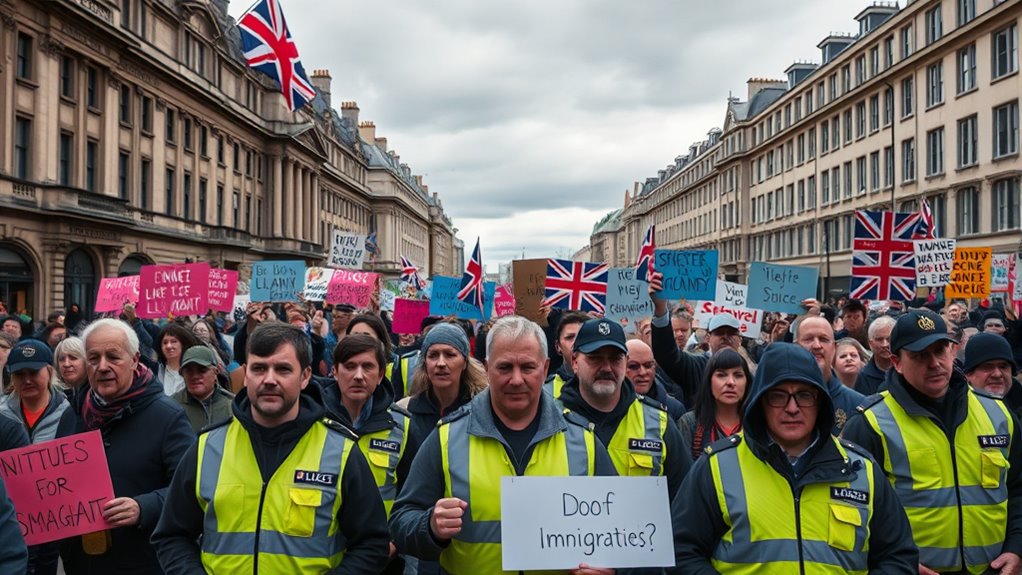
Are anti-immigration protests gaining momentum worldwide? In Britain, these protests have become increasingly visible over recent years, reflecting growing concerns among certain segments of the population. You might notice that many of these demonstrations are driven by fears over economic strain, cultural change, and national identity. As you observe the scenes, it’s clear that supporters often feel their communities are being overwhelmed or that immigration policies are too lenient. These sentiments are amplified by political rhetoric, media coverage, and personal experiences, which shape public opinion and motivate people to take to the streets.
Anti-immigration protests in Britain reflect fears over economy, culture, and identity, fueled by media, politics, and personal stories.
You may see protest signs that emphasize protecting jobs, reducing public spending, or preserving traditional values. Many participants argue that high immigration levels put pressure on housing, healthcare, and education systems, making it harder for native-born citizens to access services. They may also express concerns about integration, fearing that newcomers aren’t adopting local customs or contributing equally to society. These worries are sometimes fueled by stories in the media, which can paint immigration as a threat rather than a benefit. You might also notice that these protests aren’t always straightforward; they often include a mix of political groups, from nationalist parties to local community activists, each with their own motivations.
At the same time, you should recognize that these protests are complex and often controversial. While some participants genuinely believe they’re defending their communities, others see these demonstrations as fueled by misinformation or xenophobia. The British context adds layers of history and politics, with debates around Brexit and sovereignty playing a significant role. You could argue that anti-immigration protests are a response to broader societal anxieties—economic uncertainty, cultural shifts, or dissatisfaction with political leadership. They also reflect the broader global trend of populist movements rising against perceived globalism and multiculturalism. Additionally, the protests often highlight concerns over cultural identity, which many feel is threatened by increasing diversity.
It’s important to understand that these protests don’t necessarily represent the majority view but do highlight a significant and vocal segment of society. As you watch, you might wonder how policymakers will respond or whether these protests will lead to stricter immigration laws. The debate surrounding immigration remains deeply divisive, and protests serve as a visible expression of those tensions. Ultimately, they reveal the fears and frustrations of people who feel left behind or threatened by change, and they challenge governments to address these concerns thoughtfully and responsibly.

Access to Health Care
As an affiliate, we earn on qualifying purchases.
As an affiliate, we earn on qualifying purchases.
Frequently Asked Questions
How Have Government Policies Influenced Anti-Immigration Protests?
Government policies have directly fueled anti-immigration protests by implementing strict immigration controls and restrictions that many see as unfair or exclusionary. When policies become more aggressive or less transparent, you may feel targeted or overlooked, prompting protests. Additionally, political rhetoric emphasizing national security and economic concerns can intensify public fears, leading you to join protests to voice your dissatisfaction and demand changes to these policies.
What Demographic Groups Predominantly Participate in These Protests?
You’ll find that mainly, older white Britons participate in these protests, often expressing concerns about cultural changes and economic impacts. Some younger individuals also join, driven by nationalist sentiments or media influences. Many participants are locals who feel their community identity is threatened. You might notice that participation tends to be higher in areas with recent immigration or economic challenges, reflecting underlying fears and perceptions about immigration’s effects.
How Do Media Outlets Portray Anti-Immigration Demonstrations?
Imagine you’re scrolling through the news in 1920s London; media outlets often portray anti-immigration demonstrations as chaotic and driven by fear. They tend to highlight clashes, emphasizing concerns over nationalism and cultural change. Some outlets frame protesters as concerned citizens, while others depict them as troublemakers. Overall, media portrayal varies, shaping public perception by emphasizing either the protesters’ motives or the unrest they cause.
What Legal Challenges Have Arisen From Anti-Immigration Protests?
You might find that legal challenges from anti-immigration protests include accusations of public order violations, such as unlawful assembly or inciting hatred. Authorities may also pursue injunctions to limit protest activities or arrest individuals for hate speech or vandalism. These legal actions aim to balance free expression with maintaining public safety, but they often spark debates about the limits of protest rights and the appropriate response to inflammatory demonstrations.
How Have Anti-Immigration Protests Impacted Local Communities?
You feel the ripple effect as anti-immigration protests shake your local community like a stormy sea. These protests often create division, fueling tensions among neighbors and disrupting daily life. They can lead to increased hostility, making newcomers feel unwelcome and vulnerable. As a result, community trust erodes, and social cohesion weakens, leaving you to navigate a landscape fractured by fear and misunderstanding.

Immigration and Refugee Law and Policy (University Casebook Series)
As an affiliate, we earn on qualifying purchases.
As an affiliate, we earn on qualifying purchases.
Conclusion
You see the protests, you hear the voices, and you feel the tension. You understand the concerns, you question the policies, and you wonder about the future. You face the debates, you weigh the opinions, and you seek clarity. You recognize the fears, you acknowledge the frustrations, and you hope for solutions. In this complex issue, you stay informed, stay compassionate, and stay engaged—because your voice can shape understanding, change perspectives, and build a more inclusive tomorrow.

Hafhue Immigrants Make Great Garden Flag, Pro Immigration Garden Flag, Social Justice Sign, No Human is Illegal Banner, Immigration Social Justice Outdoor Pride Month Gifts for Family and Friends
Flag Size: This Yard Flag is 12.5 x 18 In, Double Sided With the Image Printed and Texts…
As an affiliate, we earn on qualifying purchases.
As an affiliate, we earn on qualifying purchases.

Artificial Intelligence Safety and Security (Chapman & Hall/CRC Artificial Intelligence and Robotics Series)
As an affiliate, we earn on qualifying purchases.
As an affiliate, we earn on qualifying purchases.