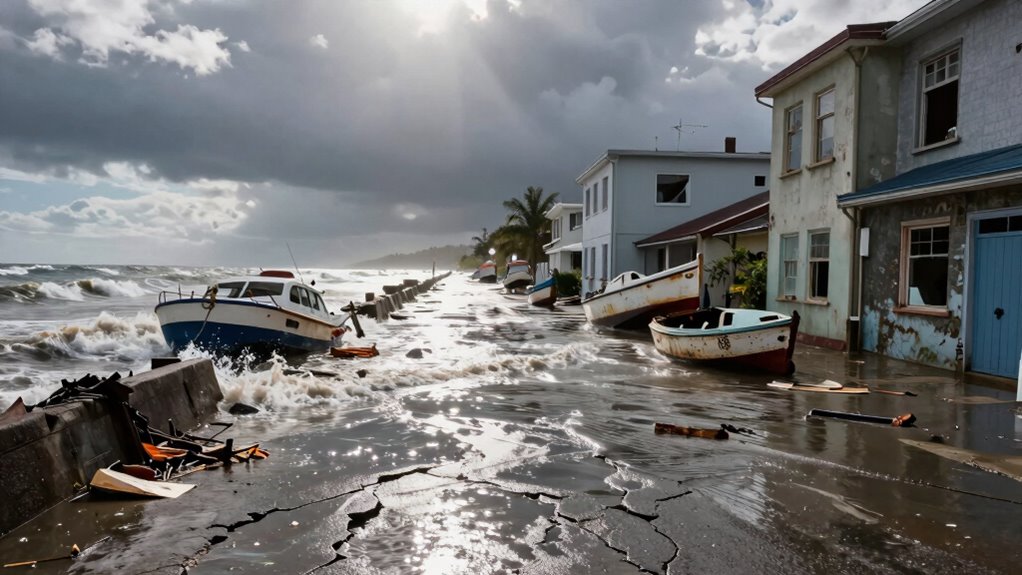

Climate change and urban growth are turning coastal flooding into an immediate threat. Rising sea levels, stronger storms, and heavier rains increase flood risks, while urban development reduces natural defenses like wetlands and dunes. These combined factors make flooding happen more frequently and severely today, not just in the future. Addressing this urgent problem requires proactive measures and innovative solutions. If you want to understand how communities are fighting back, keep exploring the strategies shaping our coastlines.

Get the latest gadgets delivered free with Prime
- Fast, free delivery on millions of items
- Prime Video, Amazon Music and more included
- Member-only deals all year
Key Takeaways
- Climate change increases storm frequency and intensity, causing more immediate and severe coastal flooding events.
- Rapid urban development reduces natural flood defenses like wetlands and dunes, heightening flood risk.
- Rising sea levels elevate baseline water levels, making coastal areas more vulnerable to flooding today.
- Accelerated infrastructure aging and insufficient flood management systems fail under current flood pressures.
- Natural ecosystem restoration offers cost-effective, immediate solutions to buffer and reduce ongoing flood impacts.

Have you noticed that many coastal areas are now investing in innovative solutions to strengthen their defenses. For instance, some cities are integrating green infrastructure—like rain gardens, permeable pavements, and restored wetlands—into urban planning. These enhancements help improve ecosystem resilience while also managing stormwater more efficiently. By reducing runoff and increasing natural absorption, these measures lessen the pressure on traditional drainage systems, which often become overwhelmed during heavy rainfalls. Additionally, updating urban infrastructure to be more adaptive—such as elevating roads, installing flood barriers, and redesigning drainage networks—becomes indispensable in this new climate reality. The role of natural ecosystems** as buffers against flooding underscores the importance of restoring wetlands, dunes, and mangroves, which can absorb storm energy and reduce water flow into inland areas. The truth is, the combination of climate change and urban development has accelerated the metamorphosis of coastal flooding from a future threat to an immediate concern. As urban areas grow and develop, the impact of climate change continues to intensify, making proactive measures more critical than ever. Recognizing the significance of ecosystem-based solutions can lead to more sustainable and cost-effective flood mitigation strategies. Moreover, climate adaptation strategies are essential for communities to effectively prepare for and respond to these changing conditions. If you’re a policymaker, community member, or developer, understanding this link is key to implementing effective strategies. You should prioritize resilient infrastructure upgrades and ecosystem restoration efforts to protect lives, property, and livelihoods. Ignoring these changes only makes the problem worse, increasing economic costs and risking irreversible damage to communities and ecosystems alike. The challenge now is to act swiftly, embracing both technological innovation and natural solutions**, to adapt to a future where coastal flooding is no longer a distant threat but an ongoing reality.
As an affiliate, we earn on qualifying purchases.
Frequently Asked Questions
How Are Local Communities Adapting to Rising Flood Risks?
You see local communities boosting resilience by investing in adaptive infrastructure like seawalls and elevated roads. They’re also implementing community-driven plans, such as flood warning systems and green spaces that absorb water. These efforts help you prepare for rising flood risks, minimizing damage and protecting lives. By focusing on community resilience and adaptive infrastructure, communities actively respond to changing conditions, making sure they’re better equipped to face current and future flooding challenges.
What Policies Are in Place to Mitigate Coastal Flooding Impacts?
You’ll find that policies like flood insurance help you financially prepare for coastal flooding, reducing personal risk. Coastal barriers are also in place to protect communities from rising waters, acting as physical defenses. Local governments often require flood insurance for new developments and invest in infrastructure projects like barriers and levees. These policies aim to guarantee damage, safeguard property, and assure communities can recover swiftly when flooding occurs.
How Can Individuals Protect Their Property From Flooding?
You can protect your property from flooding by installing property barriers like levees or floodwalls to block water entry. Additionally, improve drainage solutions around your home, such as sump pumps, proper grading, and permeable surfaces, to direct water away efficiently. Regularly maintain these features and elevate essential appliances or utilities to reduce damage during flood events. Taking these steps helps you stay resilient against rising coastal flood risks.
What Are the Economic Consequences of Increasing Coastal Floods?
You face staggering economic impacts as coastal flooding worsens, turning communities into sinking ships. The financial burden on local governments and homeowners skyrockets with rising repair costs, insurance premiums, and lost business. These floods threaten to drain resources and destabilize economies, making recovery harder with each storm. Ignoring this crisis only deepens the economic toll, risking your community’s stability and future prosperity in ways that could feel overwhelming.
How Does Climate Change Influence Future Flood Patterns?
Climate change influences future flood patterns by altering weather systems and sea levels, making floods more frequent and severe. Through climate modeling, scientists predict these changes, helping you understand potential risks. Improved flood prediction techniques enable communities to prepare better, but if emissions continue rising, you’ll face increasingly unpredictable and damaging coastal floods. Staying informed about climate impacts allows you to advocate for adaptive measures and resilient infrastructure.
As an affiliate, we earn on qualifying purchases.
Conclusion
You can’t ignore the rising tide any longer—coastal flooding isn’t a distant threat anymore, but a crashing wave upon our doorstep. Like a storm gathering strength, it’s reshaping our lives now, demanding immediate action. If you wait, the floodwaters will swallow the future you once imagined. It’s time to stand at the shoreline of change, ready to turn the tide or be swept away. The choice is yours—act now before the current pulls everything out to sea.
As an affiliate, we earn on qualifying purchases.
As an affiliate, we earn on qualifying purchases.
Fall Picks
fall essentials
As an affiliate, we earn on qualifying purchases.