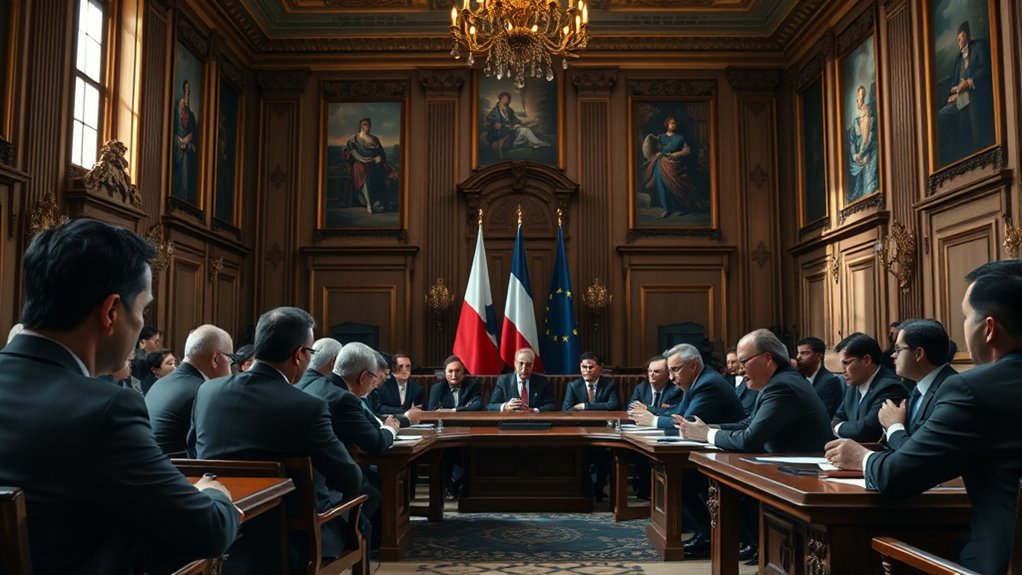

In France’s political crisis, President Macron leads pushes for reforms that spark widespread protests and opposition from far-left and far-right parties. Public unrest, strikes, and legal challenges threaten his authority, risking government instability and possible early elections. Key players include Macron, opposition groups, protestors, and the judiciary. The future depends on whether reforms are revised or abandoned amid escalating unrest. Explore further to uncover how these dynamics could shape France’s political landscape.
Key Takeaways
- President Macron pushes reforms, fueling protests and challenging his authority amid widespread social unrest.
- Opposition parties mobilize dissatisfied citizens, organizing protests against reforms and demanding dialogue.
- Legal challenges and constitutional scrutiny threaten to delay or block reforms, complicating political progress.
- Public strikes and demonstrations across France reflect deep dissatisfaction and strain social stability.
- Future outcomes range from government retreat or reform revisions to escalating instability or early elections.
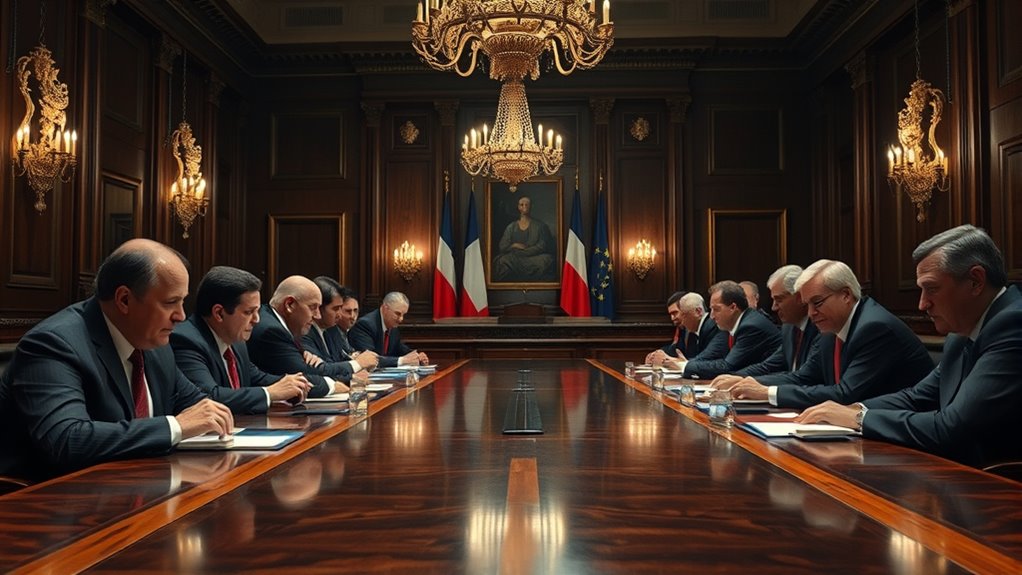
France is currently facing a political crisis that has shaken the stability of its government and sparked widespread public unrest. You might feel overwhelmed by the rapid developments and the uncertain future ahead. At the center of this turmoil are key players whose actions and decisions will shape what happens next. The French president, Emmanuel Macron, remains a pivotal figure, but his authority is increasingly challenged. His push for reforms—particularly in areas like pensions and labor laws—has ignited fierce protests, with many citizens accusing him of disregarding their concerns. Macron’s leadership style, characterized by a desire to push through reforms swiftly, has alienated large segments of the population, fueling anger and protests. You can see that his administration now faces a fragile political landscape where opposition parties and civil society are demanding a voice.
On the other side are the opposition parties, which have gained momentum by rallying citizens dissatisfied with Macron’s policies. The far-left and far-right parties, in particular, have mobilized large crowds, protesting not only specific reforms but also what they see as a broader threat to social justice and democracy. These groups are calling for more inclusive dialogue and a halt to the proposed changes, creating a polarized environment where compromise seems increasingly difficult. The French parliament is now a battleground, with debates often turning into heated confrontations, further deepening the political divide. The judiciary and constitutional bodies also play a essential role, especially as legal challenges to reforms emerge, potentially delaying or blocking legislation. Additionally, the recent vetted reforms have been scrutinized for their legality and impact on social cohesion.
Public unrest continues to grow, with strikes and demonstrations disrupting daily life across the country. You see workers, students, and pensioners taking to the streets, demanding that their voices be heard. The widespread protests reflect a deep dissatisfaction with the current political direction and raise questions about the government’s ability to maintain order. As the crisis unfolds, possible outcomes range from a government retreat and policy revisions to more severe political instability, including the potential for a government reshuffle or even early elections. The future of France’s political landscape hangs in the balance, with the actions of its key players determining whether stability can be restored or if the nation will face prolonged unrest.
Frequently Asked Questions
How Long Is the Current Political Crisis Expected to Last?
The current political crisis in France could last anywhere from a few weeks to several months, depending on how quickly key players reach agreements. You might see rapid resolutions if leaders find common ground, but prolonged negotiations or protests could extend the turmoil. Stay informed about official statements and ongoing developments, as the situation remains fluid. Your involvement and awareness can influence how swiftly the crisis concludes.
What Are the Economic Impacts of the Crisis on France?
The economic impacts of the crisis on France include slowed growth, rising inflation, and decreased investor confidence. You might see increased volatility in markets and disruptions to businesses, especially those relying on stability and foreign investment. Consumer spending could decline, and unemployment may rise if the crisis persists. These effects can weaken France’s economy overall, making recovery more challenging until political stability is restored.
How Has Public Opinion Shifted During the Crisis?
You’ve likely noticed that public opinion has become more polarized during the crisis. Supporters rally behind government reforms, while opponents express increased dissatisfaction and concern over stability. Polls show fluctuating approval ratings, reflecting uncertainty and anxiety among citizens. You might feel more engaged or frustrated, depending on your perspective. Overall, the crisis has deepened divisions, making it harder to find common ground and pushing many to question leadership and future prospects.
What Role Do International Organizations Play in the Crisis?
Imagine international organizations as guiding stars amid a stormy sky, offering stability and support. They monitor France’s crisis, provide diplomatic channels, and suggest solutions to ease tensions. You see them as mediators helping to prevent escalation, rallying global backing, and fostering dialogue. Their role is crucial—they act as a calming presence, ensuring France navigates its political upheaval with external perspectives and resources that bolster internal resilience.
Could This Crisis Lead to Constitutional Reforms in France?
Yes, this crisis could lead to constitutional reforms in France. If the situation persists, you might see pressure from political leaders and the public to change the system for stability. Reforms could include adjusting powers of government, electoral processes, or the constitution itself. These changes aim to address underlying issues and prevent future crises, ultimately shaping France’s political landscape for years to come.
Conclusion
As you watch France’s political storm unfold, think of it as a ship caught in turbulent waters—each wave threatening to change its course. The key players are steering through unpredictable currents, and the outcome remains uncertain. Will they find calm waters or be swept into uncharted territory? Whatever happens, staying alert and engaged is your best compass. This crisis isn’t just a chapter; it’s a storm that could reshape France’s future course.