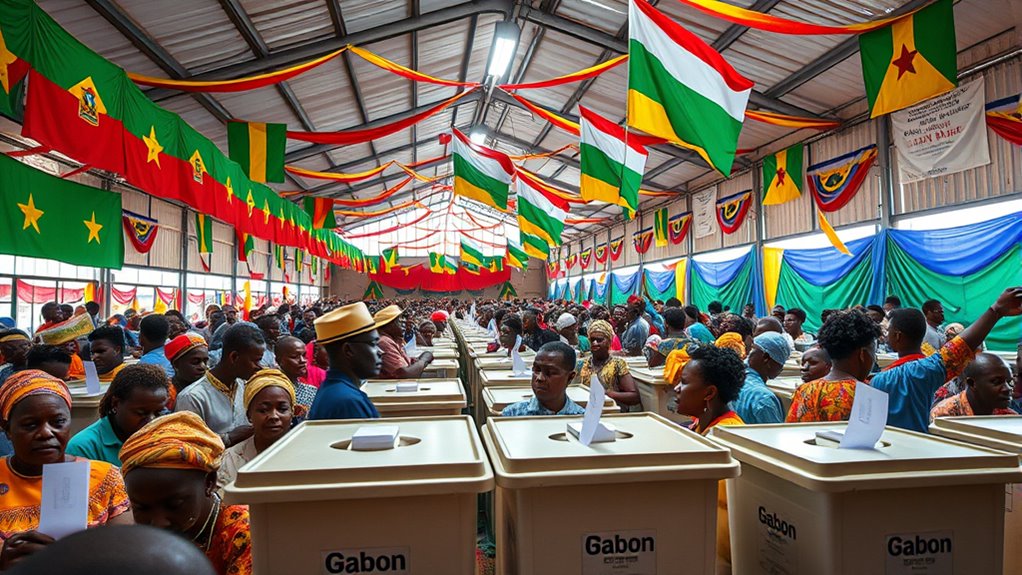

In Gabon’s 2025 National Assembly election, key issues include economic diversification, transparency, and governance reforms, with voters demanding more inclusive policies and battling corruption. Youth and marginalized groups are actively seeking better education, jobs, and social justice, making their support essential. The election’s outcome could reinforce the current power or spark significant change. If you want to discover who the winners are and what’s at stake, keep exploring these evolving political dynamics.
Key Takeaways
- The 2025 election is a critical moment for Gabon’s democratic future, influencing political stability and governance reforms.
- Economic diversification and job creation are central campaign issues, amid Gabon’s reliance on volatile oil exports.
- Corruption and transparency remain key concerns, with candidates promising to improve accountability and institutional integrity.
- Electoral fairness and political inclusivity are under scrutiny, with opposition and youth groups demanding reforms and greater participation.
- The election outcome could reinforce current power or signal a shift toward more progressive, inclusive governance for Gabon.
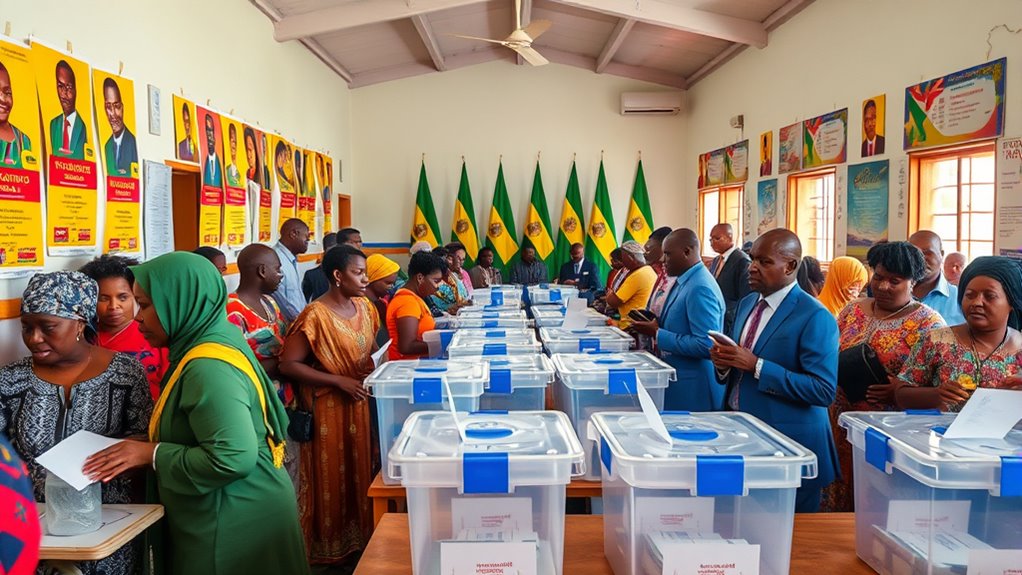
Will Gabon’s 2025 election reshape its political landscape? As you follow the developments, it’s clear this election stands at a critical crossroads for the country’s democracy. The key issues driving voter concern include economic stability, corruption, and governance reforms. With Gabon heavily dependent on oil exports, fluctuations in global oil prices have hit the economy hard. Citizens are enthusiastic for policies that diversify the economy, create jobs, and reduce reliance on oil revenues. You’ll notice candidates emphasizing economic diversification, but whether they can deliver remains uncertain.
Gabon’s 2025 election hinges on economic stability, diversification, and addressing corruption for a transformative future.
Corruption remains a pervasive challenge, influencing how resources are allocated and how justice is applied. Voters are increasingly frustrated with allegations of mismanagement within the government and the lack of transparency. This election has become a battleground for candidates promising to strengthen institutions, improve accountability, and fight corruption. Your attention is drawn to the campaign rhetoric around transparency, but many wonder if real change is possible within the existing political framework. Additionally, contrast in projectors technology impacts how effectively candidates communicate their messages during campaigns.
Another significant issue is governance reform. Many citizens feel their voices aren’t adequately represented and that political power remains concentrated among a few elites. Calls for reforms to electoral laws, decentralization, and increased civic participation resonate strongly. You might notice opposition parties pushing for more inclusive political processes, while the ruling party seeks to maintain its influence. The electoral process itself has come under scrutiny, with concerns over fairness and transparency influencing voter confidence.
The election also highlights the role of youth and marginalized groups seeking greater representation. With a young population, many young voters are demanding policies that address education, employment, and social justice. Their participation could tip the balance, especially if they turn out in large numbers and vote for change. You’ll observe campaign strategies targeting these demographics, hoping to mobilize their support.
As the votes are cast and tallied, the potential winners are emerging based on their ability to address these pressing issues. Incumbents and opposition figures alike are vying for dominance, each promising solutions aligned with voter priorities. The outcome could either reinforce the current political order or signal a shift towards more progressive and inclusive governance. Regardless of who wins, it’s evident that the election’s results will influence Gabon’s future trajectory, shaping policies, political alliances, and the country’s democratic health. In the end, what happens in 2025 could redefine Gabon’s political landscape for years to come, making this election a pivotal moment for the nation’s democracy and development.

AstroAI VTS1000H Voltage Tester with Screwdriver, Non-Contact Electrical Tester, Dual Range AC 12V/70V-1000V, Live Wire Test, Wire Breakpoint Finder, Audible Alarm, LCD Percentage Display, Red
Integrated Voltage tester & Screwdriver – The VTS1000H includes a high-strength steel screwdriver at the tail. This Two-in-One…
As an affiliate, we earn on qualifying purchases.
As an affiliate, we earn on qualifying purchases.
Frequently Asked Questions
How Will International Observers Impact Gabon’s Election Credibility?
International observers can substantially boost Gabon’s election credibility by monitoring the process closely. Your presence helps guarantee transparency, deters potential fraud, and reassures voters and international partners. When they report fair practices, it builds trust in the results. Conversely, if issues arise and are highlighted, it encourages authorities to address them promptly. Overall, their involvement can strengthen confidence in the election’s legitimacy and promote peaceful democratic processes.
What Are the Potential Effects of Election Reforms on Voter Turnout?
Election reforms act like a fresh breeze, encouraging you to participate more actively. When voting rules become clearer and more accessible, you’re more likely to head to the polls, feeling confident your voice matters. Simplified processes and fairer procedures can turn voting into an engaging experience, boosting turnout. So, these reforms have the power to transform voting from a chore into an inspiring act of civic pride.
How Might Regional Tensions Influence the Election Process?
Regional tensions could markedly influence your election experience by fueling mistrust and polarization. You might see increased violence or protests, which can disrupt voting processes and intimidate voters. These tensions may also lead candidates to adopt more aggressive campaigns, affecting voter confidence. Ultimately, regional conflicts might lower turnout and complicate efforts to ensure a fair, peaceful election, making it harder for your voice to be accurately represented.
What Role Will Social Media Play in Shaping Voter Opinions?
You’ll find social media plays a huge role in shaping your opinions during the election. It’s not just about reading news but engaging with content, sharing views, and seeing what others think. While some worry about misinformation, it also offers direct access to candidates and issues. If you stay critical and verify facts, social media can help you make a more informed choice and stay connected to the political pulse.
Are There Specific Demographic Groups Influencing Key Electoral Outcomes?
You’ll notice that younger voters, especially urban youth, critically influence electoral outcomes by engaging actively on social media and advocating for change. Women also play a vital role, often turning out in higher numbers to support candidates aligned with their interests. Additionally, rural communities’ concerns about development and infrastructure shape voting patterns. By understanding these groups’ priorities, you can better grasp how demographic shifts sway the electoral landscape.
civic engagement and voting apps
As an affiliate, we earn on qualifying purchases.
As an affiliate, we earn on qualifying purchases.
Conclusion
As Gabon’s 2025 election unfolds, the political landscape blooms with hope and uncertainty, like a fragile seedling reaching for the sun. The winners will shape the nation’s future, steering it through storms and sunshine alike. Your voice, like a guiding star, can influence this pivotal moment. Remember, every vote is a brushstroke on Gabon’s vibrant canvas, creating a masterpiece of progress or a portrait of change—your choice, your impact, your story.

24×18" Custom Yard Signs with Stakes Print Single (1) Sided Waterproof Plastic Arts & Craft Projects Political Campaigns Marketing Businesses (100, With H-Stakes)
Size: 24 inches in length x 18 inches in height. Made in the USA. Metal Stakes Included!
As an affiliate, we earn on qualifying purchases.
As an affiliate, we earn on qualifying purchases.

Anatomy of Fake News: A Critical News Literacy Education
As an affiliate, we earn on qualifying purchases.
As an affiliate, we earn on qualifying purchases.