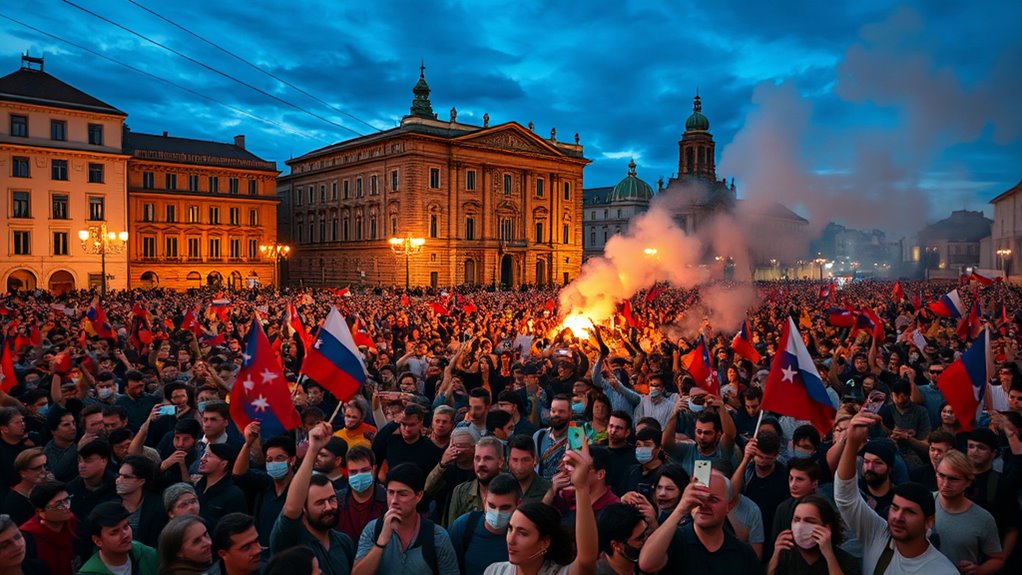

Georgia’s protests and political crisis stem from long-standing frustration with government corruption, disputes over judicial reforms, and fears of losing democratic freedoms. Citizens feel ignored and see the government as consolidating power, prompting widespread unrest. The protests highlight a struggle over Georgia’s future, with concerns about closer ties to Russia or China. Understanding the root causes and ongoing tensions will help you see the bigger picture behind this pivotal moment in Georgia’s democracy.
Key Takeaways
- The protests stem from long-standing frustrations with government corruption, judicial reforms, and threats to democratic institutions.
- Opposition parties accuse the government of election manipulation and dismiss reforms, escalating tensions.
- Citizens demand transparency, respect for democratic principles, and oppose increased authoritarian tendencies.
- Government responses have been dismissive or heavy-handed, fueling further unrest and uncertainty.
- The crisis highlights Georgia’s struggle over democracy, sovereignty, and future political stability.

Recent protests in Georgia have intensified a growing political crisis, revealing deep divisions within the country. You might have noticed how large crowds gathered in the capital, Tbilisi, chanting slogans and demanding change. These protests didn’t happen overnight; they stem from long-standing frustrations with government corruption, perceived threats to democratic institutions, and disputes over judicial reforms. As a participant or observer, you can see that many Georgians feel their voices are ignored, and tensions have reached a boiling point. The demonstrations have been fueled by concerns that the government is undermining the rule of law and trying to concentrate power, which leaves ordinary citizens feeling disenfranchised and frustrated.
Recent protests reveal Georgia’s deep divisions over corruption, judicial reforms, and democratic stability.
You may also understand that the protests have a broader political context. Georgia has experienced a series of government shifts over the past decade, with opposition parties accusing the ruling authorities of manipulating elections and limiting civil liberties. When the government proposed controversial reforms to the judiciary, many believed it was an attempt to weaken judicial independence and consolidate power further. These concerns sparked widespread outrage, prompting mass protests that gained momentum over weeks. You might have seen how the protesters demanded the government halt these reforms, restore transparency, and respect democratic principles. The government, however, has often responded with dismissiveness or heavy-handed tactics, escalating the tension. Additionally, the protests highlight the importance of maintaining democratic integrity in the face of political pressure.
It’s clear that these protests are more than just political disagreements; they reflect a deeper struggle over Georgia’s future direction. You can understand that many citizens are worried about losing their democratic freedoms and the possibility of Georgia drifting away from Western alliances toward closer ties with Russia or China. The protests symbolize a fight for democratic integrity, human rights, and national sovereignty. As the unrest continues, there’s a palpable sense of uncertainty about what lies ahead. You might feel the same unease, questioning whether the government will listen or if the protests will lead to meaningful change. The divide between the government and the protesters underscores a country at a crossroads, where the outcome will shape Georgia’s political landscape for years to come.
In essence, the protests serve as a stark reminder that political stability in Georgia remains fragile. You’re witnessing a nation grappling with its identity, democracy, and the power dynamics at play. The crisis underscores the urgent need for dialogue, reform, and a commitment to uphold democratic values. Whether the protests will lead to constructive change or deepen the crisis depends on how leaders respond and whether citizens continue to stand up for their rights.
Frequently Asked Questions
What Are the Main Demands of the Protesters?
You want to know the main demands of the protesters. They’re calling for electoral reforms to guarantee fair voting processes, the release of detained activists, and accountability for government officials. Many also want stronger checks on police power and the resignation of certain political leaders they see as corrupt or illegitimate. Their goal is to push for a more transparent, democratic system that reflects the people’s true will and rights.
How Has the Government Responded to the Protests?
The government has responded to the protests with a mix of concessions and crackdowns. They’ve announced some judicial reforms to address protesters’ concerns but also deployed police forces to disperse demonstrations, sometimes using force. You might see authorities engaging in dialogue at times, yet at others, they escalate tensions with arrests and restrictions. Overall, the response varies, reflecting the complex political landscape and the government’s attempt to manage widespread unrest.
What Role Does Foreign Influence Play in the Crisis?
You might not realize it, but foreign influence plays a significant role in Georgia’s crisis. Outside countries, often with vested interests, support certain groups or ideas, fueling tensions and complicating resolutions. This covert backing can sway public opinion or diplomatic actions, making the situation more volatile. By understanding these external influences, you can better grasp why the crisis persists and how international actors shape Georgia’s political landscape.
How Has the Crisis Impacted Georgia’s Economy?
The crisis has considerably hurt Georgia’s economy by causing instability and undermining investor confidence. You might notice decreased tourism and investment, leading to reduced job opportunities and business closures. The political unrest disrupts supply chains and hampers economic growth. As a result, you could experience higher prices, less consumer spending, and a slower overall economic recovery until stability returns and confidence is restored.
What Are the Long-Term Political Implications for Georgia?
You might see Georgia’s political landscape become more polarized, with increased activism and voter engagement. The crisis could lead to reforms aimed at election integrity and government accountability, but also deepen divisions if parties struggle to find common ground. Long-term, expect shifts in policy priorities, electoral processes, and possibly new political alliances. This could shape Georgia’s governance and influence its role in national politics for years to come.
Conclusion
As you witness Georgia’s protests unfold, remember you’re witnessing history in the making—an upheaval so profound it could reshape the nation for generations. The political crisis isn’t just a fleeting storm but a seismic shift that challenges the very fabric of democracy. Stay engaged, because your voice and awareness are the sparks that can ignite lasting change in this tumultuous moment. Together, you and your fellow citizens hold the power to steer Georgia toward a brighter future.