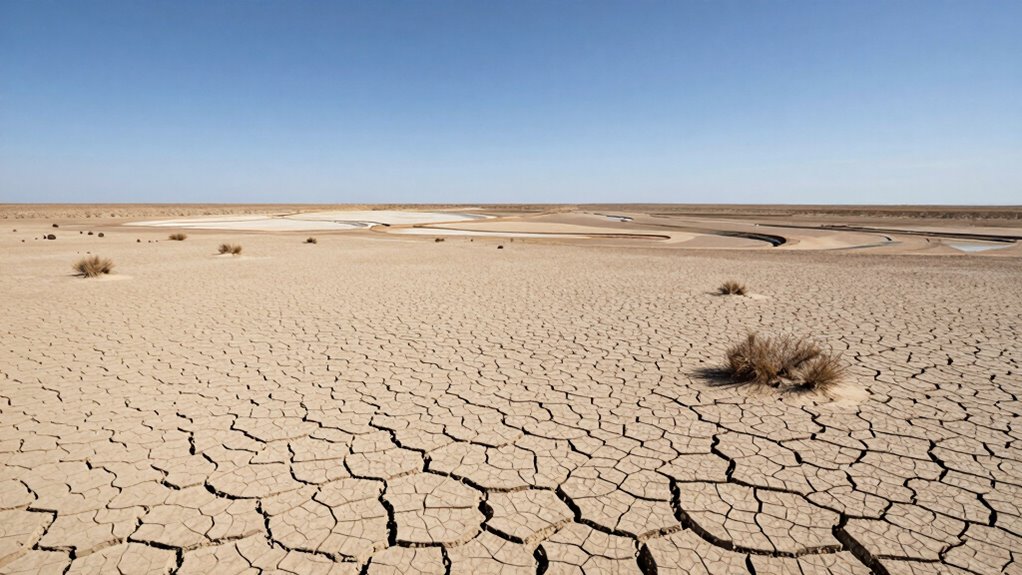

Mega-droughts can dramatically reshape regions by causing severe water shortages that impact your daily life and the environment. As water becomes scarcer, communities must adopt conservation measures, and agriculture shifts to drought-resistant crops and efficient irrigation. Urban areas may expand infrastructure like desalination and recycled wastewater systems, transforming landscapes and regional identities. These long-lasting changes alter economies and societal structures, guiding regions toward resilience. Exploring these shifts further reveals the complex solutions shaping our future.

Get the latest gadgets delivered free with Prime
- Fast, free delivery on millions of items
- Prime Video, Amazon Music and more included
- Member-only deals all year
Key Takeaways
- Persistent water shortages force regions to adopt new agricultural practices and crop choices, altering local economies.
- Regions experience landscape transformation through shrinking water bodies, impacting ecosystems and land use.
- Infrastructure investments in desalination, recycling, and deeper wells reshape regional water management systems.
- Societal shifts occur as communities adapt to arid environments, changing lifestyles and economic activities.
- Long-term water scarcity can redefine regional identities, land use, and political boundaries.
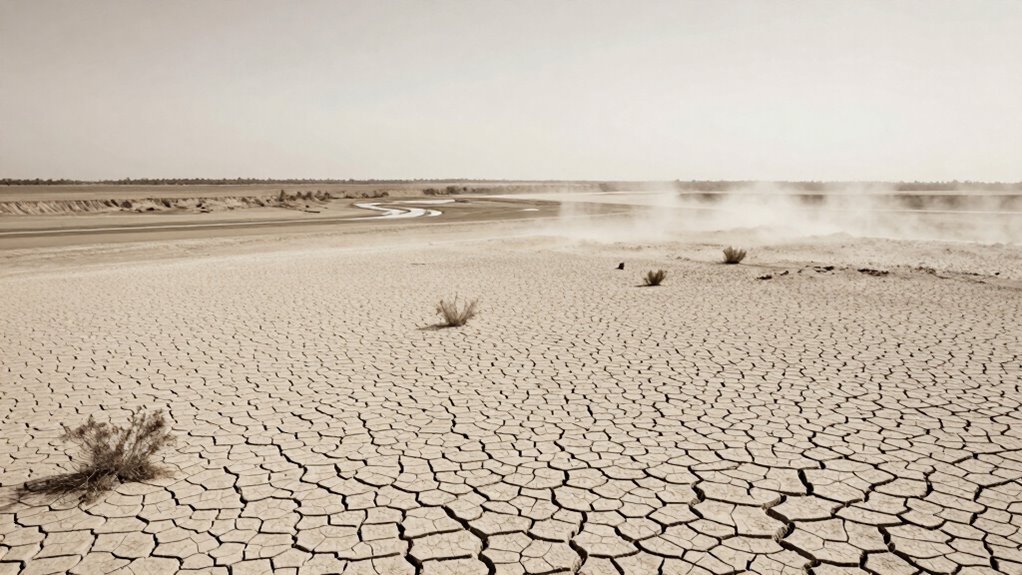
As climate patterns shift, mega-droughts are increasingly reshaping entire regions, forcing communities to adapt quickly to relentless water shortages. These prolonged dry spells threaten water supplies, disrupt ecosystems, and challenge traditional ways of life. In response, you’ll find that water conservation becomes a top priority. Everyone from farmers to city residents must reduce water use, implement efficient technologies, and rethink daily habits. Simple actions like fixing leaks, installing water-saving fixtures, and watering crops at ideal times can make significant differences. Governments and organizations often step in with policies and incentives to encourage conservation, but individual commitment remains essential. Without effective water management, the strain on already limited resources could lead to severe shortages and increased conflicts over water access.
Agricultural adaptation plays a key role in surviving mega-droughts. As water becomes scarcer, you’ll need to shift from traditional farming practices to more sustainable methods. This might mean adopting drought-resistant crops that require less water or changing planting schedules to align with limited water availability. Drip irrigation and soil moisture sensors can maximize water use, minimizing waste and ensuring crops get just enough hydration. Farmers who diversify their crops or incorporate native plants adapted to dry conditions also stand a better chance of maintaining productivity. These changes not only help preserve water but also safeguard food security in regions where agriculture is a primary livelihood. Over time, communities learn to balance water demands with environmental sustainability, which often leads to long-term shifts in land use and economic activities.
The landscape itself begins to transform as a result of these adaptations. Rivers and lakes shrink, creating new geographic boundaries and altering ecosystems. Urban areas may expand their water infrastructure, digging deeper wells or importing water from distant sources, but these solutions come with their own challenges. As natural water sources dwindle, you might see increased reliance on recycled wastewater or desalination, although these technologies demand significant investment. Over years, these adjustments reshape regional identities—what once flourished as lush farmland or vibrant cities may become more arid and sparsely populated. Communities that once depended on abundant water now learn to thrive with less, evolving their societal and economic structures to survive and, hopefully, prosper despite the persistent threat of mega-droughts.
As an affiliate, we earn on qualifying purchases.
Frequently Asked Questions
How Do Mega-Droughts Affect Local Wildlife Populations?
Mega-droughts severely impact local wildlife populations by forcing wildlife migration to find water and food, disrupting their natural habitats. You’ll see animals leaving traditional areas due to habitat loss, which can lead to increased competition and stress. Some species may not adapt quickly enough, risking population declines or extinction. As drought persists, the delicate balance of ecosystems breaks down, threatening the survival of many plants and animals that depend on consistent water sources.
What Are the Long-Term Economic Impacts on Affected Communities?
Imagine a once-bustling town slowly running dry, like a sponge squeezed too tight. Mega-droughts cause resource depletion, crippling local economies and forcing communities to rely on economic diversification. Long-term, you face declining agricultural yields, job losses, and decreased revenue, which can trap regions in persistent economic hardship. This downturn discourages investment and hampers recovery, making it crucial to develop resilient, diversified economies for future sustainability.
Can Mega-Droughts Lead to Geopolitical Conflicts?
Yes, mega-droughts can lead to geopolitical conflicts. When water becomes scarce, you might see disputes over water rights intensify, especially in shared basins. These tensions can escalate, causing diplomatic strains between nations or regions. As communities struggle to access essential resources, you could witness increased negotiations, or even confrontations, over water, making water security a critical issue that influences international relations during such prolonged droughts.
How Do Mega-Droughts Influence Agriculture and Food Security?
Mega-droughts choke the lifeblood from agriculture, turning fertile lands into cracked, barren earth. You’ll find water conservation becomes your lifeline, helping stretch precious supplies, while crop diversification acts as a resilient shield against climate unpredictability. These strategies allow you to adapt, safeguarding food security even when water sources dwindle. By embracing innovative practices, you can weather the storm, ensuring sustenance for communities despite the relentless droughts.
What Measures Can Communities Take to Adapt to Prolonged Droughts?
To adapt to prolonged droughts, you should prioritize water conservation by fixing leaks and using efficient irrigation techniques. Consider switching to drought-resistant crops that require less water and are better suited to dry conditions. Additionally, implementing rainwater harvesting systems and promoting community awareness about sustainable water use can help. These measures guarantee your community remains resilient, reduces water stress, and sustains agriculture despite ongoing drought challenges.
drip irrigation system for garden
As an affiliate, we earn on qualifying purchases.
As an affiliate, we earn on qualifying purchases.
Conclusion
As you witness these changes, it’s clear that mega-droughts aren’t just about dry spells—they’re reshaping lives and landscapes in unexpected ways. Coincidentally, just as water becomes scarcer, new opportunities for resilience and innovation emerge. This delicate balance reminds you that nature’s challenges often come hand in hand with chances for renewal. If you stay aware and adaptable, you can help forge a future where communities not only survive but thrive amid the shifting climate.
soil moisture sensors for agriculture
As an affiliate, we earn on qualifying purchases.
As an affiliate, we earn on qualifying purchases.
As an affiliate, we earn on qualifying purchases.
Halloween Picks
halloween
As an affiliate, we earn on qualifying purchases.