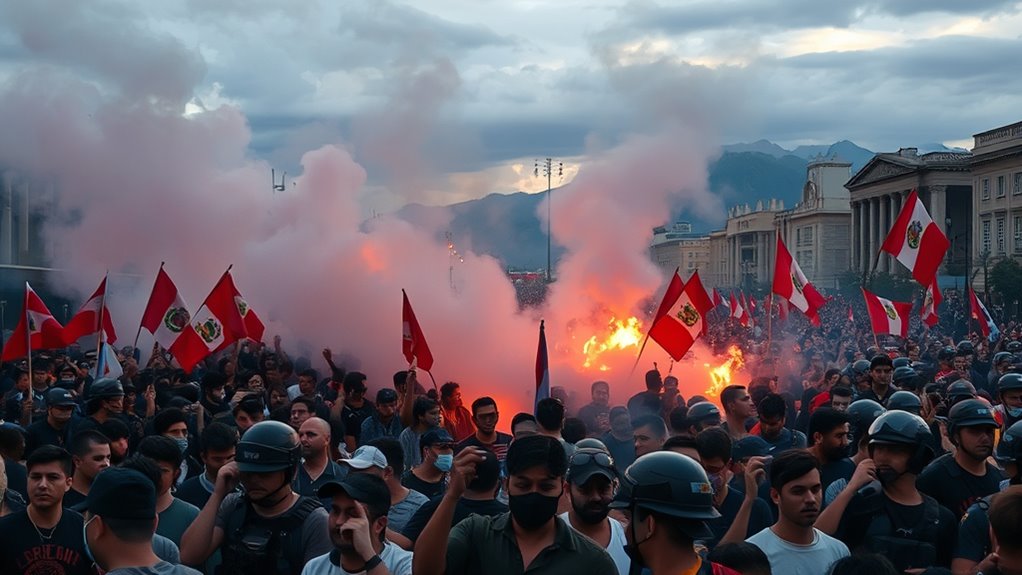

You see that the protests in Peru are driven by popular anger over corruption, economic hardship, and political instability that erode trust in leadership. Citizens demand accountability, systemic reforms, and better social justice. These demonstrations also threaten economic stability and can lead to further unrest if ignored. Understanding these causes reveals how deep-rooted issues fuel the unrest and what might happen next as citizens push for change. Keep exploring to learn more about this ongoing situation.
Key Takeaways
- Widespread protests stem from political discontent, corruption scandals, economic struggles, and unmet promises by government officials.
- Deep-rooted issues include institutional corruption, social inequality, indigenous rights, and environmental concerns.
- Citizens demand government accountability, transparency, and systemic reforms through mass demonstrations.
- Consequences include potential policy shifts, economic disruptions, heightened security, and increased political instability.
- The protests highlight the need for addressing corruption, inequality, and fostering citizen participation for lasting change.
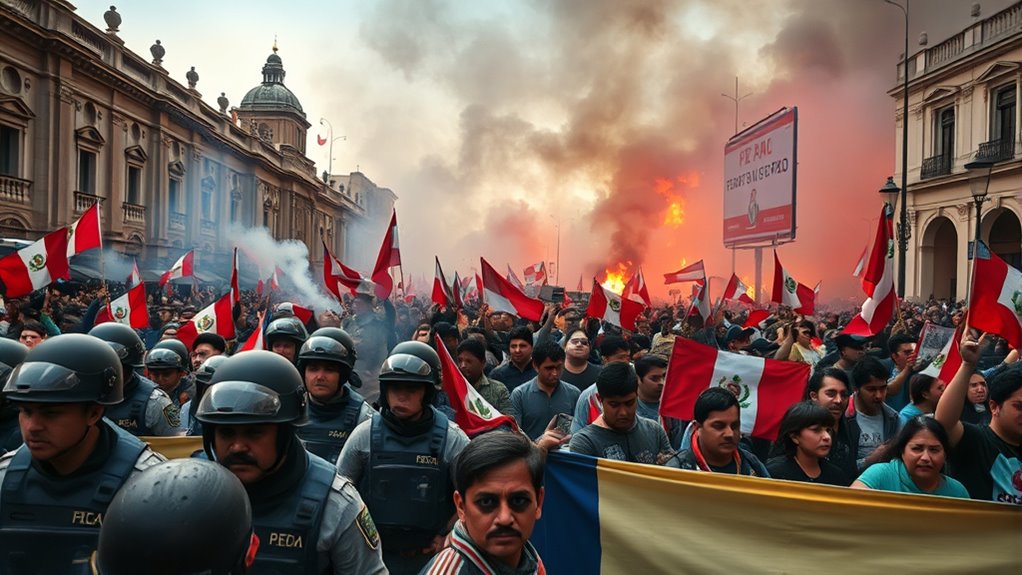
Recent weeks have seen widespread anti-government protests erupt across Peru, as citizens voice their discontent with political leadership and demand change. You might feel frustrated by the ongoing corruption scandals, economic struggles, and a perceived lack of accountability from those in power. These protests are your way of showing that you’re tired of promises that go unfulfilled and leadership that seems disconnected from the needs of everyday Peruvians. Many of you have taken to the streets, calling for the resignation of officials, reforms in governance, and a more transparent political system. The anger is fueled by years of political instability, with frequent scandals and leadership changes eroding trust in institutions. You’re not alone in feeling that the current political landscape doesn’t reflect your interests or address your concerns about poverty, inequality, and unemployment.
The causes of these protests are complex, rooted in deep-seated issues that have accumulated over decades. You’ve seen how corruption has infiltrated government agencies, siphoning off resources meant for public services like healthcare, education, and infrastructure. This corruption breeds a sense of betrayal among citizens, who feel their tax money is being wasted or stolen. Economic hardships have intensified the unrest, especially as inflation rises and job opportunities shrink. You may have experienced firsthand the struggles of trying to make ends meet, which fuels your anger and determination for change. Additionally, the political instability that has marked recent years—with presidents ousted, impeached, or fleeing—leaves many feeling insecure about the country’s future. You might also be concerned about the government’s response to social issues, including indigenous rights, environmental concerns, and rural development, which often seem ignored or inadequately addressed. Moreover, the widespread public discontent reflects a demand for systemic reform to rebuild trust and ensure accountability.
The consequences of these protests extend beyond immediate political upheaval. You could see a shift in public discourse, with more people demanding accountability and reforms. These protests might pressure leaders to reconsider policies, crack down on corruption, or accelerate reforms to better serve the population. However, there’s also a risk of violence, economic disruption, and further polarization if dialogue breaks down. You may worry about how ongoing unrest affects your daily life—business closures, travel restrictions, or increased security measures can impact your routine. Yet, these protests also serve as a wake-up call, highlighting the urgent need for meaningful change. They remind you that citizen voices matter and that collective action can challenge entrenched power structures. Ultimately, what happens next depends on whether leaders listen to the demands or dismiss them, but your participation signifies a desire for a more just and accountable Peru.
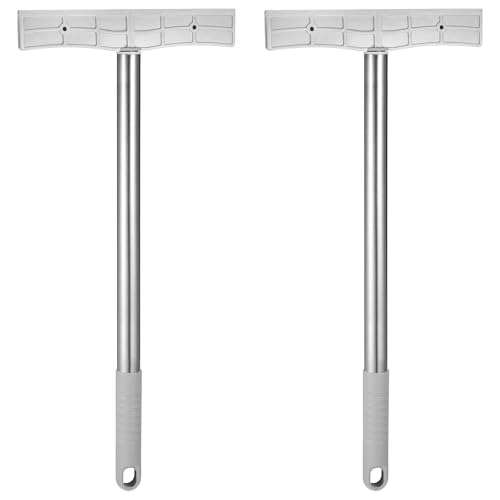
Lurrose Portable Sign Holder Rod 2-Pack for Welcome Signs Protest Rally Parade Voting Banner Display Stick 17In
Versatile Signage Holder: This signboard holder rod is designed for multiple uses including election campaigns, protests, parades, sports…
As an affiliate, we earn on qualifying purchases.
As an affiliate, we earn on qualifying purchases.
Frequently Asked Questions
How Long Have the Protests Been Ongoing?
The protests have been ongoing for several weeks now, starting in early December and continuing into late January. You might notice that the demonstrations persist as citizens demand political change and resist government actions they see as unjust. During this time, you could see widespread marches, strikes, and clashes with authorities. The duration reflects the deep frustration and urgency felt by many Peruvians seeking reforms and accountability from their leaders.
What Specific Government Policies Sparked the Protests?
You see, it’s the sudden rise in fuel prices, the controversial judicial reforms, and the cuts to social programs that ignited your protests. These policies feel like a slap in the face, undermining your rights and worsening inequality. You rally, chant, and march because these decisions threaten your livelihood, your voice, and your future. Each act of resistance becomes a powerful symbol of your demand for change and justice.
Are There Any Major Political Figures Involved?
You’ll see that several major political figures are involved in the protests, including opposition leaders and activists who challenge the current administration’s policies. These figures rally support through speeches and public demonstrations, fueling the unrest. Their involvement highlights the deep political divisions in the country, as they push for reforms or criticize government actions. Their participation amplifies the protests, making them more widespread and impactful across Peru.
How Has the International Community Responded?
The world’s eyes are watching, like a lighthouse guiding the way. The international community responds with concern, calling for peace and dialogue. Countries and organizations send aid, condemn violence, and urge respect for human rights. You see global leaders emphasizing diplomacy, symbolizing unity and hope. Their messages act as beacons, inspiring Peru to find peaceful solutions while reminding everyone that justice and stability must prevail.
What Are the Protesters’ Main Demands?
You want to know what the protesters are demanding. They primarily call for President Castillo’s resignation, an overhaul of the political system, and fairer access to justice. Many also want the dissolution of Congress, new elections, and measures to combat corruption. These demands reflect their frustration with government corruption, inequality, and lack of transparency, showing their desire for significant political change and accountability in Peru.

SHvivik Emergency Whistle, 2PCS Premium Safety Survival Whistles with Lanyard Keychain, High Pitch Double Tubes for Outdoor Hiking Camping Hunting Fishing Boating
Super Loud: double-tube whistle is extremely loud and easy to blow. Sound power provides up to 120 decibels,…
As an affiliate, we earn on qualifying purchases.
As an affiliate, we earn on qualifying purchases.
Conclusion
You witness the protests, feel the voices demanding change, and see the call for justice rise. You understand the causes rooted in inequality, corruption, and discontent, and recognize the consequences shaping the nation’s future. You realize that change begins with awareness, progress with action, and hope with resilience. In these protests, you find a reflection of your own voice, a reminder that when people unite for justice, they forge a path toward a better tomorrow.

NNPCBT 100PCS 3 Ply Black Disposable Face Mask Filter Protection Face Masks
1.3 layers face mask -It's made of 3 layers fabric.
As an affiliate, we earn on qualifying purchases.
As an affiliate, we earn on qualifying purchases.

Mini First Aid Kit – 150 Piece Small Waterproof Hard Shell Medical Kit for Home, Car, Travel, Camping, Truck, Hiking, Sports, Office, Vehicle & Outdoor Emergencies- Small First Aid Medical Kit (Red)
ESSENTIALS FOR EMERGENCY: Everything you need is in this first aid kit! Our kit includes over 150 professional-grade…
As an affiliate, we earn on qualifying purchases.
As an affiliate, we earn on qualifying purchases.