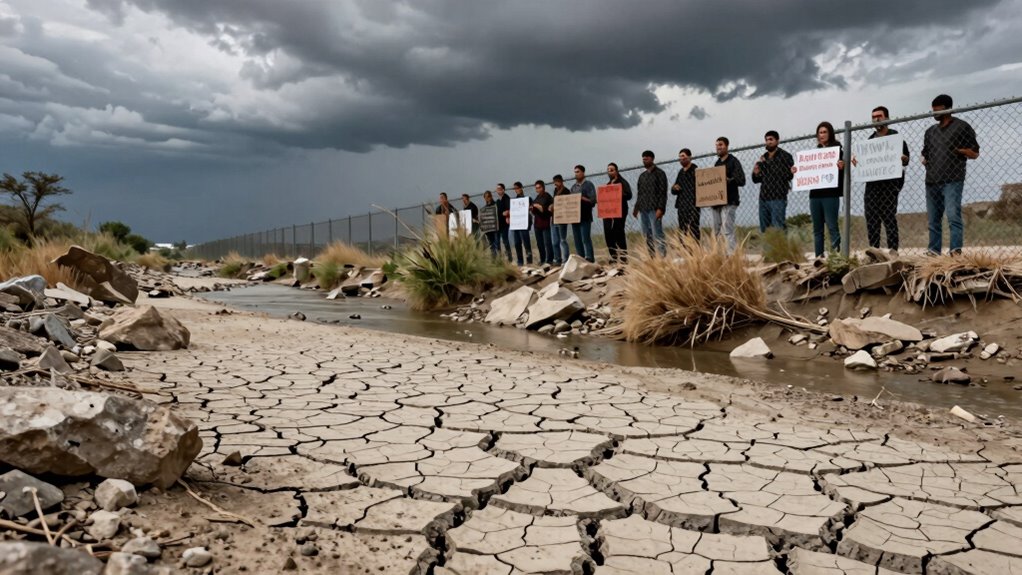

As water scarcity worsens and demands grow from agriculture, industry, and populations, you’ll see increasing political pressure over water rights worldwide. Governments and local authorities face tough decisions on resource allocation, often leading to legal battles and outdated laws that cause delays. These disputes reflect broader conflicts about fairness, sustainability, and environmental protection. If you want to understand how these tensions shape water policies and impact communities, you’ll find more insightful details ahead.
Key Takeaways
- Growing population, agriculture, and industry increase demand, intensifying political disputes over water allocation.
- Outdated legal frameworks cause prolonged disputes, heightening political tensions over water rights.
- Water disputes often become legal battles, reflecting broader conflicts over fairness and resource sustainability.
- Politicized decisions on water access impact legislation, international relations, and infrastructure priorities.
- Drought-prone regions experience heightened political pressure as water scarcity worsens.
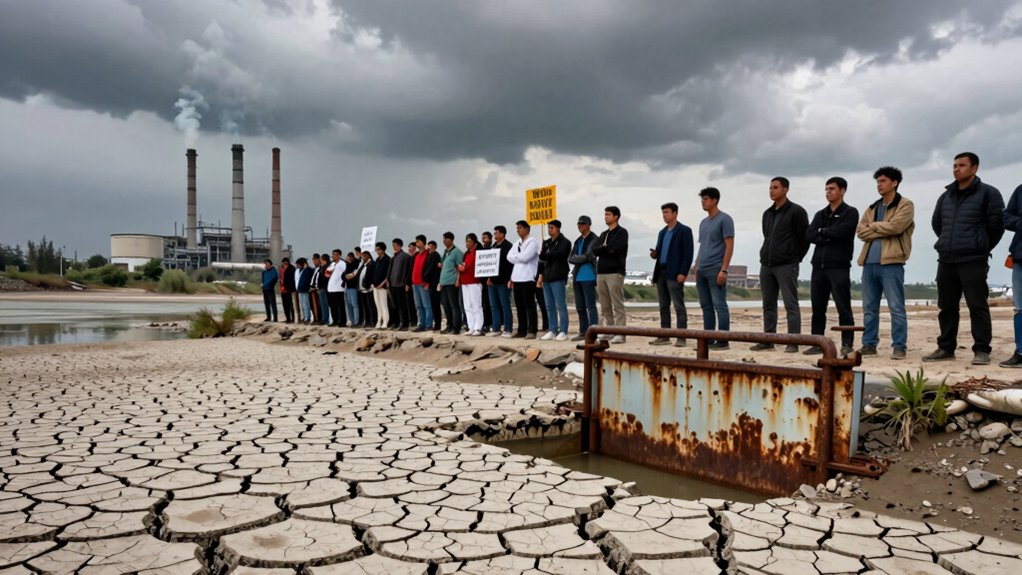
Water rights have become a focal point of political pressure, as competing interests clash over access and control of this essential resource. As demands for water increase due to population growth, agriculture, and industry, governments and local authorities find themselves caught in a complex web of water allocation issues. You’re likely aware that water isn’t just a commodity but a critical element for survival and economic stability. When different groups vie for limited supplies, conflicts often escalate into legal disputes, with courts becoming battlegrounds for determining who has the right to what share of this precious resource. These disputes can last for years, delaying projects and creating uncertainty that hampers development and conservation efforts.
You might notice that the politics surrounding water rights are deeply rooted in historical agreements and legislation that often fail to keep pace with current needs. Governments are under pressure to balance the demands of farmers, urban residents, industries, and environmental conservation. Each stakeholder claims a fair share, but the legal frameworks governing water allocation are frequently outdated or ambiguous. This ambiguity fuels legal disputes, as parties challenge each other’s rights, seeking judicial intervention to clarify who controls the water and under what conditions. These disputes are not just about legal rulings; they reflect broader tensions about resource fairness, economic priorities, and environmental sustainability. Additionally, water management systems often lack the flexibility needed to adapt to changing circumstances, further complicating resolution efforts. Recognizing the importance of efficient resource management can help address some of these challenges and promote sustainable use. Moreover, the lack of modern infrastructure exacerbates vulnerabilities in managing water distribution effectively, highlighting the need for technological advancements in water infrastructure.
The intensifying political pressure pushes policymakers to revisit water rights laws and regulations regularly. You may see debates over water rights becoming highly politicized, especially in drought-prone regions where water scarcity is a growing concern. Politicians often face tough choices: prioritize economic growth, protect ecological systems, or ensure equitable access for all. These decisions are rarely straightforward, leading to fierce negotiations and often, legal battles. As water becomes more contested, you’ll observe that legal disputes over water rights are increasingly common, with courts becoming the arbiters of resource distribution. These battles can influence legislation, policy directions, and even international relations if transboundary water sources are involved. Recognizing the vulnerabilities in device and network security, such as in home security cameras or Wi-Fi networks, is crucial as these disputes often involve critical infrastructure and communication systems.
water filtration system for home
As an affiliate, we earn on qualifying purchases.
As an affiliate, we earn on qualifying purchases.
Frequently Asked Questions
How Do Water Rights Impact Indigenous Communities?
Water rights directly impact indigenous communities by threatening their cultural sovereignty and traditional practices. When access to water is restricted or diverted, it hampers their ability to maintain traditional practices like fishing, farming, and ceremonies. You see, water is crucial for preserving their cultural identity. Protecting water rights ensures these communities can continue practicing their traditions and uphold their sovereignty, essential for their well-being and cultural survival.
What Legal Challenges Are Common in Water Rights Disputes?
Water rights battles often resemble a tug-of-war, with legal disputes over water allocation pulling communities apart. Common challenges include proving prior rights, maneuvering conflicting laws, and addressing environmental concerns. You might face courts, regulatory agencies, or negotiations that test your patience and resolve. These legal hurdles can feel like a storm on the horizon, threatening your access to essential water resources and amplifying tensions among stakeholders.
How Does Climate Change Influence Water Rights Conflicts?
Climate change worsens water rights conflicts by causing unpredictable droughts and changing water availability. You need to focus on climate adaptation strategies to address these issues and guarantee fair water distribution. Drought management becomes critical, forcing communities and policymakers to renegotiate rights and allocate resources more carefully. These shifts increase tensions, making it essential for stakeholders to collaborate and develop sustainable solutions in response to evolving climate impacts.
Are There International Laws Governing Transboundary Water Rights?
Imagine the river as a shared thread weaving nations together; yes, international treaties govern transboundary water rights. These agreements aim to balance water sovereignty, ensuring fair access while respecting sovereignty. They set frameworks for cooperation, dispute resolution, and sustainable use. While not always perfect, they serve as essential tools in managing water resources across borders, helping nations work together instead of fighting over a finite, precious resource.
How Do Urban Areas Compete for Limited Water Resources?
You see urban areas compete for limited water resources through management of urban infrastructure, like pipelines and reservoirs, to maximize efficiency. As population growth accelerates, demand skyrockets, prompting cities to implement conservation measures, prioritize essential uses, and develop alternative sources like recycled water. This competition often leads to conflicts, requiring governments to balance development needs with sustainable water use, ensuring long-term access despite increasing scarcity.
As an affiliate, we earn on qualifying purchases.
Conclusion
As water rights become increasingly politicized, you’ll find that nearly 80% of Western states face ongoing disputes over water access. This rising tension means you’ll want to stay informed about policies affecting water allocation, as these decisions could impact your community and future generations. Understanding the political pressures around water rights helps you grasp the importance of fair resource management. Staying engaged now can help guarantee sustainable solutions for everyone down the line.
irrigation water management tools
As an affiliate, we earn on qualifying purchases.
As an affiliate, we earn on qualifying purchases.
As an affiliate, we earn on qualifying purchases.