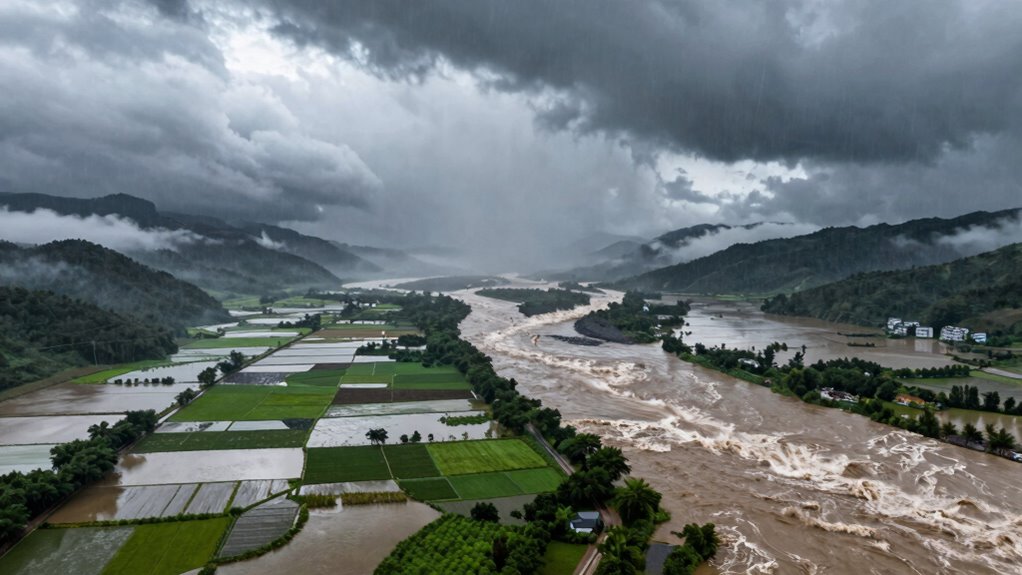

Atmospheric rivers turn into major flooding events when they carry large volumes of moisture across the land, releasing intense rainfall upon landfall. As global temperatures rise, these rivers hold even more water, increasing the risk of severe floods. When the moisture hits saturated ground or comes down rapidly, rivers swell and overwhelm local areas. If you want to understand how climate change worsens these floods and what can be done about it, there’s more to explore.

Get the latest gadgets delivered free with Prime
- Fast, free delivery on millions of items
- Prime Video, Amazon Music and more included
- Member-only deals all year
Key Takeaways
- Atmospheric rivers carry large amounts of moisture that release suddenly upon landfall, causing heavy rainfall.
- Climate change increases atmospheric moisture, intensifying rainfall and flood risks from atmospheric rivers.
- Heavy rainfall from atmospheric rivers leads to river swelling and rapid runoff, resulting in flooding.
- Saturated soil reduces absorption, amplifying surface runoff and flood severity during atmospheric river events.
- Increased frequency and intensity of atmospheric rivers due to climate change escalate major flooding events.
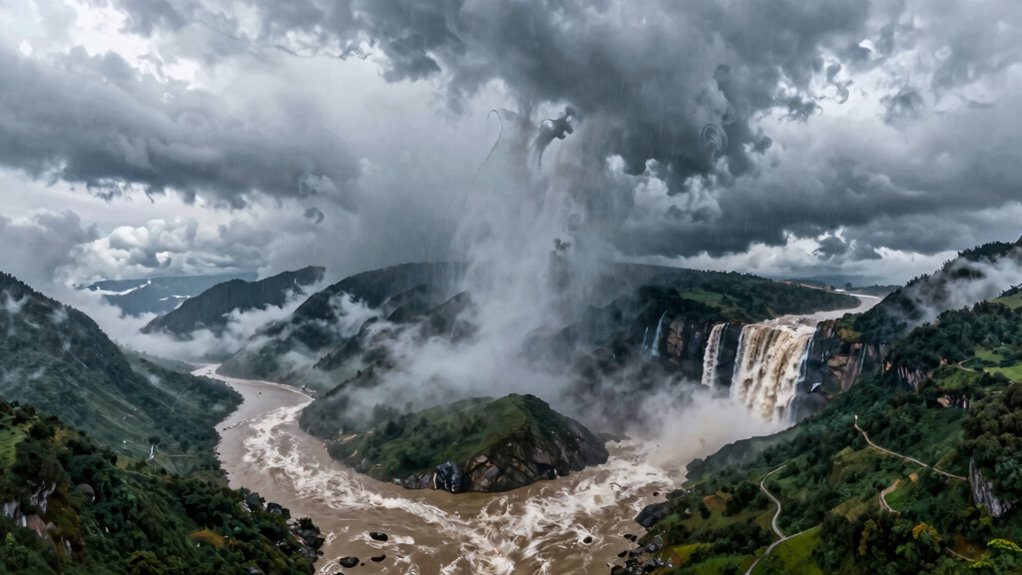
Have you ever wondered how massive stretches of water suddenly pour down from the sky, causing floods and widespread damage? This phenomenon often begins with atmospheric rivers—long, narrow bands of moisture in the atmosphere that transport enormous amounts of water vapor across vast distances. When these atmospheric rivers make landfall, they release their moisture in a concentrated burst, leading to heavy rainfall that can overwhelm local drainage systems. This process directly ties into the water cycle, which continuously moves water between the atmosphere, land, and oceans. When the water cycle becomes disrupted or intensified by certain climate impacts, atmospheric rivers can turn into major flooding events. Additionally, the increased capacity of the atmosphere to hold moisture due to climate change amplifies the potential for these events to cause severe flooding.
Climate impact plays a crucial role in how atmospheric rivers behave. As global temperatures rise, the atmosphere can hold more moisture—about 7% more water vapor for every degree Celsius increase in temperature. This means that when atmospheric rivers develop, they carry more water vapor than they would have historically. Consequently, the resulting rainfall during landfall is often more intense and prolonged, increasing the risk of flooding. Changes in climate patterns also influence the frequency and intensity of atmospheric rivers, making some regions more susceptible to these destructive events. These shifts in the water cycle, driven by climate impact, cause atmospheric rivers to deliver larger quantities of moisture over shorter periods, overwhelming rivers, streams, and urban drainage systems. Understanding the water cycle helps clarify how these processes are interconnected and how climate change can intensify them. The amplification of moisture in the atmosphere due to warming is a key factor in the increased severity of these events. Recognizing these impacts underscores the importance of studying climate change to better predict and prepare for future flooding risks.
Once the moisture from an atmospheric river is released during landfall, it can cause rivers to swell and flood surrounding areas. When the ground becomes saturated quickly, runoff increases, and floodwaters spread rapidly, damaging homes, infrastructure, and ecosystems. The severity of these floods depends on several factors: the amount of moisture carried by the atmospheric river, local topography, and existing land use. Urban areas, with their concrete and asphalt surfaces, are especially vulnerable because they limit water absorption, causing runoff to surge into streets and waterways. The aftermath of such flooding can be devastating, leading to property destruction, displacement, and long-term environmental impacts. Understanding how climate impact influences atmospheric rivers helps highlight the importance of adaptive flood management strategies in vulnerable regions.
As an affiliate, we earn on qualifying purchases.
Frequently Asked Questions
How Do Atmospheric Rivers Form Over Oceans and Land?
You see atmospheric rivers form when warm air over the ocean evaporates moisture, which then travels long distances. As this moist air moves over land, it cools and rises, leading to cloud condensation. This process creates narrow, intense streams of moisture that can bring heavy rainfall. The continuous supply of moisture from ocean evaporation fuels these rivers, making them powerful and capable of causing significant flooding when they reach land.
What Role Does Climate Change Play in Atmospheric River Intensity?
Climate change acts like a stormy artist, intensifying atmospheric rivers with its greenhouse influence. As greenhouse gases warm the atmosphere, climate feedbacks boost the moisture-holding capacity of these rivers, turning them into powerful, relentless streams. This increased intensity leads to more extreme flooding events, making the atmospheric rivers not just water carriers but fierce agents of destruction, driven by a warming world that fuels their relentless surge.
Can Atmospheric Rivers Occur Outside the Pacific Northwest?
Yes, atmospheric rivers can occur outside the Pacific Northwest. They are a global occurrence, forming across various regions worldwide. However, regional variability influences their frequency and intensity; some areas experience them more often or with greater impact than others. You might see atmospheric rivers bringing heavy rainfall to parts of Europe, South America, or Asia, depending on climate patterns and geographic factors, making them a widespread phenomenon beyond just the Pacific Northwest.
How Do Weather Forecasting Models Predict Atmospheric River Development?
You rely on weather pattern analysis and satellite detection to predict atmospheric river development. Meteorologists examine atmospheric conditions, such as moisture levels and wind patterns, to identify potential rivers. Satellite images provide real-time data, showing moisture streams and cloud formations. Combining these tools helps forecast models anticipate when atmospheric rivers will form or intensify, enabling timely warnings and preparations for possible flooding.
What Are the Long-Term Impacts of Repeated Flooding From Atmospheric Rivers?
You’ll find that repeated flooding from atmospheric rivers can wear down floodplain management efforts and threaten ecosystem resilience. Over time, these floods may lead to soil erosion, habitat loss, and weakened natural barriers. As the landscape struggles to recover, communities face increased risks and costs. It’s a reminder that you must adapt and strengthen flood defenses now, or suffer the long-term consequences of nature’s relentless push.
waterproof flood protection sandbags
As an affiliate, we earn on qualifying purchases.
As an affiliate, we earn on qualifying purchases.
Conclusion
Think of atmospheric rivers as mighty waterways in the sky, carrying immense amounts of moisture. When they hit land, they release their floodwaters like a bursting dam. Staying informed and prepared helps you ride out the storm, much like a skilled sailor steering turbulent seas. Remember, understanding these atmospheric rivers is your anchor in weathering the flood — turning a potential disaster into a manageable tide. Stay vigilant, and you’ll weather the storm when it comes.
As an affiliate, we earn on qualifying purchases.
As an affiliate, we earn on qualifying purchases.
Fall Picks
fall essentials
As an affiliate, we earn on qualifying purchases.