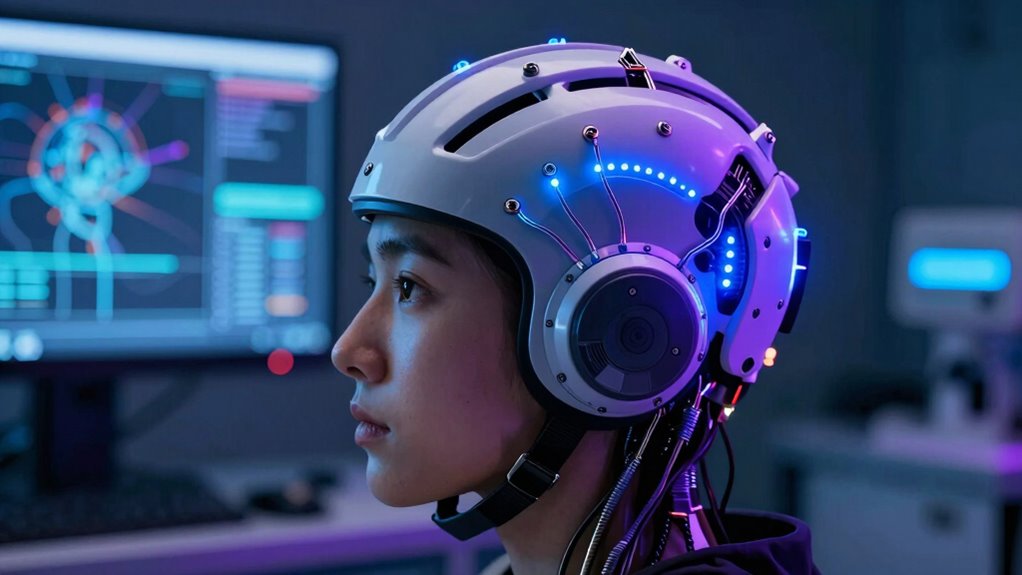

The next big leap in brain-computer interfaces will make your interactions with technology more seamless and precise. Advances will allow your brain signals to be decoded faster and more accurately, enabling direct control of devices and machines with your thoughts. Smart algorithms and machine learning will adapt to your unique neural patterns, making the experience more personalized and reliable. If you keep exploring, you’ll discover how these innovations could transform your everyday life and open new technological frontiers.

Get the latest gadgets delivered free with Prime
- Fast, free delivery on millions of items
- Prime Video, Amazon Music and more included
- Member-only deals all year
Key Takeaways
- Integration of AI and machine learning for more accurate, adaptive neural signal decoding.
- Development of non-invasive, high-resolution BCIs for everyday consumer use.
- Enhanced personalization through systems that learn individual neural patterns over time.
- Improved security and privacy measures to protect sensitive neural data.
- Ethical frameworks addressing consent, data ownership, and potential mind influence risks.
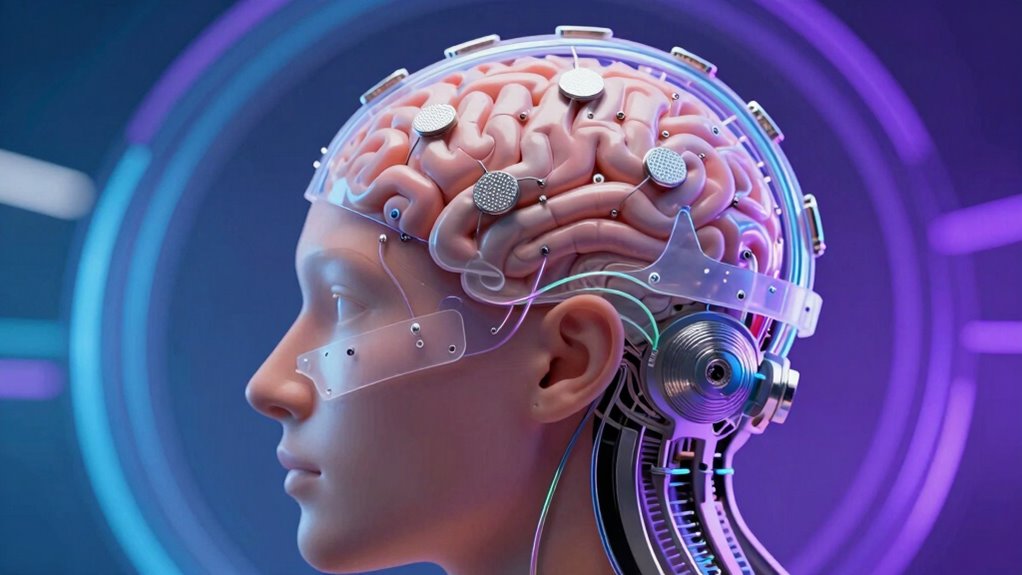
Brain-Computer Interfaces (BCIs) are revolutionary systems that enable direct communication between your brain and external devices. They work by capturing neural signals, which are the electrical impulses your brain produces when you think, feel, or intend to move. These signals are then processed through sophisticated neural signal processing algorithms, translating your thoughts into commands that computers or machines can understand. These algorithms often utilize machine learning techniques to improve accuracy over time. This technology opens up incredible possibilities, from restoring mobility for paralyzed individuals to controlling smart home devices with just your mind. But as BCIs become more advanced, they also bring about complex ethical considerations that you need to be aware of.
Neural signal processing is at the heart of making BCIs effective. It involves filtering out noise, deciphering the specific patterns associated with different thoughts or actions, and converting these signals into usable commands. This process requires cutting-edge algorithms and machine learning techniques, which continuously improve as the technology evolves. The better the neural signal processing, the more accurate and responsive your BCI will be, making interactions feel more natural and less frustrating. As these systems get smarter, they can even adapt to your individual neural patterns, providing a more personalized experience. However, the reliance on neural data also raises questions about privacy and security. The data captured by BCIs can reveal sensitive information about your mental state, intentions, or even subconscious thoughts, which could be exploited if not properly protected. neural data is a crucial component that needs to be safeguarded to prevent misuse. Additionally, advancements in neural signal processing are essential for making BCIs more reliable and widespread.
This leads to significant ethical considerations. As BCIs become more integrated into daily life, issues such as consent, data ownership, and the potential for manipulation come to the forefront. You need to think about who has access to your neural data and how it might be used. Will it be shared with third parties, like tech companies or government agencies? Could it be used for mind control or influence? These questions highlight the importance of establishing clear regulations and safeguards to protect your rights and privacy. Developers and policymakers must work together to ensure that BCI technology is used ethically, balancing innovation with respect for individual autonomy. As you explore the future of BCIs, it’s vital to stay informed about these ethical issues and advocate for responsible development that prioritizes your safety and privacy. Ultimately, while the next big leap in BCI technology promises incredible benefits, it also demands careful consideration of the moral and ethical implications involved.
non-invasive brain-computer interface headset
As an affiliate, we earn on qualifying purchases.
As an affiliate, we earn on qualifying purchases.
Frequently Asked Questions
How Secure Are Brain-Computer Interfaces From Hacking or Unauthorized Access?
Brain-computer interfaces’ security depends on strong data encryption and privacy safeguards. While they aim to protect your neural data, vulnerabilities still exist, making hacking a concern. Developers continually improve security measures, but you should stay informed and cautious. Implementing robust encryption protocols and privacy safeguards is essential to minimize risks, ensuring your sensitive information remains secure from unauthorized access.
What Are the Long-Term Health Effects of Using Brain Implants?
Sure, wearing tiny brain implants might make you feel like a sci-fi hero, but long-term health effects are still a mystery. You could potentially disrupt your neural plasticity, leading to unpredictable changes in mental health. Imagine trading your peace of mind for a little extra brain power, only to find out years later that your neural pathways are permanently rewired or damaged. It’s a gamble with your mental health’s future.
Can Brain-Computer Interfaces Enhance Cognitive Abilities Beyond Normal Levels?
Yes, brain-computer interfaces can boost your cognitive abilities through neural enhancement and cognitive augmentation. By directly connecting your brain to advanced technology, you could improve memory, problem-solving, and learning speed beyond normal levels. These innovations may help you think faster, process information more efficiently, and even develop new skills rapidly. However, ethical considerations and long-term effects are still being studied before widespread adoption.
How Affordable Will Future Brain-Computer Interface Technologies Become?
Imagine a world where brain-computer interfaces are as common as smartphones in the 2000s. Thanks to ongoing cost reductions and accessibility improvements, future BCI tech will become increasingly affordable. As manufacturing scales up and technology advances, prices will drop, making them accessible to more people. You’ll likely see these devices integrated into daily life, helping everyone access new potentials without breaking the bank.
What Ethical Issues Are Associated With Mind-Reading Capabilities?
You should be aware that mind-reading capabilities raise serious ethical issues like privacy concerns, as your thoughts could potentially be accessed without permission. Consent issues also come into play, making it essential to guarantee you’re fully aware and agreeable before your brain data is used. As these technologies advance, safeguarding your mental autonomy becomes indispensable to prevent misuse and protect your personal mental space.
As an affiliate, we earn on qualifying purchases.
Conclusion
As you plunge into the future of brain-computer interfaces, remember that just like the first flight of the Wright brothers changed everything, these innovations could revolutionize how you interact with technology. With rapid progress, what now seems like science fiction might soon be as commonplace as a smartphone. So, stay curious and ready—this next leap promises to blur the line between mind and machine in ways even a Jedi would envy. The future’s calling; are you ready to answer?
As an affiliate, we earn on qualifying purchases.
brain wave control smart home devices
As an affiliate, we earn on qualifying purchases.
As an affiliate, we earn on qualifying purchases.
Halloween Picks
halloween
As an affiliate, we earn on qualifying purchases.