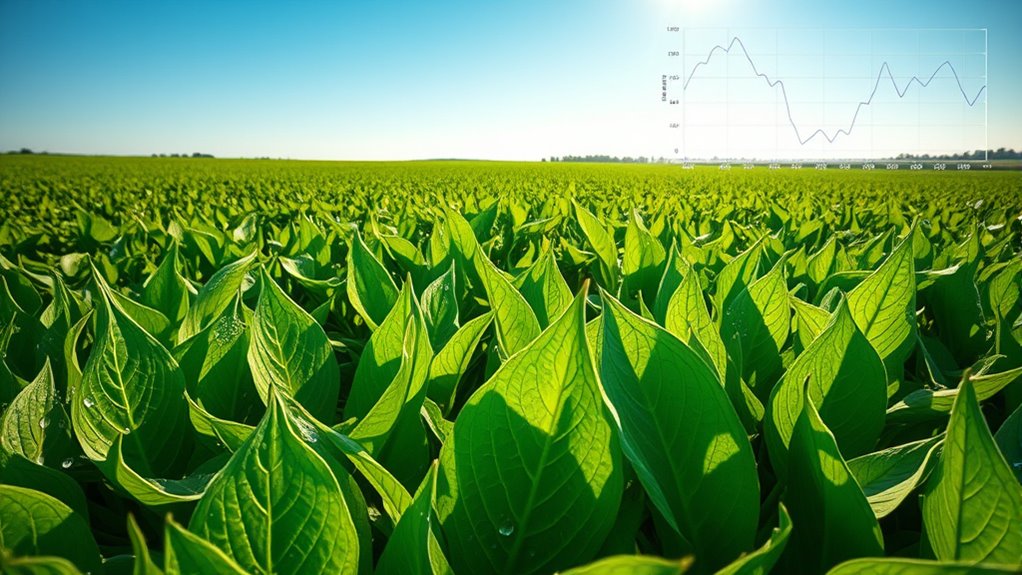

Combining genomic data with climate modeling helps you develop crops that better withstand environmental stresses like drought, heat, and floods. By identifying stress-tolerance genes and predicting future climate scenarios, you can select or engineer resilient varieties more efficiently. This approach speeds up crop breeding and enhances food security. If you want to explore how this innovative synergy shapes sustainable agriculture and safeguards future food supplies, there’s more to discover ahead.
Key Takeaways
- Integrating genomic data with climate models enables prediction of crop performance under future environmental stresses.
- Genomic insights identify genes linked to stress tolerance, guiding development of resilient crop varieties.
- Climate modeling forecasts future conditions, allowing proactive breeding and genetic engineering strategies.
- Databases connect genetic markers with climate data to tailor crop recommendations for changing environments.
- Combining genomics and climate science enhances sustainable agriculture and global food security amid climate change.
As climate change accelerates and environmental stresses become more unpredictable, developing crops that can withstand harsh conditions is essential for global food security. You need crops that thrive despite droughts, floods, extreme temperatures, and soil degradation. To achieve this, scientists are increasingly turning to the integration of genomic data with climate modeling. This approach allows you to identify and cultivate varieties better suited to future environmental challenges, making farming more resilient and sustainable.
Genomic data provides detailed insights into the genetic makeup of different crop varieties. By analyzing this information, you can pinpoint specific genes associated with stress tolerance, such as drought resistance or heat adaptability. This genetic understanding enables you to select the most promising traits and accelerate breeding programs. Instead of relying solely on traditional methods, you can now develop crops with targeted improvements, reducing the trial-and-error process and shortening development cycles.
Genomic insights identify stress-tolerance genes, speeding up breeding and improving crop resilience.
Climate modeling complements genomic insights by simulating future environmental conditions based on current climate trends. When you combine these models with genetic data, you gain a powerful tool to predict how different crop varieties will perform under changing conditions. This predictive capability means you can proactively select or engineer crops that are likely to succeed in future climates, rather than reacting after failures occur. For example, if climate models project increased drought frequency in a region, you can focus on developing or selecting drought-tolerant varieties now, rather than waiting for the problem to become critical.
You also benefit from this integration by being able to test crop performance virtually before field trials. Climate models can simulate stress scenarios, allowing you to evaluate how specific genetic traits may perform under different environmental pressures. This process saves time and resources, guiding your decisions more efficiently. furthermore, it helps you diversify crop portfolios, ensuring you’re not overly reliant on a single variety that might fail under future stress conditions.
In practical terms, scientists are creating databases that link genomic markers with environmental data and climate predictions. Using these resources, you can access tailored recommendations for crop varieties suited to your region’s specific future climate challenges. This targeted approach enhances your ability to adapt quickly and effectively, ensuring food security and reducing vulnerability to environmental shocks.
Ultimately, by merging genomic data with climate modeling, you gain a strategic advantage in developing resilient crops. This synergy empowers you to anticipate and prepare for future stresses, securing food supplies for growing populations. It’s a forward-thinking approach that combines cutting-edge science with practical farming needs, helping you build a more resilient agricultural system in an uncertain world.
Top picks for "environmentally resilient crop"
Open Amazon search results for this keyword.
As an affiliate, we earn on qualifying purchases.
Frequently Asked Questions
How Do Genomic Edits Impact Crop Biodiversity?
Genomic edits can reduce crop biodiversity if they lead to widespread planting of a few optimized varieties. However, you can also use precise gene editing to enhance diverse traits within existing varieties, promoting resilience. By carefully managing these edits, you maintain or even increase biodiversity, ensuring crops adapt to changing climates while preserving genetic diversity that’s vital for long-term food security and ecosystem health.
What Are the Ethical Concerns With Climate-Adaptive Crops?
The ethical concerns with climate-adaptive crops are enormous, almost like facing a moral hurricane. You might worry about unintended ecological consequences, such as disrupting local ecosystems or harming non-target species. There’s also the risk of increased corporate control over seeds, which could threaten farmers’ independence. Additionally, some argue that prioritizing technology over traditional farming practices could widen social inequalities. Balancing innovation and ethics is vital to guarantee these crops benefit everyone fairly.
How Affordable Is Implementing Genomic Technologies Globally?
Implementing genomic technologies globally can be costly, especially for developing countries. You might find the initial investment in advanced labs, skilled personnel, and regulatory processes expensive. However, prices are gradually decreasing as technology advances and becomes more widespread. Collaborations, grants, and open-access initiatives can also help you access these tools more affordably. Still, ensuring equitable access remains a challenge, and you need to contemplate long-term sustainability and support systems.
Can Resilient Crops Adapt to Rapidly Changing Climates?
Yes, resilient crops can adapt to rapidly changing climates. By leveraging advanced genomic data, you can identify and breed varieties that withstand extreme weather, pests, and droughts. These crops are designed to thrive in unpredictable conditions, giving you a sustainable solution for food security. Incorporating climate modeling helps guarantee these resilient varieties stay effective as environmental factors continue to evolve quickly.
What Is the Timeline for Commercial Deployment of New Crops?
You might see new resilient crops on the market within 5 to 10 years. Advances in genomic research and climate modeling accelerate development, but regulatory approvals and field testing can extend timelines. As you follow this progress, recognize that these crops are designed to withstand climate challenges, offering hope for sustainable agriculture. Your support and awareness can help push these innovations toward faster, broader deployment in the near future.
Conclusion
Just as Prometheus brought fire to humanity, your efforts in merging genomic data with climate modeling ignite hope for resilient crops. By harnessing this innovative synergy, you’re cultivating a future where agriculture withstands rising challenges. Imagine a landscape where crops thrive despite storms and droughts, a symbol of human ingenuity. Keep pushing boundaries—your work isn’t just shaping science; it’s forging a legacy of sustainability for generations to come.