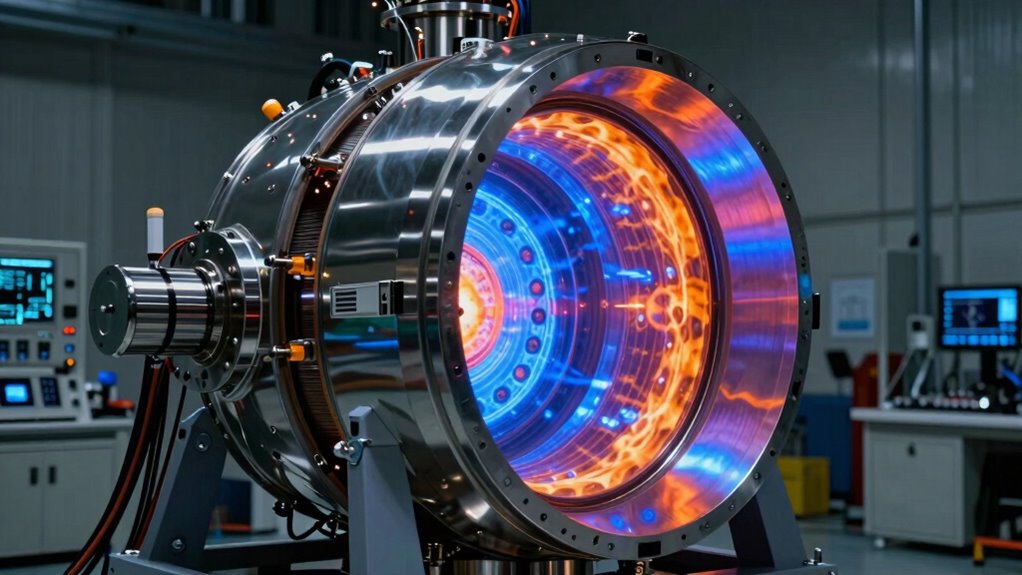

The recent fusion energy milestone is a major step toward producing clean, limitless power by achieving energy breakeven, where the energy output matches or exceeds the energy input. This involves improving plasma confinement with advanced magnetic fields and stability techniques, allowing the fusion reaction to sustain itself longer. To do this, scientists use sophisticated diagnostic tools and control strategies. If you want to understand how these breakthroughs could revolutionize energy, keep exploring the details behind this exciting progress.

Get the latest gadgets delivered free with Prime
- Fast, free delivery on millions of items
- Prime Video, Amazon Music and more included
- Member-only deals all year
Key Takeaways
- The milestone is achieving or surpassing energy breakeven, where fusion output equals or exceeds input energy.
- It demonstrates significant progress toward practical, sustainable fusion power generation.
- Advances rely on improved plasma confinement and magnetic field configurations for stability.
- Diagnostic tools and control strategies are essential for maintaining plasma conditions necessary for energy gain.
- While commercial fusion is not immediate, these milestones mark critical steps toward reliable, clean energy from fusion.
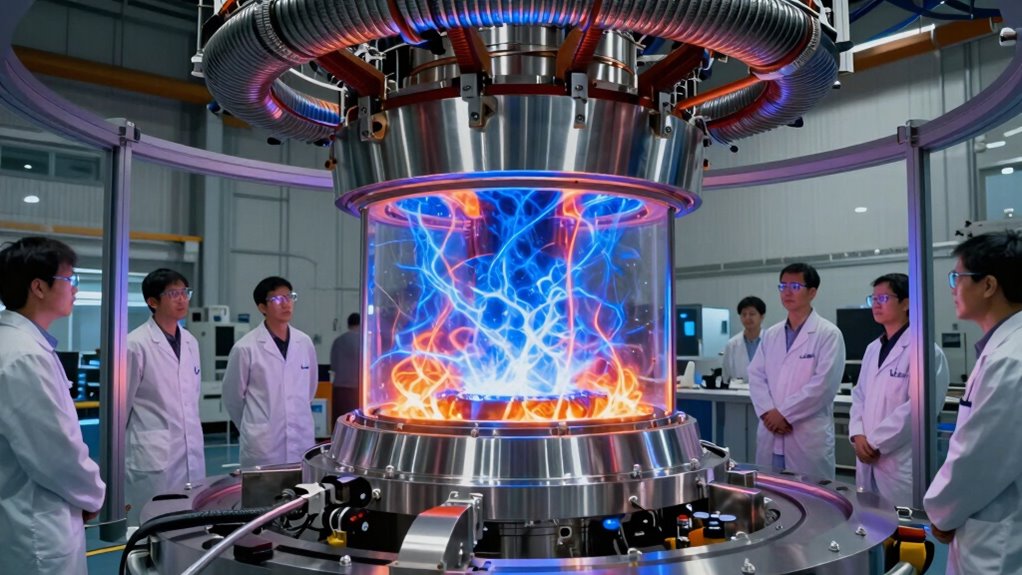
Recent advancements in fusion energy have marked a significant milestone in the pursuit of clean, limitless power. This breakthrough centers around a critical goal: achieving energy breakeven, where the energy produced by fusion equals or exceeds the energy put into the system. To reach this point, scientists need to master plasma confinement, which is essential for sustaining the extremely hot and dense state of matter necessary for nuclear fusion. Think of plasma as a superheated, ionized gas that must be held stable long enough for fusion reactions to occur efficiently. If the plasma escapes too quickly or isn’t contained properly, the process falters, and energy gain becomes impossible. That’s why plasma confinement is at the heart of fusion research — it’s the key to maintaining the conditions needed for a self-sustaining reaction. Improving magnetic field configurations is also vital, as innovative magnetic designs can enhance plasma stability and confinement efficiency. Additionally, advancements in diagnostic tools are helping scientists better understand plasma behavior and improve control strategies.
Achieving energy breakeven means you’ve managed to generate as much energy from the fusion process as you’ve invested in creating the necessary environment. It’s a complex balancing act, involving precise control of temperature, pressure, and magnetic fields. Magnetic confinement devices like tokamaks or stellarators use powerful magnetic fields to keep the plasma stable and confined without direct contact with material walls, which would cool the plasma and cause energy losses. When these magnetic fields are optimized, they prevent the plasma from touching the walls, reducing energy losses and increasing the likelihood of reaching breakeven. Recent progress in fusion experiments demonstrates that scientists are inching closer to this goal. For instance, some experiments have achieved a state where the energy output approaches or surpasses the energy input, which is a critical sign that energy breakeven is within reach. While there’s still work to do — like improving plasma stability, increasing sustained reaction times, and scaling up reactor designs — the progress is promising. It shows that the theory is practical, and with continued innovation, fusion could eventually provide a clean, abundant energy source for the future. Advances in plasma confinement techniques are particularly crucial for this progress. You might not see fusion power plants tomorrow, but these milestones signal a future where humanity harnesses the power of the stars, thanks to advancements in plasma confinement and a relentless drive to achieve energy breakeven.
As an affiliate, we earn on qualifying purchases.
Frequently Asked Questions
How Does Fusion Energy Differ From Nuclear Fission?
Fusion energy differs from nuclear fission because fusion technology merges lightweight atoms, like hydrogen, to form heavier ones, releasing vast energy. In contrast, fission splits heavy atoms, like uranium, into smaller parts. Fusion offers greater energy scalability, producing more power with less radioactive waste. You benefit from cleaner, safer energy, and the potential for abundant power sources. Fusion’s process could revolutionize energy production, making it more sustainable and environmentally friendly.
What Are the Main Challenges in Achieving Sustained Fusion Reactions?
You face a formidable challenge: maintaining plasma stability long enough for fusion to occur consistently. Magnetic confinement must keep the super-hot plasma contained without turbulence or disruptions. Achieving this balance is tricky because even tiny instabilities can halt the reaction. Overcoming these hurdles requires precise control, advanced materials, and innovative magnetic designs. Only then can sustained fusion reactions become a reality, revealing a limitless, clean energy source for the future.
How Close Are We to Commercial Fusion Power Plants?
You’re getting close to commercial fusion power plants, but challenges remain. Researchers are refining fusion fuel, like deuterium and tritium, to sustain reactions efficiently. Meanwhile, developing durable reactor materials that withstand extreme temperatures is essential. While prototypes show promise, scaling up for widespread energy production still takes years. Continued innovation in fusion fuel management and reactor materials will be key to making fusion power a practical reality soon.
What Safety Concerns Are Associated With Fusion Energy?
Fusion energy has safety concerns, mainly involving radioactive materials used in the process. You should know that strict safety protocols are in place to prevent accidents and contain radioactivity. Unlike nuclear fission, fusion produces less long-lived radioactive waste, reducing risks. Still, handling radioactive materials requires careful procedures to protect workers and the environment. Overall, fusion’s safety measures aim to make it a secure energy source, but ongoing vigilance remains essential.
How Does Fusion Energy Impact Global Energy Sustainability?
Fusion energy promises to revolutionize global sustainability by providing a nearly limitless power source. You’ll see it seamlessly integrate with renewable energy, smoothing out supply gaps and reducing reliance on fossil fuels. Its environmental benefits are immense—minimal waste, no greenhouse gases, and abundant fuel. This tech could finally help us achieve long-term energy security, making the planet cleaner and more resilient, all while sparing future generations from energy crises.
magnetic confinement fusion device
As an affiliate, we earn on qualifying purchases.
As an affiliate, we earn on qualifying purchases.
Conclusion
As you stand on the edge of this new dawn, remember that fusion’s promise is like a fragile star within your grasp—a luminous beacon of hope shimmering through the darkness of doubt. This milestone isn’t just a scientific achievement; it’s the dawn of a new era, where humanity holds the key to endless energy. With perseverance, you become the navigator guiding this celestial flame toward a future where energy and possibility intertwine, forever illuminating the path ahead.
As an affiliate, we earn on qualifying purchases.
tokamak magnetic field generator
As an affiliate, we earn on qualifying purchases.
As an affiliate, we earn on qualifying purchases.
Halloween Picks
halloween
As an affiliate, we earn on qualifying purchases.