
Glaciers reveal far more than just past temperatures. They trap air bubbles, dust, and chemical signatures that show changes in atmospheric composition and greenhouse gases. Their layered structure records volcanic eruptions, ocean current shifts, and environmental events over thousands of years. Glaciers also respond directly to climate fluctuations, helping us understand ongoing climate impacts. If you explore further, you’ll uncover how these icy giants provide a detailed story of Earth’s complex climate history.

Get the latest gadgets delivered free with Prime
- Fast, free delivery on millions of items
- Prime Video, Amazon Music and more included
- Member-only deals all year
Key Takeaways
- Glaciers record not only temperature changes but also atmospheric composition, dust, and volcanic activity over time.
- Their movement patterns provide insights into climate dynamics and sea level rise beyond temperature data.
- Ice core layers contain chemical signatures revealing past greenhouse gas levels and environmental conditions.
- Glacial responses to climate fluctuations help understand the severity and pace of climate change.
- Studying glaciers offers comprehensive environmental history, including ocean currents and human impacts.
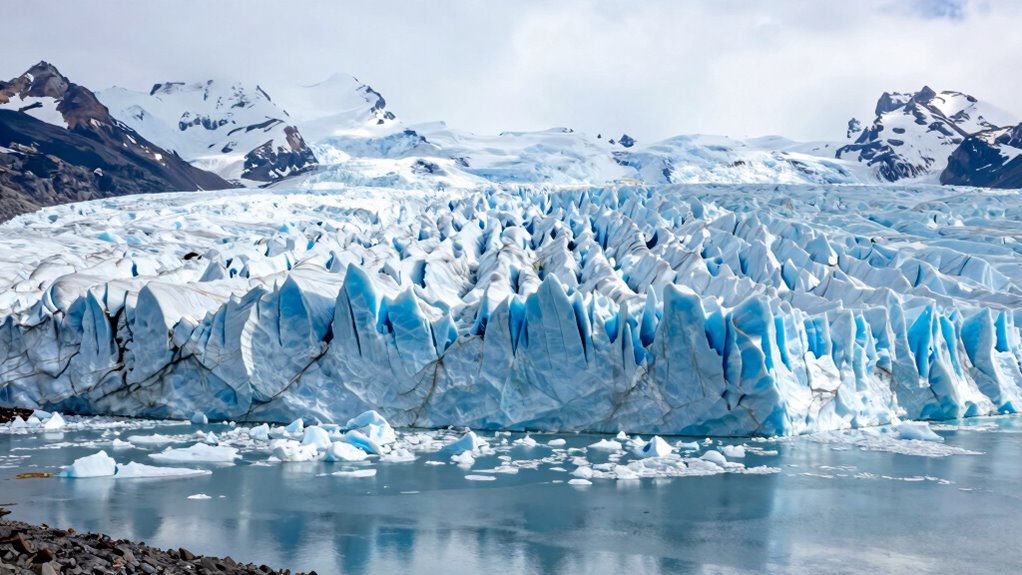
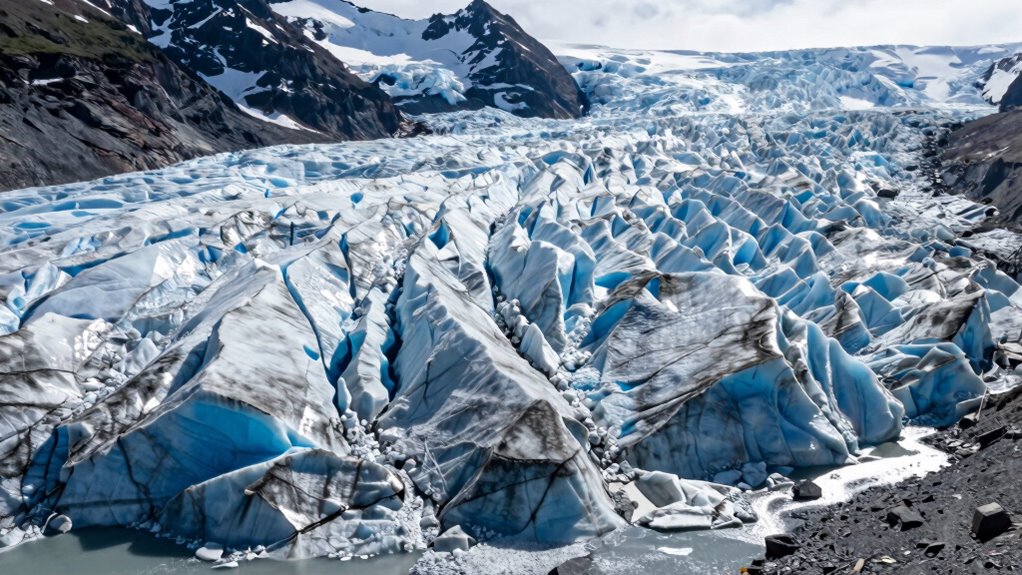
Glaciers are more than just frozen archives of past temperatures; they are dynamic storytellers that reveal a wealth of information about Earth’s climate and environmental changes. When you study ice core analysis, you access stories stored deep within the ice. These cores, extracted from the ice sheets and glaciers, contain trapped air bubbles, dust particles, and chemical signatures that tell you about atmospheric composition, greenhouse gas levels, and even volcanic eruptions from thousands of years ago. As you carefully analyze these layers, you gain insights not only into temperature fluctuations but also into shifts in Earth’s climate systems, ocean currents, and even human impact over centuries. ice core analysis provides a detailed window into these ancient atmospheric conditions, helping scientists piece together climate history. Additionally, the layered structure of ice cores reveals how climate events are interconnected across different time periods, offering a more comprehensive understanding of past environmental changes. Glaciers aren’t static; their movement patterns offer another essential layer of understanding. You might observe that glaciers flow slowly, inching forward over decades, or sometimes accelerate dramatically due to melting or structural changes. Tracking glacier movement patterns helps you see the direct effects of climate change in real time. When temperatures rise, you notice increased melting at the surface, which can weaken the glacier’s internal structure, causing faster flow rates or calving events—where chunks of ice break off into the ocean. Conversely, during colder periods, glaciers tend to advance, sculpting landscapes and preserving layers of ice that serve as historical records. Recognizing the movement patterns of glaciers can also help estimate the rate of sea level rise and anticipate potential impacts on coastal communities. Understanding the link between glacier dynamics and climate variability enhances our ability to project future environmental changes and develop effective mitigation strategies. Moreover, observing glacial responses to climate fluctuations can provide real-time clues about the pace and severity of ongoing climate change.
As an affiliate, we earn on qualifying purchases.
Frequently Asked Questions
How Do Glaciers Affect Sea Level Rise Beyond Melting?
You might not realize it, but glaciers influence sea level rise beyond melting through ice sheet dynamics and glacial sediment transport. As glaciers move, they reshape coastlines and deposit sediments, affecting underwater landscapes. These processes can destabilize ice sheets, causing faster ice flow into the ocean. This accelerates sea level rise, showing that glaciers impact sea levels through complex physical mechanisms, not just melting alone.
Can Glaciers Preserve Ancient Life Forms or DNA?
Yes, glaciers can preserve ancient life forms and DNA through ice entrapment. About 30,000-year-old ancient DNA has been recovered from ice cores, revealing insights into prehistoric organisms. When organisms get trapped in ice, they’re effectively frozen in time, preventing decay. This preservation allows scientists to study ancient ecosystems and genetic material, offering a rare glimpse into life’s history and evolution that would otherwise be lost to time.
What Role Do Glaciers Play in Global Freshwater Supply?
You rely on glaciers as essential freshwater sources, especially during dry seasons. Their role in global freshwater supply is significant because, through glacial geology, scientists study ice core analysis to understand ice formation and melt patterns. As glaciers melt, they release stored freshwater into rivers and lakes, supporting ecosystems and human needs. Monitoring these processes helps predict future water availability and climate impacts, emphasizing glaciers’ importance in sustaining life worldwide.
How Do Glaciers Influence Local Climate Patterns?
You might not realize it, but glaciers profoundly influence local climate patterns. As they melt, their ice albedo effect reflects sunlight, regulating temperatures nearby. Glacier dynamics, like advancing or retreating, impact regional weather and precipitation. For example, a 10% change in glacier size can alter local rainfall patterns by modifying heat absorption. This delicate balance demonstrates how glaciers act as climate regulators, shaping the environment around them in subtle yet powerful ways.
Are Glaciers Indicators of Broader Environmental Changes?
Yes, glaciers are strong indicators of broader environmental changes. Their glacier albedo—the reflectivity of their surface—shifts as ice stratification and melting alter, signaling climate shifts. When snow and ice layers become thinner or less reflective, it shows warming trends and increased melting. Monitoring these changes helps us understand not just local climate impacts but global patterns, making glaciers valuable tools for tracking global environmental health.
glacier movement tracking device
As an affiliate, we earn on qualifying purchases.
As an affiliate, we earn on qualifying purchases.
Conclusion
As you stand before a glacier, its icy surface whispers secrets beyond mere warmth and cold. Beneath the shimmering blue, ancient air and dust trapped over millennia reveal stories of Earth’s shifting climate, volcanic eruptions, and even human footprints. These frozen sentinels are more than temperature records—they’re storytellers, capturing moments in time like a crystal-clear mirror of our planet’s complex history. Pay attention, and you’ll uncover a world of knowledge frozen in time.
As an affiliate, we earn on qualifying purchases.
As an affiliate, we earn on qualifying purchases.
Halloween Picks
halloween
As an affiliate, we earn on qualifying purchases.