TL;DR
Deep-learning systems learn patterns by making predictions, measuring errors against examples and adjusting internal weights through repeated training. That process helps explain why AI can perform useful tasks while still producing mistakes, and why model size alone does not guarantee better results. The source is an educational explainer, not a report of a new technical development.
A November 17, 2026, explainer from Thorsten Meyer AI describes how deep-learning systems learn from examples by repeatedly making predictions, measuring errors and adjusting their internal weights. The account is aimed at people who use AI at work, where understanding that process can help explain both the tools’ capabilities and why their answers still need checking.

Get the latest gadgets delivered free with Prime
- Fast, free delivery on millions of items
- Prime Video, Amazon Music and more included
- Member-only deals all year
The explainer describes a neural network as layers of calculations. Each artificial neuron combines its inputs using adjustable weights, adds a bias and passes the result through an activation function. As information moves through the layers, the network produces an output, such as a classification or a generated response.
Training changes the weights. A model makes a prediction, a loss function measures how far that prediction is from the target, and an optimization method adjusts the weights to reduce the error. Back-propagation calculates how changes to individual weights affect the loss; gradient descent uses that information to update them. The cycle repeats across examples.
The article distinguishes training from use, often called inference. During training, the model’s weights are adjusted. When a workplace user later submits a prompt, the trained model applies those weights to produce an output; that act of use does not, by itself, retrain the model.

What Training Means at Work
For employees using AI tools, the training process offers a practical reason to treat outputs as predictions, not guaranteed facts. A model learns statistical patterns from examples; it does not receive a complete set of rules for every situation it may face. That can make it useful for tasks such as drafting or sorting, while leaving room for errors that require human review.
The method also helps explain why performance can falter when a request differs from the examples or conditions reflected in training data. The source says models can guess when uncertain and inherit gaps in their data. In a workplace, that means users should check consequential answers against reliable records and relevant expertise rather than assume fluent wording proves accuracy.
Model size is not a reliable shortcut for judging suitability. The explainer cites DeepMind’s comparison of Chinchilla and Gopher: Chinchilla had 70 billion parameters and trained on 1.4 trillion tokens, while Gopher had 280 billion parameters and trained on 300 billion tokens. It says Chinchilla performed better, but the excerpt does not specify the evaluation measure or task. The example supports a limited point: parameter count alone does not establish that a model will perform better.
Products Worth Considering

LG 27GS60QC-B Ultragear 27-inch Curved Gaming Monitor (QHD, 180Hz, 1ms, 1000R)
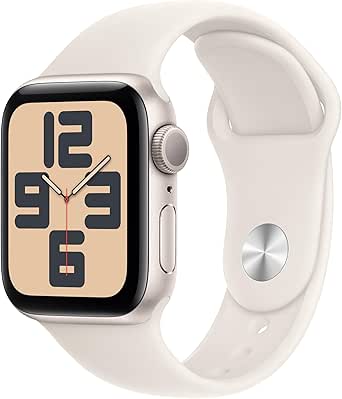
Apple Watch SE (2nd Generation) GPS 40mm Smartwatch with Starlight Aluminum Case and Starlight Sport Band (S/M)

Apple Watch Series 12 GPS 46mm Smartwatch
As an affiliate, we earn on qualifying purchases.
From 1986 to Modern Models
The underlying learning idea predates today’s workplace AI systems. In an October 1986 paper in the journal Nature, David Rumelhart, Geoffrey Hinton and Ronald Williams described a procedure that adjusted network connection weights to reduce the difference between actual and desired outputs. The source quotes their description; in plain language, the core loop remains guess, measure and adjust.
“Deep” refers to a network’s multiple layers, where earlier computations can represent simpler patterns and later layers can combine them. The source uses image recognition as an example: a network might build from edges and contours toward object parts and a final classification. These representations are learned during training rather than manually specified as a complete sequence of rules.
As an illustration of progress in image recognition, the source reports that the best error rate in the ImageNet challenge fell from 28.2% in 2010 to 3.57% in 2015, and that winning networks grew from eight layers in 2012 to 152 in 2015. These figures describe that challenge and period; they do not establish how current systems perform across all tasks.
““Bigger is not magic.””
— Thorsten Meyer AI
Where the Explanation Stops
The source is a general educational explainer, not an independent evaluation of a named workplace AI product. It does not provide new benchmark results, product-specific accuracy figures or evidence about how any particular employer’s system was trained.
The ImageNet figures and the Chinchilla–Gopher comparison are presented without full evaluation details in the supplied material. Readers should not treat them as direct measures of performance on workplace tasks. The explainer also does not quantify how often models make errors or specify which jobs are safe to automate.
More broadly, the explanation simplifies complex systems. The exact data, training methods, safety controls and update policies vary by model and provider. The source’s account does not establish what information a particular workplace tool retains from user prompts or whether its provider uses those prompts for later training; users need to check the relevant product and employer policies.
Questions for Workplace Users
For readers applying the explanation, the immediate next step is to check the rules for the specific AI service they use: what data it accepts, how outputs should be reviewed and whether prompts may be retained or used for training. The source does not announce a product launch or a scheduled technical milestone.
As AI systems are assessed for workplace tasks, useful evidence would include performance on the actual task, the conditions under which results fail and the human review required. Parameter count alone is not enough to answer those questions. Whether a particular model is suitable depends on the task and the evidence available about its performance.
Key Questions
What does deep learning mean?
Deep learning is a way to train neural networks with multiple layers. The layers perform calculations that can build from simpler patterns toward more complex outputs.
How does a model learn from examples?
It produces an answer for an example, compares that answer with a target using a loss function, then adjusts its weights to reduce the error. Training repeats this process across many examples.
Does an AI tool learn every time I use it?
Not necessarily. The explainer distinguishes training, when weights are adjusted, from inference, when a trained model uses its weights to produce an answer. Whether a provider uses prompts for later training depends on that service’s policies.
Does a larger model always perform better?
No. The source cites a comparison in which DeepMind’s 70-billion-parameter Chinchilla model performed better than its 280-billion-parameter Gopher model, though the supplied material does not state the evaluation measure. Model size alone does not establish how well a system will handle a particular workplace task.
Why can a deep-learning model give a wrong answer?
A model learns patterns from training examples rather than a complete rulebook for every situation. As the source explains, gaps in those examples or differences between training conditions and a new task can contribute to errors, so important outputs need checking.
Source: Thorsten Meyer AI