Magnetic levitation research now extends well beyond fast trains, impacting fields like medicine, robotics, and space exploration. You’ll find levitation reducing wear and vibrations in delicate instruments, while quantum effects and new materials boost stability and efficiency. These advances pave the way for frictionless transport, smarter sensors, and lightweight devices. If you’re curious, you’ll discover how these innovations are shaping the future of technology and industry far beyond just transportation.

Get the latest gadgets delivered free — and shop member deals
- Fast, free delivery on millions of items
- Access to Prime Big Deal Days deals on October 6–7
- Prime Video, Amazon Music and more included
Key Takeaways
- Research explores applications in robotics, medical devices, and energy systems, beyond just high-speed transportation.
- Quantum effects enhance levitation stability, reduce energy use, and enable ultra-sensitive sensors and medical innovations.
- Material advancements like superconductors improve efficiency, stability, and miniaturization of levitation systems.
- Integrating quantum and new materials accelerates the development of scalable, eco-friendly, and high-performance levitation technologies.
- Future research aims for frictionless microelectronics, medical instruments, and broader industrial applications.
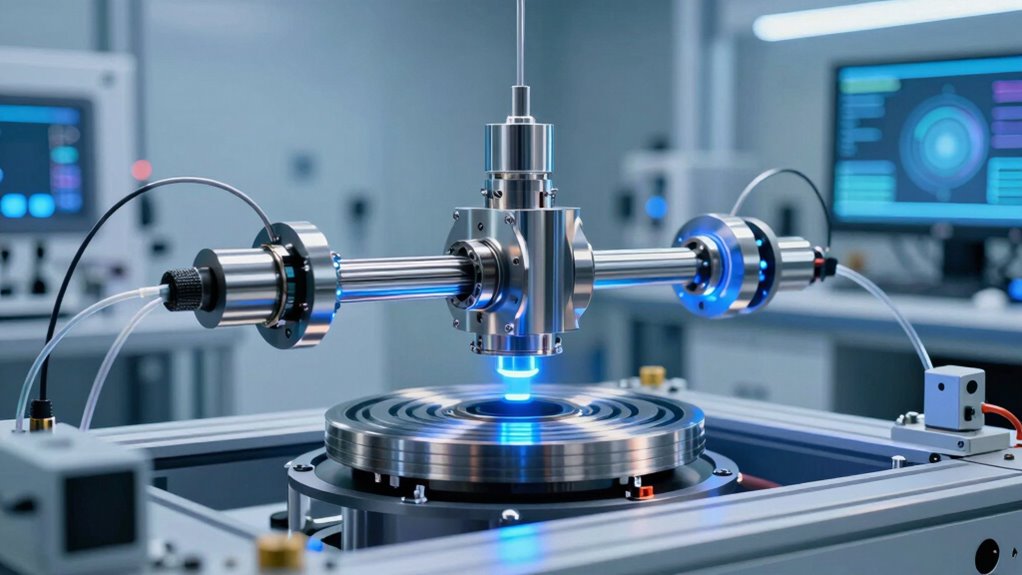
Magnetic levitation research is revealing new possibilities for transportation and engineering by exploring ways to suspend objects using magnetic forces. While most people associate maglev technology with high-speed trains, recent advancements go far beyond that, opening doors to innovative applications. At the core of these breakthroughs are quantum effects and material innovations that enable more efficient, versatile levitation systems. Quantum effects, which involve the behavior of particles at atomic and subatomic levels, are now being harnessed to improve stability and reduce energy consumption in magnetic levitation setups. Researchers are experimenting with quantum magnetic states to create more precise control over levitated objects, making it possible to develop ultra-sensitive sensors, advanced medical devices, or even frictionless bearings for machinery. These quantum-driven improvements allow levitation systems to operate with greater accuracy and less energy, making them suitable for a wide array of industries beyond transportation. Additionally, ongoing research into quantum magnetic states is opening new pathways for developing highly stable and energy-efficient levitation systems that can adapt to various environmental conditions. Material innovations play an equally crucial role in expanding the capabilities of magnetic levitation. Traditional materials used in magnetic systems, such as copper coils and ferromagnetic cores, are being replaced or enhanced with advanced composites and superconductors. Superconductors, which exhibit zero electrical resistance at very low temperatures, have the potential to generate stronger magnetic fields with less energy, markedly increasing system efficiency. New composite materials, lightweight yet highly durable, also enable more flexible and adaptable levitation setups. These innovations not only improve the stability and strength of magnetic fields but also reduce the size and weight of levitation devices, making them more practical for various applications. For instance, in precision manufacturing or space exploration, where weight and power are critical constraints, these material advances can revolutionize how objects are manipulated and transported. As research continues, you’ll see magnetic levitation being integrated into fields like robotics, medical technology, and energy systems. The ability to suspend objects without physical contact reduces wear and tear, increases lifespan, and minimizes vibrations—advantages that are especially valuable in delicate environments. The integration of quantum and material innovations is accelerating the development of next-generation levitation technologies with unprecedented capabilities. Moreover, understanding the interplay between quantum effects and materials is essential for designing more effective levitation systems in the future. Advances in material science are also enabling the development of more adaptable and environmentally friendly levitation solutions, further broadening their potential uses. The combination of quantum effects and material innovations means levitation can become more reliable, scalable, and adaptable. What once seemed limited to high-speed trains now holds promise for frictionless transport in microelectronics, ultra-precise medical instruments, or even clean energy systems. In essence, magnetic levitation research is pushing beyond the traditional boundaries, creating a future where magnetic suspension becomes a fundamental component of technologies across many sectors.
As an affiliate, we earn on qualifying purchases.
Frequently Asked Questions
What Industries Beyond Transportation Are Exploring Magnetic Levitation?
You’ll find that industries beyond transportation are exploring magnetic levitation for urban infrastructure and medical technology. Urban planners use maglev to develop efficient, contactless systems for moving people and goods, reducing congestion. In medical tech, researchers are experimenting with maglev for high-precision devices and contactless patient transport, enhancing safety and hygiene. This technology’s versatility promises innovative solutions across sectors, transforming how we approach city development and healthcare.
How Does Magnetic Levitation Impact Energy Consumption?
Did you know magnetic levitation can reduce energy consumption by up to 50% compared to traditional systems? You’ll find that it considerably improves energy efficiency because it minimizes friction, leading to lower power consumption. This technology allows for smoother, faster operations with less energy needed, making it an attractive option for industries seeking sustainable solutions. Overall, magnetic levitation helps cut costs and environmental impact by optimizing energy use.
Are There Safety Concerns With Magnetic Levitation Technology?
Yes, there are safety concerns with magnetic levitation technology, but strict safety protocols help address them. You should understand that risk mitigation strategies, like regular system maintenance and real-time monitoring, are essential to prevent accidents. While the technology is generally safe, ongoing research focuses on improving safety measures to minimize risks, ensuring passenger safety and system reliability. Staying informed about these protocols keeps you confident in the technology’s safety.
What Are the Environmental Benefits of Magnetic Levitation Systems?
Magnetic levitation systems offer significant environmental benefits through eco-friendly design and sustainable infrastructure. By reducing reliance on fossil fuels, they lower greenhouse gas emissions and air pollution. Their energy-efficient operation cuts down on power consumption, and their smooth, quiet ride minimizes noise pollution. Additionally, their potential to connect cities with less environmental impact encourages sustainable urban development, making them a greener alternative to traditional transportation methods.
How Affordable Is Magnetic Levitation Technology for Different Applications?
Magnetic levitation technology’s affordability varies by application, but a cost analysis shows it’s becoming more accessible. For instance, a city considering maglev for urban transit weighs high initial costs against long-term savings in maintenance and energy. Scalability challenges, like infrastructure complexity, can drive up expenses, but as research advances, prices are expected to decrease. Smaller-scale projects might be more feasible now, while larger systems will need strategic investments.
superconducting magnetic levitation device
As an affiliate, we earn on qualifying purchases.
As an affiliate, we earn on qualifying purchases.
Conclusion
As you see, magnetic levitation isn’t just about zipping trains across tracks; it’s a gateway to countless innovations. Like a shining star guiding sailors home, this technology lights the way for future transportation, energy, and medical breakthroughs. So, keep an eye on these magnetic marvels—they’re not just defying gravity; they’re lifting us into a new era of possibility. After all, the future isn’t written in stone, but in magnetic fields that propel us forward.
quantum magnetic levitation system
As an affiliate, we earn on qualifying purchases.
As an affiliate, we earn on qualifying purchases.
frictionless bearings for machinery
As an affiliate, we earn on qualifying purchases.
As an affiliate, we earn on qualifying purchases.
Fall Picks
fall essentials
As an affiliate, we earn on qualifying purchases.