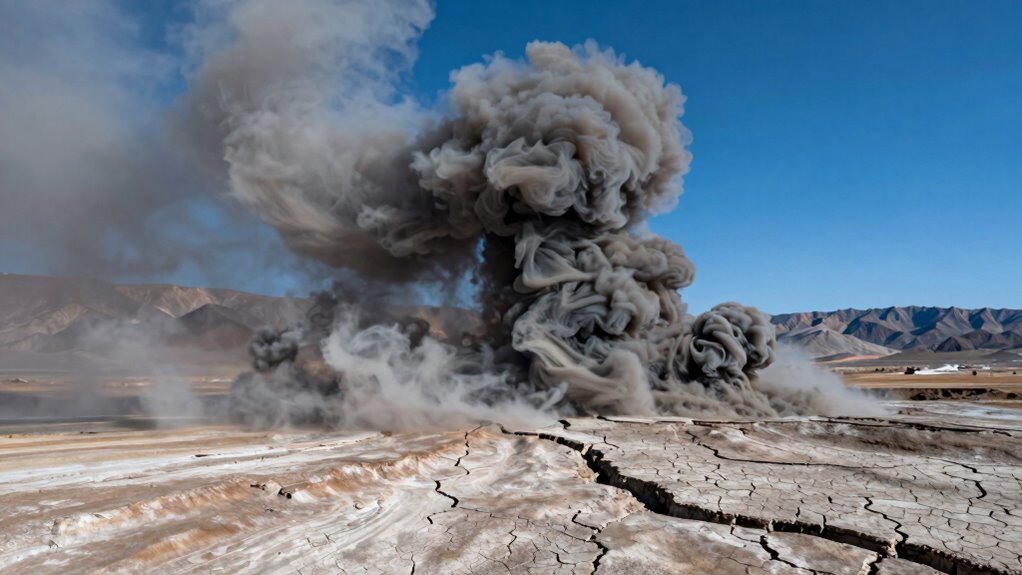

Scientists track methane plumes from space to quickly identify leaks and sources across large regions, helping reduce emissions more effectively. Space-based technology offers continuous, all-encompassing coverage that ground methods can’t match, allowing you to see the big picture of methane’s impact on climate. This advanced monitoring helps detect even low-concentration leaks and track changes over time. If you want to understand how this technology supports climate solutions, keep exploring further.
Key Takeaways
- To detect and quantify methane leaks over large areas beyond ground-based limitations.
- To monitor methane emissions in real-time, enabling rapid response to emerging leaks.
- To assess the climate impact of methane as a potent short-term greenhouse gas.
- To evaluate the effectiveness of regulations and mitigation strategies over time.
- To gain comprehensive, consistent data for informed climate policy and emission reduction efforts.
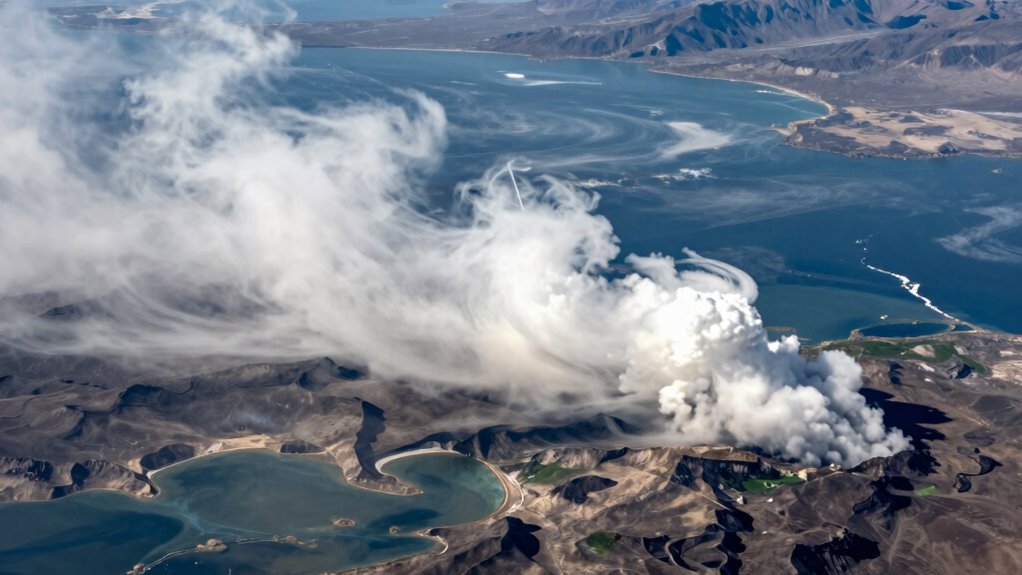
Scientists are increasingly turning to space-based technology to monitor methane plumes because these emissions substantially impact climate change. When you think about remote sensing, it’s the tool that allows scientists to observe Earth’s atmosphere from space, providing a thorough view that ground-based methods can’t match. This technology captures data over vast regions, helping you understand where methane leaks are happening and how much gas is being released. The ability to detect these emissions from orbit means you don’t have to rely solely on localized measurements, which can miss significant sources or underestimate their scale.
Space-based remote sensing reveals methane leaks globally, offering comprehensive data to combat climate change effectively.
The climate impact of methane is profound. It’s a potent greenhouse gas—far more effective at trapping heat than carbon dioxide over a short period. Because of this, tracking methane plumes accurately becomes essential if you want to understand and mitigate its effects on global warming. Space-based remote sensing allows scientists to quickly identify new or persistent leaks, whether they originate from oil and gas operations, landfills, or natural sources like wetlands. This rapid detection helps you prioritize areas for intervention, potentially reducing emissions before they cause further climate harm.
Using satellites equipped with specialized sensors, you can observe methane’s spectral signatures, which reveal its presence even at low concentrations. These sensors can scan entire regions, providing continuous, real-time data. When you analyze this data, it becomes easier to see patterns and trends in methane emissions, giving you a clearer picture of how human activities and natural processes contribute to overall climate impact. This broad scope makes satellite monitoring a powerful tool for policymakers and environmental agencies who need reliable information to craft effective climate strategies.
Moreover, remote sensing from space offers a level of consistency and repeatability that ground measurements can’t always achieve. You can track changes over time, noticing whether methane leaks are increasing or decreasing in specific areas. This long-term data is indispensable for assessing the effectiveness of regulations and technological improvements aimed at reducing emissions. It also helps you understand the bigger picture—how methane plumes fit into the overall climate system and what actions can have the most significant impact.
In essence, by leveraging space-based remote sensing, scientists gain an essential advantage in their fight against climate change. You get a detailed, real-time view of methane emissions, enabling more accurate evaluations and more targeted efforts to limit this potent greenhouse gas’s climate impact. This approach ensures that we’re not only monitoring the problem but actively working toward solutions grounded in precise, thorough data. Additionally, advances in spectral detection technology improve the sensitivity and accuracy of methane measurements from space, enhancing our ability to respond swiftly to emerging leaks.
As an affiliate, we earn on qualifying purchases.
Frequently Asked Questions
How Do Satellites Detect Methane Plumes Accurately?
Satellites detect methane plumes accurately using specialized sensors that measure specific wavelengths of sunlight absorbed by methane molecules. These satellite sensors gather detailed data, which you can analyze through advanced data analysis techniques, filtering out noise and pinpointing emission hotspots. By combining high-resolution imaging with precise spectral measurements, you gain reliable, real-time insights into methane leaks and emissions from space.
What Are the Primary Sources of Methane Emissions?
Did you know that agriculture accounts for about 40% of human-made methane emissions? You often see urban emissions from landfills, wastewater, and transportation, making cities significant contributors too. Agricultural practices like rice paddies and livestock farming release large amounts of methane, while urban areas emit it through waste management and infrastructure. Both sources play an essential role in global methane levels, highlighting the need for targeted strategies to reduce emissions.
How Does Methane Impact Climate Change Compared to Co₂?
You learn that methane impacts climate change more intensely than CO₂ because of its potent greenhouse effect during its short lifecycle. In atmospheric chemistry, methane’s lifecycle involves rapid absorption and breakdown, releasing heat quickly. Its higher global warming potential means that, although it stays in the atmosphere for a shorter time, methane traps considerably more heat per molecule, making it a critical target for climate mitigation efforts.
Can Methane Leaks Be Prevented With Current Technology?
Think of methane leaks as fleeting whispers escaping into the sky; with current technological advancements, you can often catch and seal these whispers before they grow loud. Policy implications drive investments in better detection and repair tools, making prevention more feasible. While not foolproof yet, these innovations are steadily closing the gap, giving you the power to substantially reduce leaks and curb their climate impact before they get out of control.
What Are the Long-Term Goals of Methane Monitoring Efforts?
Your goal with methane monitoring is to inform policy implications and drive technological innovations for better climate protection. By tracking methane plumes from space, you help identify major leak sources and guarantee accountability. Long-term, you aim to develop more accurate detection methods, support stricter regulations, and promote sustainable practices. This ongoing effort seeks to reduce methane emissions globally, ultimately mitigating climate change impacts and fostering a healthier environment for future generations.
satellite methane monitoring device
As an affiliate, we earn on qualifying purchases.
As an affiliate, we earn on qualifying purchases.
Conclusion
By tracking methane plumes from space, you become a vigilant guardian watching over Earth’s fragile breath. Each detected plume is like a whisper from the planet’s depths, revealing secrets that could shape your future. As you piece together these cosmic clues, you help paint a clearer picture of our climate’s story—one that’s essential to safeguarding the delicate balance of life on this blue orb. Your vigilance can turn whispers into a chorus of change.
environmental remote sensing equipment
As an affiliate, we earn on qualifying purchases.
As an affiliate, we earn on qualifying purchases.
As an affiliate, we earn on qualifying purchases.