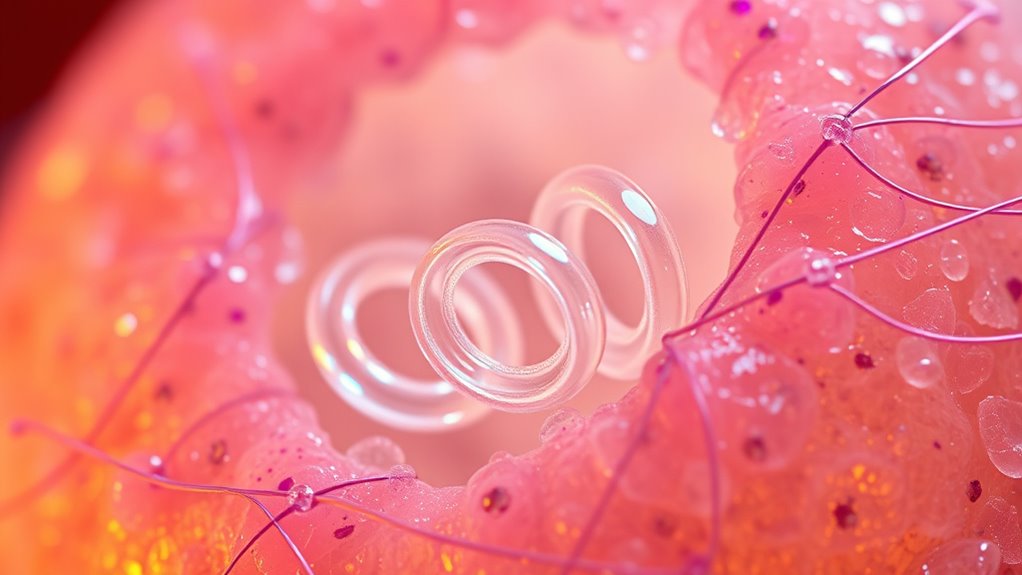

Microcompartments are tiny, protein-based structures that help organize metabolic processes inside cells. These structures persist through cell division by being inherited or quickly reformed in daughter cells, ensuring essential functions continue smoothly. They are formed from specific proteins encoded by genes, with mechanisms in place for their faithful segregation. To discover more about how these microcompartments maintain cellular stability across generations, keep exploring this fascinating topic.
Key Takeaways
- Microcompartments are protein-based structures encoded by specific genes that organize metabolic processes within cells.
- They are dynamic, capable of assembly and disassembly, ensuring proper inheritance during cell division.
- Microcompartments are anchored to cellular regions and often have markers for recognition and segregation.
- Their formation involves precise protein interactions, with genes tightly regulating their expression and duplication.
- These structures persist through cell division, maintaining metabolic stability across generations.

Microcompartments in genomes are specialized, protein-based structures that compartmentalize specific metabolic processes within a cell. While they might seem tiny, these structures play a essential role in maintaining cellular efficiency and organization. They act like miniature, self-contained factories, isolating certain biochemical reactions from the rest of the cell to prevent unwanted interactions and increase reaction speed. You might picture them as tiny bubbles or shells that enclose enzymes and substrates, allowing reactions to occur in a controlled environment. These microcompartments are especially important for pathways that produce toxic intermediates or require tight regulation.
Microcompartments are tiny protein structures that enhance metabolic efficiency and prevent harmful interactions within cells.
As you explore deeper, you’ll see that these microcompartments are not static; they are dynamic structures that can persist through cell division. This persistence ensures that each daughter cell inherits the necessary machinery to carry out essential metabolic functions. Think about it: when a cell divides, you might expect many internal structures to disassemble and reassemble, but microcompartments are often retained or quickly reformed, guaranteeing continuity. This inheritance isn’t random—it’s a highly regulated process, ensuring that metabolic processes continue seamlessly across generations. The microcompartments are often anchored to specific regions within the genome or cytoplasm, which helps guide their inheritance during cell division.
Furthermore, recent research suggests that the formation and inheritance of microcompartments involve specific protein interactions, which facilitate their stability and proper segregation during cell division. You should also understand that the genetic blueprint for these microcompartments is encoded within the genome itself. Certain genes produce the proteins that assemble into these compartments, and their expression is tightly controlled. During cell division, the cell ensures that the proteins needed for microcompartment formation are available and correctly localized. This way, the microcompartments don’t just disappear; they are duplicated or maintained, ensuring metabolic stability. Their ability to persist through division highlights their importance—they’re not just transient structures but integral parts of cellular organization.
Moreover, the mechanisms behind their inheritance involve complex interactions between proteins, DNA, and sometimes even membrane components. These structures often have specific signals or markers that facilitate their recognition and proper segregation during cell division. This precision prevents errors that could lead to metabolic disruptions. Their resilience and faithful inheritance demonstrate how evolution has optimized these tiny but essential structures to support cellular life across countless generations. By maintaining these microcompartments through division, cells ensure that critical metabolic functions are preserved, supporting cell health and adaptability over time.
Top picks for "microcompartment genom tiny"
Open Amazon search results for this keyword.
As an affiliate, we earn on qualifying purchases.
Frequently Asked Questions
How Do Microcompartments Influence Gene Expression Regulation?
Microcompartments influence gene expression regulation by organizing DNA into distinct loops, which brings specific genes closer to regulatory elements or separates them from repressors. This spatial arrangement allows you to control gene activity efficiently, turning genes on or off as needed. As you observe these tiny loops, you see how they create a dynamic environment that modulates gene expression, ensuring proper cellular function and response to environmental cues.
What Techniques Are Used to Visualize Microcompartments in Cells?
To visualize microcompartments in cells, you’ll want to wield techniques like fluorescence microscopy, which uses fluorescent dyes or proteins to highlight specific genome regions. Super-resolution microscopy, such as STORM or PALM, pushes past traditional limits to reveal tiny loops and compartments in exquisite detail. Additionally, chromatin conformation capture (3C) techniques help map interactions, offering insight into the spatial organization of these microcompartments within the nucleus.
Are Microcompartments Conserved Across Different Species?
Yes, microcompartments are conserved across different species, indicating their essential role in cellular functions. You’ll find similar structures in bacteria, archaea, and eukaryotes, although their specific compositions and functions may vary. This conservation suggests they’re fundamental for processes like gene regulation, metabolism, and compartmentalization. Studying these structures across species can reveal insights into their evolution and how cells maintain organization and efficiency.
Can Microcompartments Impact Genetic Mutation Rates?
Microcompartments can influence mutation rates by shielding certain DNA regions from damage or repair processes. For example, if a microcompartment isolates an essential gene, it might reduce mutation exposure, maintaining genetic stability. Conversely, if it traps damaged DNA, mutation risk increases. You should consider how these tiny loops may either protect or expose genetic material, ultimately affecting mutation frequency and genomic integrity in your studies.
How Might Microcompartments Be Targeted for Therapeutic Purposes?
You can target microcompartments therapeutically by designing drugs that alter their structure or function, potentially controlling gene expression or genome stability. For instance, small molecules might disrupt harmful microcompartment formations in cancer cells, reducing their proliferation. Alternatively, you could enhance beneficial microcompartment interactions to promote healthy gene regulation. Precision therapies could also aim to modify specific microcompartments, minimizing side effects and improving treatment outcomes.
Conclusion
Now that you see how these tiny loops endure through cell division, it’s like discovering secret passageways within your genome—silent guardians maintaining order amid chaos. These microcompartments aren’t just structural quirks; they’re essential for preserving genetic identity across generations. As you imagine this microscopic world, remember: even the smallest loops hold the key to life’s continuity, proving that sometimes, the tiniest details make the biggest difference in the story of life.