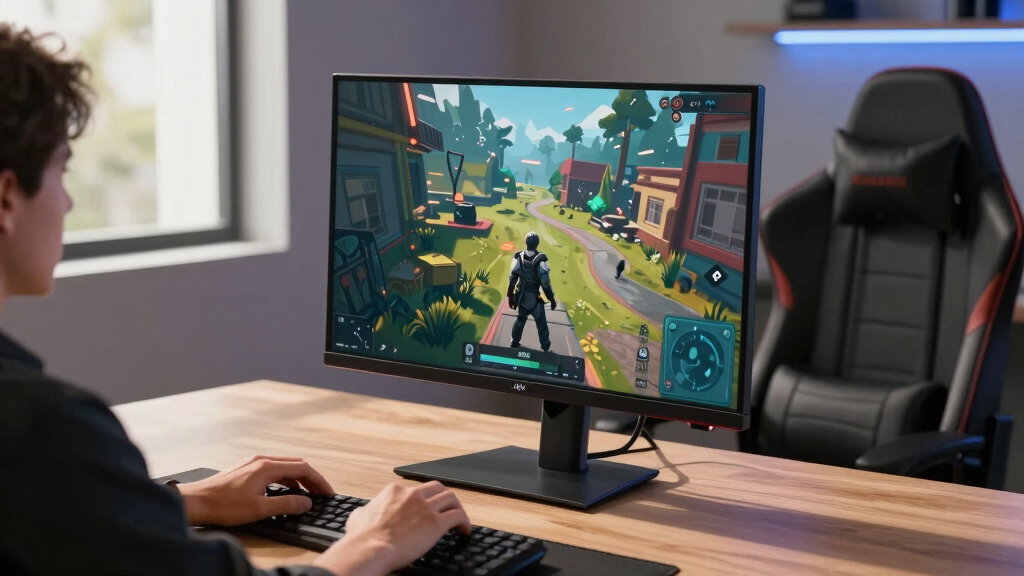

When searching for 4K gaming monitors, gamers face a tradeoff between high refresh rates, image quality, and price. The ASUS ROG Swift 32” OLED stands out for its stunning QD-OLED display and 240Hz refresh rate, making it ideal for competitive play. The Samsung Odyssey G7 offers a curved design with 165Hz, great for immersive experiences, while the SANSUI 27” Dual Mode provides versatile performance at a more accessible price. Balancing resolution, responsiveness, and budget can be challenging, but I’ll walk you through the options to find your best fit. Keep reading for a detailed breakdown of each model and what makes them unique.
Key Takeaways
- High refresh rates (160Hz+) are increasingly common even among 4K monitors, benefiting fast-paced gaming.
- OLED and QD-OLED panels deliver superior contrast and color accuracy but tend to come at a premium.
- Dual-mode monitors that switch between 4K@Hz and FHD@Hz can provide more flexibility for different gaming scenarios.
- Built-in features like G-SYNC and FreeSync significantly reduce screen tearing, but compatibility varies.
- Size and curvature play vital roles in immersion, with larger and curved screens favored by enthusiasts.


More Details on Our Top Picks
SANSUI 27″ 4K Gaming Monitor with Dual Mode (160Hz UHD / 320Hz FHD), Fast IPS, HDR400, and Ergonomic Stand
This SANSUI monitor stands out for offering a unique dual-mode setup, allowing users to switch between stunning 4K at 160Hz or ultra-fast FHD at 320Hz. Its Fast IPS panel with 1ms response ensures quick reactions, rivaling the performance of the CRUA 27” 4K Gaming Monitor, but with the added flexibility of resolution and refresh rate options. The inclusion of HDR400 and wide color coverage enhances visual quality, though its heavier build and lack of USB or VESA mount might limit placement options. For gamers seeking adaptable performance in a single device, this model provides compelling value, especially if you prioritize ergonomic adjustments and built-in features. However, source device limitations can cap its ultimate performance, making it less ideal for high-end consoles or PCs aiming for maximum 4K 160Hz.
Pros:- Dual-mode capability with 4K@160Hz and FHD@320Hz for versatile gaming
- Fast IPS panel with 1ms response time and wide color gamut (93% DCI-P3)
- Ergonomic stand with height, tilt, and pivot adjustments
- Includes built-in speakers and AI crosshair/sniper features
Cons:- Heavier than many competitors, which can complicate placement
- Performance may be limited by source device capabilities, especially on consoles
- No VESA mount or USB ports included
Best for: Gamers who want flexible resolution and refresh rate options for both casual and competitive play.
Not ideal for: Users who need VESA mounting or plan to use the monitor in a compact or wall-mounted setup, due to its weight and lack of mounting compatibility.
- Screen Size:27 inches
- Resolution:3840 x 2160 (4K UHD)
- Refresh Rate:Up to 160Hz (UHD) / 320Hz (FHD)
- Response Time:1ms (Overdrive)
- Panel Type:IPS
- HDR Support:HDR400
Bottom line: This monitor is best suited for gamers who need adaptable resolution and high refresh rates in a single, ergonomic package.
ASUS ROG Strix 32” 4K OLED Gaming Monitor (XG32UCWMG) – TrueBlack Glossy, Dual Mode(4K@240Hz, FHD@480Hz), 0.03ms, G-SYNC Compatible, Neo Proximity Sensor, USB-C, HDMI 2.1, 3 yr Warranty
This ASUS ROG monitor makes a strong impression with its expansive 32-inch OLED panel, offering stunning visuals and deep contrast thanks to its TrueBlack Glossy surface. Its dual modes of 4K@240Hz and FHD@480Hz push beyond typical gaming limits, making it ideal for competitive players who demand ultra-fast refresh rates. The 0.03ms response time and G-SYNC compatibility ensure smooth gameplay, while the Neo Proximity Sensor helps protect the panel from burn-in during absences. Compared to the Samsung Odyssey G7, this model’s OLED display provides richer blacks and more vivid colors, but at a higher price and with a potential burn-in risk. Its extensive connectivity and included warranty make it a premium choice for enthusiasts and content creators alike. Still, the size and premium cost could deter casual gamers.
Pros:- Exceptional OLED picture quality with deep blacks and vibrant colors
- Dual-mode support for 4K@240Hz and FHD@480Hz for competitive gaming
- Fast 0.03ms response time and G-SYNC compatibility
- Includes Neo Proximity Sensor to mitigate burn-in risk
Cons:- Premium price point limits accessibility for average users
- Potential burn-in risk despite protective features
- Large size may not fit all desk setups
Best for: High-end gamers and content creators seeking the best visual fidelity and ultra-fast refresh rates in a 4K OLED display.
Not ideal for: Budget-conscious buyers or those with limited space, due to its high price and larger footprint.
- Size:32 inches
- Resolution:3840 x 2160 (4K)
- Refresh Rate:240Hz (4K), 480Hz (FHD)
- Response Time:0.03ms
- Panel Type:OLED
- VESA:Yes
Bottom line: This OLED monitor is ideal for demanding gamers and creators who prioritize image quality and ultra-fast performance, despite its high cost and size.
Samsung 37” Odyssey G7 Curved Gaming Monitor with 4K UHD, 165Hz, and VESA DisplayHDR 600
The Samsung Odyssey G7 offers an immersive 37-inch curved display that enhances gameplay immersion, especially for those who favor large screens. Its 4K UHD resolution provides sharp details, complemented by a 165Hz refresh rate and 1ms response time, making it well-suited for fast-paced gaming. The VESA DisplayHDR 600 certification improves contrast and color vibrancy, although the large size might be overwhelming on smaller desks or for users seeking a more compact setup. Compared with smaller monitors like the CRUA 27” 4K Gaming Monitor, the Odyssey G7 emphasizes size and immersion over desk space efficiency. Its high-end features come at a likely premium price, but for those who want an expansive, curved gaming environment, it delivers.
Pros:- Large 37-inch curved display for immersive gaming
- 4K UHD resolution with 165Hz refresh rate and 1ms response
- VESA DisplayHDR 600 for improved contrast and vivid colors
- Curved design enhances depth perception and engagement
Cons:- Size may be too large for standard or smaller desks
- Premium features likely increase cost significantly
- Limited portability and space flexibility
Best for: Gamers who prefer a large, curved display for immersive, high-resolution gaming on spacious desks.
Not ideal for: Players with limited desk space or those seeking a more budget-friendly 4K monitor, as size and cost could be prohibitive.
- Size:37 inches
- Resolution:4K UHD
- Refresh Rate:165Hz
- Response Time:1ms
- DisplayHDR:VESA DisplayHDR 600
- Curvature:1000R
Bottom line: This monitor is best for gamers who value an expansive, curved display to maximize immersion and visual detail.
CRUA 27” 4K Gaming Monitor with Dual-Mode IPS Display
The CRUA 27” monitor excels by offering dual modes: crisp 4K at 160Hz or ultra-fast FHD at 320Hz, making it flexible for both detailed visuals and competitive gaming. Its IPS panel with 120% sRGB and 92% DCI-P3 delivers vibrant, accurate colors, rivaling more expensive options like the ASUS ROG Strix 32” OLED, but with a more traditional design. Its wide viewing angles and ergonomic stand support extended gaming sessions, yet its built-in speakers may fall short for audiophiles, and lacking VESA compatibility beyond basic support could limit mounting options. This pick makes the most sense for gamers who want a balance between high resolution and high refresh rate without the premium price of OLEDs or larger displays.
Pros:- Dual-mode operation with 4K@160Hz and FHD@320Hz for versatile gaming
- IPS panel with wide color coverage and excellent viewing angles
- Ergonomic stand with tilt, swivel, height, and pivot adjustments
- Supports PIP/PBP for multitasking
Cons:- Built-in speakers may lack quality for serious audio needs
- No VESA mount compatibility beyond basic support
- Price range not specified, potentially less affordable than entry-level options
Best for: Competitive gamers and content creators seeking a flexible, high-performance 27-inch monitor.
Not ideal for: Users who need VESA mount compatibility for custom setups or those prioritizing premium audio quality from built-in speakers.
- Display Size:27 inches
- Resolution Modes:3840×2160 (4K, 160Hz) / 1920×1080 (FHD, 320Hz)
- Panel Type:IPS
- Refresh Rate:160Hz / 320Hz
- Response Time:1ms
- Color Gamut:120% sRGB, 92% DCI-P3
Bottom line: This monitor is best suited for gamers who want flexible performance with a balanced display and ergonomic features.
acer Nitro 27” 4K UHD 3840 x 2160 Gaming IPS Monitor | AMD FreeSync | Up to 72Hz Refresh Rate with DFR to FHD 144Hz | Up to 0.5ms | 1 x Display Port 1.4 & 2 x HDMI 2.0 Ports | VG270K L1bmiipx
The Acer Nitro VG270K offers a compelling balance of performance and affordability, featuring 3840×2160 resolution in a 27-inch IPS panel with 0.5ms response times and AMD FreeSync support. Its DFR technology allows switching between 4K@72Hz and FHD@144Hz, providing flexibility for various gaming and work scenarios, similar to the CRUA 27” 4K Gaming Monitor but with a focus on responsiveness. The zero-frame design maximizes screen real estate, while HDR10 support and 95% DCI-P3 coverage enhance image quality. Its connectivity options and ergonomic tilt make it suitable for extended use. Still, the 72Hz maximum 4K refresh rate may be limiting for high-end competitive gaming, and the absence of VESA mounting could restrict advanced setups.
Pros:- Affordable 4K UHD resolution with fast 0.5ms response time
- Diverse refresh rate options with DFR technology (72Hz/144Hz)
- HDR10 support with wide color coverage (95% DCI-P3)
- Zero-frame design maximizes screen space
Cons:- Maximum 72Hz at 4K may be limiting for competitive gamers
- No VESA mounting capability
- HDR performance limited compared to higher-end models
Best for: Budget-conscious gamers and professionals who want a 4K display with fast response times and good color accuracy.
Not ideal for: High-level esports players seeking ultra-high refresh rates at 4K or users needing VESA mounting for custom arrangements.
- Size:27 inches
- Resolution:3840 x 2160 (4K UHD)
- Refresh Rate:Up to 72Hz (4K), 144Hz (FHD)
- Response Time:0.5ms (GtG)
- HDR:HDR10
- Color Gamut:DCI-P3 95%
Bottom line: This monitor offers a solid, budget-friendly 4K experience with fast response times suitable for casual and mid-range gamers.
ASUS ROG Strix 27” 4K HDR USB-C Gaming Monitor (XG27UCG) – UHD (3840×2160) Dual Mode (4K 160Hz or FHD 320Hz), 1ms, Fast IPS, Extreme Low Motion Blur Sync, G-SYNC Compatible, AI Gaming, 3yr Warranty
This monitor stands out for its dual-mode capability, allowing seamless switching between 4K at 160Hz and FHD at 320Hz, which makes it highly adaptable for both fast-paced gaming and detailed creative tasks. Its 1ms response time and Fast IPS technology deliver sharp visuals with minimal motion blur, rivaling the responsiveness of the ASUS TUF VG27UQ1A. Compared with the ASUS ROG Swift OLED PG32UCDMR, it offers a more affordable entry point with excellent performance but lacks the same high-end contrast and color depth of OLED. The inclusion of G-SYNC compatibility and AI-powered features further enhance gameplay smoothness and visual clarity. The main tradeoff is that it doesn’t match the OLED’s vibrant contrast, but its versatility and connectivity make it ideal for gamers who also want to do creative work.
Pros:- Dual mode for 4K at 160Hz or FHD at 320Hz, offering flexibility for different gaming scenarios
- 1ms response time with ASUS Fast IPS for sharp, blur-free visuals
- G-SYNC compatibility and Extreme Low Motion Blur Sync for smooth gameplay
- Versatile USB-C port for modern connectivity
Cons:- Lacks the deep contrast and perfect black levels of OLED monitors like the PG32UCDMR
- Higher price compared to some 4K monitors without dual mode or G-SYNC
Best for: Gamers who need a flexible monitor for both high-frame-rate gaming and creative tasks, with modern connectivity options.
Not ideal for: Enthusiasts seeking the deepest contrast and perfect black levels for cinematic experiences, as it lacks OLED’s true black rendering.
- Display Size:27 Inches
- Resolution:3840 x 2160 (4K)
- Refresh Rate:160Hz (4K mode) / 320Hz (FHD mode)
- Response Time:1ms
- Color Gamut:95% DCI-P3
- Connectivity:HDMI, USB-C, DisplayPort
Bottom line: This monitor is perfect for gamers who want a high-performance, versatile display that also suits creative workflows.
ASUS ROG Swift 32” 4K OLED Gaming Monitor (PG32UCDMR): QD-OLED, 240Hz, 0.03ms Response Time
The ASUS ROG Swift PG32UCDMR elevates gaming with its QD-OLED panel offering 99% DCI-P3 color coverage, vibrant visuals, and 0.03ms response time. Its 240Hz refresh rate ensures ultra-smooth gameplay, making it a clear upgrade over the ASUS TUF VG27UQ1A for fast-paced titles. The OLED technology provides deep blacks and a contrast ratio of 1,500,000:1, far surpassing LED-based monitors, but this comes with a higher risk of burn-in, despite advanced OLED Care Pro. Compared to the ASUS ROG Strix XG27UCG, this model prioritizes image quality and response time over versatility, at a premium price. Its extensive port options and 90W USB-C charging make it a top choice for enthusiasts seeking cutting-edge visuals and responsiveness at a high cost.
Pros:- 240Hz refresh rate with 0.03ms response time for ultra-smooth, responsive gaming
- Vivid QD-OLED panel with 99% DCI-P3 for exceptional color accuracy
- Deep blacks and high contrast for immersive visuals
- Extensive connectivity including DisplayPort 2.1 and USB-C with 90W power delivery
Cons:- OLED panels can be prone to burn-in if not used carefully
- Premium price tag limits accessibility for most users
Best for: High-end gamers and content creators who demand top-tier color accuracy, response time, and premium OLED performance.
Not ideal for: Budget-conscious buyers or those concerned about burn-in, as OLED panels require careful use and are more expensive.
- Display Type:QD-OLED
- Resolution:3840 x 2160 (4K)
- Refresh Rate:240Hz
- Response Time:0.03ms
- Color Gamut:99% DCI-P3
- Connectivity:DisplayPort 2.1, HDMI 2.1, USB-C (90W)
Bottom line: This monitor is best suited for gamers and creators who prioritize top-tier visuals and response speed and are willing to invest in OLED technology.
ASUS TUF Gaming 27” 4K HDR Monitor (VG27UQ1A) – 160Hz, 1ms Response Time
The ASUS TUF VG27UQ1A offers a compelling mix of 4K resolution and a high 160Hz refresh rate, making it suitable for competitive gamers who need fast response times without breaking the bank. Its 1ms response time and ELMB Sync technology reduce motion blur and tearing, providing a smooth experience comparable to more expensive models like the ASUS ROG Strix XG27UCG. While it doesn’t support G-SYNC, its compatibility with AMD FreeSync Premium ensures broad adaptive sync support. The HDR support with 95% DCI-P3 offers vibrant visuals, but it doesn’t reach the peak contrast or color depth of OLED or HDR400 monitors like the ASUS ROG Strix 27” 4K HDR. Overall, it’s a solid pick for gamers who want high frame rates and good visuals at a more accessible price point, with the tradeoff of slightly less color vibrancy and contrast.
Pros:- 160Hz refresh rate with 1ms response time for fast-paced gaming
- ELMB Sync technology for tear-free visuals
- Good color coverage with 95% DCI-P3 for vibrant images
- Affordable for a 4K high-refresh-rate monitor
Cons:- Lacks G-SYNC support, limiting compatibility with some NVIDIA GPUs
- Brightness and contrast are less impressive than OLED or HDR600 monitors
Best for: Budget-conscious gamers who want a 4K gaming experience with high refresh rates and fast response times.
Not ideal for: Enthusiasts seeking the deepest contrast or professional color accuracy, as it doesn’t match OLED or high-end HDR displays.
- Display Size:27 Inches
- Resolution:3840 x 2160 (4K)
- Refresh Rate:160Hz
- Response Time:1ms
- Color Gamut:95% DCI-P3
- Connectivity:HDMI, DisplayPort, USB
Bottom line: This monitor delivers high-frame-rate 4K gaming at an accessible price, ideal for competitive players on a budget.
The acer Nitro VG270K strikes a balance between high-quality visuals and responsive gaming with up to 160Hz refresh rate and DFR technology that dynamically adjusts resolution for higher frame rates. Its 0.5ms response time and AMD FreeSync Premium make it suitable for smooth gameplay across different genres, rivaling the Dell S2725QS. The monitor’s HDR10 support and 90% DCI-P3 color coverage enhance visual vibrancy, although it doesn’t match the deep contrast of OLEDs or HDR600 monitors. Its zero-frame design maximizes screen real estate, and multiple ports—including HDMI 2.1—enhance connectivity options. The main tradeoff is that, compared to OLED models, it sacrifices some contrast depth and black levels, but it remains a versatile, feature-packed choice for general gaming and multimedia use.
Pros:- Up to 160Hz refresh rate with 0.5ms response time for smooth gameplay
- DFR technology boosts frame rates for demanding titles
- HDR10 support and 90% DCI-P3 for vibrant visuals
- Multiple HDMI 2.1 ports for console and PC compatibility
Cons:- Lacks the contrast depth of OLED or HDR600 monitors
- Brightness may be limited in HDR content compared to premium displays
Best for: Gamers who want a flexible, feature-rich 4K monitor for a variety of content, including HDR gaming and fast-paced titles.
Not ideal for: Purists seeking the deepest blacks and contrast, as it doesn’t match OLED or HDR600 high-end displays in those areas.
- Display Size:27 Inches
- Resolution:3840 x 2160 (4K)
- Refresh Rate:160Hz
- Response Time:0.5ms
- Color Gamut:90% DCI-P3
- Connectivity:HDMI 2.1, DisplayPort 1.4
Bottom line: This monitor offers a versatile and feature-rich 4K experience suitable for gamers seeking good visuals and responsiveness without OLED costs.
Dell S2725QS 27-inch 4K Monitor with AMD FreeSync Premium and ComfortView Plus
The Dell S2725QS offers a reliable 27-inch 4K display with a 120Hz refresh rate, suitable for casual gaming and productivity. Its 99% sRGB coverage and ComfortView Plus technology reduce blue light, making it a good choice for extended work sessions. While it doesn’t match the high refresh rates of more gaming-centric monitors, its 0.03ms response time ensures minimal motion blur during moderate gaming sessions. Compared to the ASUS TUF VG27UQ1A, it is less aggressive in gaming specs but excels in color accuracy and eye comfort. Its sleek design with ultra-thin bezels makes it suitable for multi-monitor setups, though the lack of USB-C connectivity limits some modern device integrations. It’s a solid, budget-friendly option for users balancing casual gaming and work.
Pros:- 120Hz refresh rate with 0.03ms response time for smooth visuals
- ComfortView Plus reduces blue light for extended use
- High 99% sRGB color coverage for accurate, vibrant images
- Ultra-slim bezels suitable for multi-monitor setups
Cons:- Limited to 120Hz, less ideal for fast-paced competitive gaming
- No USB-C port for modern device connectivity
- Maximum brightness may be lower compared to gaming-specific HDR monitors
Best for: Casual gamers and professionals who prioritize color accuracy and eye comfort over ultra-high refresh rates.
Not ideal for: Competitive gamers or those seeking ultra-smooth 4K gameplay, as it maxes out at 120Hz and lacks advanced gaming features.
- Display Size:27 Inches
- Resolution:3840 x 2160 (4K)
- Refresh Rate:120Hz
- Response Time:0.03ms
- Color Coverage:99% sRGB
- Connectivity:HDMI, DisplayPort
Bottom line: An excellent choice for casual gaming and work, offering good color accuracy and eye comfort at a budget-friendly price.
ASUS ROG Strix XG32UCG 32” 4K HDR Gaming Monitor
The ASUS ROG Strix XG32UCG stands out for its dual-mode refresh rate support, offering 4K at 160Hz or FHD at an impressive 320Hz, making it highly adaptable for different gaming scenarios. Its 0.3ms response time significantly cuts input lag, which is crucial for fast-paced games, and the 95% DCI-P3 color gamut ensures vibrant visuals that compare favorably to less color-accurate options like the SANSUI 27″. Its USB-C connectivity adds convenience, but this feature might be underutilized on some setups, and the high price could be a barrier for budget-conscious gamers. The limited G-SYNC support means NVIDIA GPU users may not fully benefit, and the tripod socket could require additional hardware. Compared to the ASUS ROG Strix 32” OLED, this model offers more versatility but falls short in absolute color accuracy and HDR performance. This monitor makes the most sense for gamers who need flexible refresh rates and sharp visuals without sacrificing color fidelity, but those on a tight budget or seeking complete G-SYNC compatibility should consider alternatives.
Pros:- Dual refresh rate modes for flexible gaming experiences
- Ultra-fast 0.3ms response time reduces input lag
- High 95% DCI-P3 color accuracy for vivid visuals
- USB-C connectivity for streamlined setup
Cons:- High price may limit accessibility for budget-conscious buyers
- Limited G-SYNC support excludes some NVIDIA GPU users
- Tripod socket may require additional mounting hardware
Best for: Gamers who want a versatile display with fast refresh options and excellent response times for competitive play.
Not ideal for: NVIDIA GPU users who require full G-SYNC support or budget buyers seeking a more affordable 4K option.
- Screen Size:32-inch
- Resolution:4K (3840 x 2160)
- Refresh Rate Modes:4K @ 160Hz / FHD @ 320Hz
- Response Time:0.3ms
- Color Gamut:95% DCI-P3
- Connectivity:USB-C with DP Alt mode, DisplayPort
- Sync Technology:ELMB SYNC + Variable Refresh Rate
- Warranty:3 years
Bottom line: This monitor is ideal for gamers seeking a high-performance, adaptable display with fast refresh rates and bright visuals, provided the price fits their budget.
How We Picked
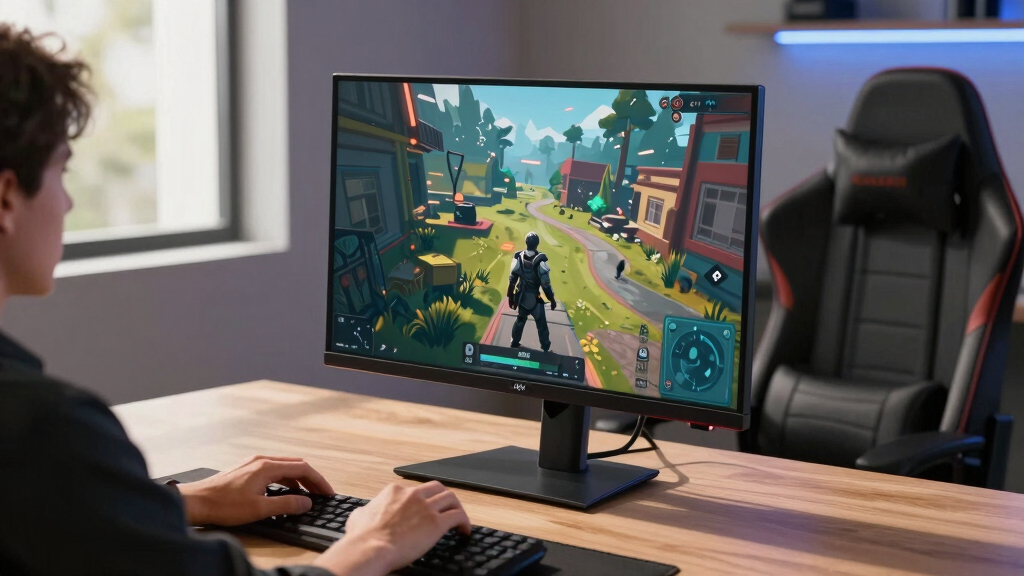
To evaluate the best 4K gaming monitors, I focused on performance, build quality, and usability. Key factors included refresh rates, response times, and adaptive sync support to ensure smooth gameplay. I also considered panel technology, as OLED and fast IPS panels offer different advantages in contrast and color. Pricing and warranty coverage were assessed for value, while ergonomic features and connectivity options helped determine ease of use. The rankings reflect a balance between high-end features and practical performance, aiming to match different gamer needs and budgets.Factors to Consider When Choosing 4K Gaming Monitors
Choosing the right 4K gaming monitor involves balancing several factors beyond just resolution. Understanding your gameplay style and setup can help you prioritize features like refresh rate, response time, and panel technology. It’s also important to consider size and ergonomics, as larger or curved screens enhance immersion but may require more space. Connectivity options, such as HDMI 2.1 or USB-C, ensure compatibility with your gaming hardware. Finally, be mindful of your budget—spending more often yields better image quality and responsiveness, but there are capable options at moderate prices.Refresh Rate and Response Time
For smooth gameplay, especially in fast-paced titles, a high refresh rate (at least 144Hz) is essential. Many 4K monitors now support 160Hz or higher, providing a competitive edge and reducing motion blur. Response times of 1ms or lower further improve clarity during rapid movements. However, higher refresh rates and lower response times typically come with increased costs, so consider your priorities—if competitive gaming is your focus, investing in these specs makes sense. For casual players, slightly lower specs might suffice without sacrificing enjoyment.
Panel Technology and Image Quality
Panel choices significantly impact visual quality. OLED and QD-OLED panels deliver exceptional contrast and vibrant colors, making games look more lifelike. Fast IPS panels, common in many high-end monitors, offer excellent color accuracy and wide viewing angles, though they may not match OLED’s contrast levels. TN panels are less common at 4K but can offer faster response times at lower prices. Balancing image quality with price is key—premium panels provide stunning visuals but at a higher cost.
Size and Curvature
The size of your monitor influences immersion; 27″ to 32″ screens are popular for gaming, with larger displays offering a more encompassing experience. Curved screens can reduce eye strain and provide a more natural viewing angle, especially on wider models like the Odyssey G7. Keep in mind, larger or curved monitors demand more desk space and may require better graphics cards to drive the higher resolutions smoothly. Choosing a size that fits your setup while enhancing your gaming experience is crucial.
Connectivity and Compatibility
Ensure your monitor supports the latest standards such as HDMI 2.1 or DisplayPort 1.4 to handle 4K at high refresh rates. USB-C ports are increasingly common, allowing for straightforward connection to modern laptops and devices. Verify that your gaming hardware can support the monitor’s specs—paying attention to maximum bandwidth and adaptive sync support can prevent issues like screen tearing. Compatibility can be a bottleneck, so double-check your setup before purchasing.
Budget and Value
Quality 4K gaming monitors span a wide price range, from budget-friendly options to premium models with OLED panels and ultra-high refresh rates. While spending more often guarantees better performance and durability, there are compelling mid-range options that deliver excellent value without breaking the bank. Consider what features are most important for your use—if you prioritize top-tier visuals, investing in a premium model is justified. For casual gaming, more affordable options with decent specs can still provide a satisfying experience.
Frequently Asked Questions
Is a 4K monitor necessary for competitive gaming?
While a 4K monitor offers stunning visuals, it’s not mandatory for competitive gaming. Many pro players prefer high refresh rates and low response times over resolution, often opting for 1080p or 1440p displays with faster response specs. However, if your system can handle 4K and you value visual fidelity, a high-refresh 4K monitor can provide both immersion and responsiveness. It’s about balancing resolution with performance based on your gaming priorities.
Can my current GPU handle 4K gaming at high refresh rates?
This depends on your graphics card’s capabilities. Modern high-end GPUs like the RTX 4080 or AMD RX 7900 XT are designed to drive 4K at 120Hz or higher in many titles, but performance varies by game. If your GPU is mid-range or older, you may need to lower settings or target lower refresh rates to maintain smooth gameplay. Always check your GPU’s specs and compare them with the monitor’s requirements before making a purchase to avoid bottlenecks.
Are OLED monitors durable enough for gaming use?
OLED panels offer incredible contrast and color, but they can be susceptible to burn-in if static images are displayed for long periods. Modern OLED monitors have introduced features to mitigate this risk, making them more durable for gaming. If you frequently switch between different games and avoid static UI elements, an OLED can be a great choice. For more static or extended use, QD-OLED or high-quality IPS panels might be safer options with longer lifespan.
What is the benefit of a curved monitor for gaming?
Curved monitors enhance immersion by wrapping the display around your field of view, making gameplay feel more natural and engaging. They also help reduce glare and reflections, providing a clearer picture from different angles. However, curved screens can take up more space and may not be suitable for all desk setups or preferences. If you prioritize an immersive experience and have adequate space, a curved monitor is often worth considering.
Is it worth paying extra for a monitor with G-SYNC or FreeSync?
Adaptive sync technology like G-SYNC and FreeSync significantly reduces screen tearing and stuttering when paired with compatible hardware. Paying extra for these features enhances visual smoothness, especially in fast-paced games. Compatibility with your graphics card is essential—G-SYNC works best with NVIDIA cards, while FreeSync is optimized for AMD. If you want the smoothest possible experience and your setup supports it, investing in a monitor with these features is advisable.
Conclusion
For gamers prioritizing overall performance and versatility, the ASUS ROG Swift 32” OLED offers stunning visuals and high responsiveness, making it the best choice for enthusiasts. If you seek the best value, the CRUA 27’’ Dual Mode provides flexible performance at a more accessible price point. The Samsung Odyssey G7 suits those who want an immersive, curved display with high refresh rates for casual and competitive play alike. For beginners or budget-conscious buyers, options like the Dell S2725QS deliver reliable 4K quality without breaking the bank. Ultimately, your ideal monitor depends on your gaming style, setup, and budget—consider these factors carefully before making your decision.