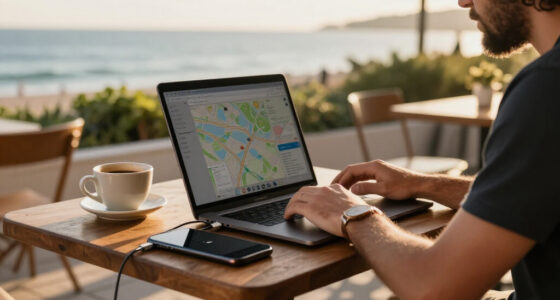
For holiday travel, I’d choose the Anker 20,000mAh Power Bank with Built-In USB-C Cable as the best overall pick: its 87W output and attached cable suit travelers who need a capable charger without packing a separate lead. The INIU 10,000mAh 45W is a more compact option for lighter carry, while the Anker 25,000mAh 165W better fits travelers charging several demanding devices. The main tradeoff is between capacity and portability: bigger banks can cover more charging needs, but take up more space and may face stricter airline rules. Built-in cables reduce packing clutter, though they can’t be swapped if damaged or mismatched to a device. Read on for the full breakdown and a guide to matching a power bank to your trip.

Get the latest gadgets delivered free with Prime
- Fast, free delivery on millions of items
- Prime Video, Amazon Music and more included
- Member-only deals all year
Complete the kit



Key Takeaways
- The 20,000mAh class is the lineup’s most balanced choice: it offers more reserve than the 10,000mAh models without the bulk implied by the 50,000mAh and 60,000mAh options.
- Built-in cables are a recurring convenience, not a guarantee of better performance: the Anker 20,000mAh model pairs an attached cable with 87W output, while several multi-cable models prioritize connector availability instead.
- Output separates quick phone charging from laptop-capable charging: the Anker 25,000mAh 165W model and Anker 20,000mAh 87W model stand out for higher-output needs; capacity alone does not indicate charging speed.
- Small banks have a clearer travel role than oversized banks: the INIU 10,000mAh 45W and Anker PowerCore Slim 10000 suit lighter carry, while very high-capacity models may be less practical for flights.
- Convenience features come with compromises: built-in wall plugs, multiple cables, and a flashlight can reduce packing needs, but add features do not replace checking capacity, output, weight, and airline limits.
| Anker 20,000mAh Power Bank with Built-In USB-C Cable, 87W, Black |  | Best Overall for Laptop-and-Phone Travel | Capacity: 20,000mAh | Maximum output: 87W total; up to 65W to one device | Ports: Built-in USB-C cable, 1 USB-C, 1 USB-A | VIEW LATEST PRICE | See Our Full Breakdown |
| Zmmyuluo 10,000mAh Portable Charger with 4 Built-In Cables |  | Best for Cable-Free Group Charging | Capacity: 10,000mAh | Output: 18W; 3A | Built-in cables: 4; compatible with iOS, USB-C, and Micro USB devices | VIEW LATEST PRICE | See Our Full Breakdown |
| Miady 2-Pack Slim 10,000mAh Portable Chargers |  | Best Value for Shared Travel Backups | Pack quantity: 2 power banks | Capacity: 10,000mAh each | Ports: USB-A and USB-C; product information also lists 4 ports | VIEW LATEST PRICE | See Our Full Breakdown |
| 45W 20,000mAh Fast-Charging Portable Power Bank with Built-In USB-C Cables |  | Best for Battery-Level Visibility | Capacity: 20,000mAh | Maximum output: 45W | Charging protocols: PD and QC | VIEW LATEST PRICE | See Our Full Breakdown |
| HELLEE N18 15,000mAh Portable Charger with 4 Built-In Cables |  | Best for Mixed-Connector Phone Charging | Capacity: 15,000mAh | Built-in cables: USB-A, USB-C, iOS, Micro USB | Number of outputs: 6 | VIEW LATEST PRICE | See Our Full Breakdown |
| 15,000mAh Portable Charger with Four Built-In Cables |  | Best for Cable-Free Packing | Battery capacity: 15,000mAh | Maximum charging power: 22.5W | Built-in cables: iOS, USB-C, Micro USB, and USB-A | VIEW LATEST PRICE | See Our Full Breakdown |
| Anker 25,000mAh Power Bank with 165W Output and Built-In Cables |  | Best for Laptop-Heavy Travel | Battery capacity: 25,000mAh | Total output: 165W | USB-C ports: 3, rated up to 100W each | VIEW LATEST PRICE | See Our Full Breakdown |
| JKELAR P8 50,000mAh Portable Charger with Built-In Cables, 22.5W Fast Charging and Flashlight |  | Best for Extended Off-Grid Trips | Battery capacity: 50,000mAh | Maximum charging power: 22.5W | Built-in cables: USB-C and iOS | VIEW LATEST PRICE | See Our Full Breakdown |
| INIU 10,000mAh 45W Fast-Charging Portable Power Bank |  | Best Compact Fast-Charging Pick | Battery capacity: 10,000mAh | Maximum output: 45W | Output ports: 2 USB-C and 1 USB-A | VIEW LATEST PRICE | See Our Full Breakdown |
| Anker PowerCore Slim 10000 Portable Charger |  | Best for Simple, Durable Phone Backup | Battery capacity: 10,000mAh | Ports: 1 USB-C and 1 USB-A | Maximum output: 5V / 3A | VIEW LATEST PRICE | See Our Full Breakdown |
| Orfeika 20,000mAh Power Bank with 4 Built-In Cables |  | Best for Group Charging | Battery capacity: 20,000mAh | Energy capacity: 77Wh | Built-in cables: 4: iPhone, USB-C, USB-A, and Micro | VIEW LATEST PRICE | See Our Full Breakdown |
| Sucrosey 50,000mAh Portable Power Bank with Built-In Wall Plug and Cables |  | Best for Outlet-Limited Trips | Battery capacity: 50,000mAh | Maximum output power: 22.5W | Built-in features: Foldable AC plug, USB-C cable, and iOS cable | VIEW LATEST PRICE | See Our Full Breakdown |
| ZZI 60,000mAh Portable Charger with 22.5W Fast Charging |  | Best for Ground-Trip Backup | Battery capacity: 60,000mAh | Maximum output power: 22.5W | Number of ports: 3 | VIEW LATEST PRICE | See Our Full Breakdown |
| INIU 20,000mAh 22.5W Portable Charger with Built-In USB-C Cable |  | Best for USB-C Travelers | Battery capacity: 20,000mAh | Maximum output: 22.5W | Ports: 3 USB-C ports | VIEW LATEST PRICE | See Our Full Breakdown |
| VRURC 20,000mAh Portable Charger with Built-In Cables |  | Best for Slim, Mixed-Device Carry | Battery capacity: 20,000mAh | Built-in cables: Type-C, phone, Micro USB, and USB Type-A | Additional ports: 1 USB-A and 1 USB-C | VIEW LATEST PRICE | See Our Full Breakdown |
| portable power banks for holiday travel | Dimensions | Battery capacity | Weight |
|---|---|---|---|
| Anker 20,000mAh Power Bank wit | 6.22 × 2.91 × 1.02 in | — | 15.2 oz |
| Zmmyuluo 10,000mAh Portable Ch | 4.17 × 2.8 × 0.71 in | — | 188g |
| Miady 2-Pack Slim 10,000mAh Po | 5.5 × 2.6 × 0.6 in | — | 7.68 oz |
| 45W 20,000mAh Fast-Charging Po | 3.98 × 2.79 × 1.26 in | — | — |
| HELLEE N18 15,000mAh Portable | 6 × 3.2 × 1.1 in | — | 250g |
| 15,000mAh Portable Charger wit | 4.5 × 2.7 × 0.9 inches | 15,000mAh | 0.51 lb |
| Anker 25,000mAh Power Bank wit | — | 25,000mAh | — |
| JKELAR P8 50,000mAh Portable C | — | 50,000mAh | — |
| INIU 10,000mAh 45W Fast-Chargi | — | 10,000mAh | — |
| Anker PowerCore Slim 10000 Por | 6.01 × 0.61 × 2.82 inches | 10,000mAh | 8.48 ounces |
| Orfeika 20,000mAh Power Bank w | 6.33 × 2.85 × 0.74 in | 20,000mAh | 0.73 lb |
| Sucrosey 50,000mAh Portable Po | 4.61 × 2.87 × 1.26 in | 50,000mAh | 0.79 lb (300 g, as listed) |
| ZZI 60,000mAh Portable Charger | 5.8 × 2.9 × 1.1 in | 60,000mAh | — |
| INIU 20,000mAh 22.5W Portable | 4.1 × 2.8 × 1.2 in | 20,000mAh | 320g |
| VRURC 20,000mAh Portable Charg | — | 20,000mAh | — |
More Details on Our Top Picks
Anker 20,000mAh Power Bank with Built-In USB-C Cable, 87W, Black
For a holiday itinerary that mixes phone top-ups with laptop work, I’d rank this Anker first: its 20,000mAh capacity and up to 65W to one device give it more flexibility than the smaller Miady two-pack. The built-in USB-C cable also means one less loose accessory to pack, while two additional ports let me charge other gear at the same time. Its 87W total output is useful for sharing power, though that figure is split across devices rather than delivered to one. The tradeoff is its 15.2-ounce weight, which is more noticeable in a day bag than the lightweight Zmmyuluo. Recharging in 1.5 hours requires a separate 65W charger, so the quick turnaround depends on carrying the right wall adapter.
Pros:- 20,000mAh capacity suits longer travel days and multiple device top-ups.
- Built-in USB-C cable reduces the number of loose charging accessories.
- Up to 65W output to one device can support compatible laptops as well as phones.
- Three charging connections and 87W total output support sharing power across devices.
Cons:- At 15.2 oz, it is heavier than the compact Zmmyuluo and Miady options.
- The 1.5-hour recharge time requires a separate 65W charger.
- The 87W total output is shared when multiple devices are connected.
Best for: Holiday travelers carrying a USB-C laptop and phone who want one airline-approved bank to cover several devices.
Not ideal for: Light packers who mainly need a phone top-up and want to minimize bag weight, or travelers without a 65W charger for faster recharging.
- Capacity:20,000mAh
- Maximum output:87W total; up to 65W to one device
- Ports:Built-in USB-C cable, 1 USB-C, 1 USB-A
- Weight:15.2 oz
- Dimensions:6.22 × 2.91 × 1.02 in
- Recharge time:1.5 hours with a 65W charger
- Airline travel:Approved
- Warranty:18 months
Our verdict“Choose this Anker if laptop-capable output and a built-in cable matter more than keeping your holiday bag light.”
Zmmyuluo 10,000mAh Portable Charger with 4 Built-In Cables
I’d pick the Zmmyuluo for travelers who value fewer loose cables over fast charging. Its four built-in cables cover iOS, USB-C, and Micro USB connections, and the product claims support for up to five devices at once—a broader mix of connections than the Anker’s single built-in USB-C cable. The compact 188g body and LED percentage display make it easy to pack and check between outings. The limit is power: 18W output and 10,000mAh are better suited to phone backups than a full day of powering several devices, and simultaneous charging divides the available output. Compared with the Miady two-pack, this is the more convenient all-in-one cable solution, but it offers less total capacity across the package. Its 4-hour recharge also calls for planning ahead.
Pros:- Four built-in cables cover several common device connector types.
- Lightweight 188g design suits a small travel pouch or day bag.
- LED display shows the remaining battery percentage.
- Safety protections include overcharge, overcurrent, short-circuit, and temperature protection.
Cons:- 10,000mAh capacity is less suited to extended trips than the 20,000mAh Anker.
- 18W output is modest for fast charging and does not match the Anker’s laptop-capable output.
- Charging several devices at once divides the available power, and full recharge takes four hours.
Best for: Traveling couples or families with a mix of iOS, USB-C, and Micro USB devices who want to leave spare cables at home.
Not ideal for: Laptop users, travelers needing high-speed charging, or anyone expecting several connected devices to charge quickly at once.
- Capacity:10,000mAh
- Output:18W; 3A
- Built-in cables:4; compatible with iOS, USB-C, and Micro USB devices
- Ports:3
- Simultaneous charging:Up to 5 devices
- Weight:188g
- Dimensions:4.17 × 2.8 × 0.71 in
- Recharge time:4 hours
- Display:LED battery percentage display
Our verdict“Choose the Zmmyuluo for a light, cable-integrated phone backup for a group, not for high-output charging or long stretches away from an outlet.”
Miady 2-Pack Slim 10,000mAh Portable Chargers
The Miady set is the practical choice when two travelers would rather carry a charger each than share one larger unit. Each slim bank has 10,000mAh capacity, so the pair provides separate backups without the bulk of one high-capacity charger like the Anker 20,000mAh. Their USB-C ports work for both recharging the banks and powering devices, and the included USB-C cables help get a basic travel setup ready. The tradeoff is that the set is less cable-complete for iPhone users: Lightning cables are not included. Product information also gives conflicting port details, so I wouldn’t choose it based on the advertised port count or assume every connection arrangement is clear. At 7.68 oz per charger, these are easy to divide between bags, but not a laptop-power option.
Pros:- Two separate 10,000mAh banks let travelers split backup power between bags.
- Slim 0.6-inch profile is easy to tuck into a pocket or day bag.
- Bidirectional USB-C supports both recharging the bank and charging devices.
- LED indicators and auto shut-off provide simple status and power management.
Cons:- Lightning cables are not included, so iPhone travelers need to pack their own.
- Port information is inconsistent, making the connection layout unclear.
- Each 10,000mAh bank is less suitable than the Anker for laptop charging or extended high-demand use.
Best for: Two phone-focused travelers who want separate, slim backup chargers and can bring the cables their devices require.
Not ideal for: Laptop travelers or iPhone users who expect included Lightning cables and clearly specified port arrangements.
- Pack quantity:2 power banks
- Capacity:10,000mAh each
- Ports:USB-A and USB-C; product information also lists 4 ports
- Maximum simultaneous devices:3
- Weight:7.68 oz
- Dimensions:5.5 × 2.6 × 0.6 in
- USB-C:Bidirectional input and output
- Included:2 USB-C cables and user manual
- Not included:Lightning cable
Our verdict“Choose the Miady two-pack if you want two slim phone backups for separate travelers and are comfortable bringing the needed cables.”
45W 20,000mAh Fast-Charging Portable Power Bank with Built-In USB-C Cables
For travelers who want a clear readout of remaining charge, this bank’s digital battery display makes it easier to decide whether to top up before leaving the hotel. Its 20,000mAh capacity and 45W maximum output offer a middle ground: more reserve than the Zmmyuluo’s 10,000mAh, but less single-device power than the Anker’s 65W. Two built-in USB-C cables can simplify charging compatible devices, and PD/QC support adds flexibility. There is a specification mismatch to keep in mind: the description says it can charge four devices at once, yet the listed connections are two USB-C cables plus one USB-C port and one USB output. I’d treat multi-device claims cautiously. The compact dimensions are appealing, though its 1.26-inch thickness may feel chunkier than a slim phone backup.
Pros:- 20,000mAh capacity provides more reserve than the 10,000mAh Zmmyuluo.
- Digital display makes the remaining battery level easy to check.
- 45W output and PD/QC support offer faster charging than basic low-output banks.
- Two built-in USB-C cables reduce the need to pack separate leads.
Cons:- Listed connections do not clearly support the stated four-device simultaneous charging claim.
- 45W maximum output is below the Anker’s 65W single-device output.
- At 1.26 inches thick, it may take up more space than a slim travel backup.
Best for: Travelers who want a 20,000mAh reserve, built-in USB-C leads, and a visible charge estimate for day-to-day planning.
Not ideal for: People who need clearly documented multi-device connections, maximum laptop output, or a particularly thin power bank.
- Capacity:20,000mAh
- Maximum output:45W
- Charging protocols:PD and QC
- Connections listed:2 built-in USB-C cables, 1 USB-C port, 1 USB output
- Maximum simultaneous devices:4 claimed
- Display:Digital battery-level display
- Dimensions:3.98 × 2.79 × 1.26 in
- Battery cell type:Lithium polymer
- Protection:Overcharge, overcurrent, overdischarge, overvoltage, and short-circuit protection
Our verdict“Choose this model if a clear battery readout and 20,000mAh reserve matter more than top-tier output or unambiguous multi-device specifications.”
HELLEE N18 15,000mAh Portable Charger with 4 Built-In Cables
The HELLEE N18 suits travelers whose group carries a mix of connector types and wants to share one charger. Its four built-in cables cover USB-A, USB-C, iOS, and Micro USB, while the stated six outputs give it a more connection-heavy setup than the Anker, which has three charging connections. A 15,000mAh capacity sits between the Miady’s 10,000mAh-per-bank design and the 20,000mAh Anker, making this a compromise between portability and reserve. The 22.5W fast-charging claim is useful for compatible phones, but it won’t match the Anker’s stronger laptop-oriented output. Wireless charging is listed, yet no wireless output is specified, so I wouldn’t make that feature the reason to buy. At 250g, it may feel heavy for a pocket-sized unit.
Pros:- Four built-in cable types cover USB-A, USB-C, iOS, and Micro USB devices.
- 15,000mAh capacity offers more reserve than the 10,000mAh Miady banks.
- 22.5W fast-charging output is suited to compatible phones.
- Six listed outputs offer several connection options for shared charging.
Cons:- At 250g, it is heavier than the Zmmyuluo and less suited to minimal pocket carry.
- 22.5W output is well below the Anker’s 65W single-device output and is not a laptop-focused option.
- Wireless charging is listed without a specified wireless output.
Best for: Traveling groups with older and newer phones that want built-in connector variety and a moderate-capacity shared backup.
Not ideal for: Laptop users, travelers prioritizing the lightest pocket carry, or buyers who need a specified wireless charging rate.
- Capacity:15,000mAh
- Built-in cables:USB-A, USB-C, iOS, Micro USB
- Number of outputs:6
- Fast-charging output:22.5W
- Weight:250g
- Dimensions:6 × 3.2 × 1.1 in
- Charging time:3 hours
- Wireless charging:Qi; output not specified
- Battery type:Lithium polymer
Our verdict“Choose the HELLEE N18 for connector variety and shared phone charging, but skip it if laptop power or low carry weight is the priority.”
15,000mAh Portable Charger with Four Built-In Cables
For holiday travelers who tend to leave a charging cable at home, this model’s four integrated cable types cover iOS, USB-C, Micro USB, and USB-A without a separate cable pouch. Its 15,000mAh capacity offers more backup than the INIU 10,000mAh 45W, while its 22.5W maximum output is better suited to phone top-ups than laptop charging. The compact 4.5-inch body and lanyard that doubles as a finger hook make it easier to handle on the move, though at 0.51 lb it may feel heavy in a pocket. There is a specification caveat: the listing describes both three ports and one output port, so I would not choose it based on port-count claims. It makes the most sense when cable convenience matters more than clear, high-power multi-device charging.
Pros:- 15,000mAh capacity provides more reserve than the INIU 10,000mAh model.
- Four integrated cable types reduce the number of separate cables to pack.
- Up to 22.5W output supports faster charging for compatible devices.
- Compact body includes a lanyard that can serve as a finger hook.
Cons:- At 0.51 lb, it may be noticeable in a pocket.
- The listing gives conflicting port-count information.
- Its 22.5W output is a weaker fit for charging power-hungry devices than the 45W INIU.
Best for: Travelers carrying a mix of older and newer phones who want built-in cable options and moderate backup capacity.
Not ideal for: Laptop users or travelers who need confidently documented port counts and high-output charging.
- Battery capacity:15,000mAh
- Maximum charging power:22.5W
- Built-in cables:iOS, USB-C, Micro USB, and USB-A
- Listed ports:2 USB-A and 1 USB-C; listing also gives a conflicting port count
- Dimensions:4.5 × 2.7 × 0.9 inches
- Weight:0.51 lb
- Display and protection:Digital display and overcharge protection
- Support:3-year replacement service and lifetime technical support
Our verdict“Choose this for a cable-light holiday bag with varied phone connections, but skip it if you need laptop-level output or unambiguous port details.”
Anker 25,000mAh Power Bank with 165W Output and Built-In Cables
This is the strongest choice here for a holiday itinerary that includes a laptop, tablet, and phone: 25,000mAh capacity and up to 165W total output give it a much broader charging role than the phone-focused INIU 10,000mAh. Three USB-C ports are rated up to 100W each, and four total ports let several devices share the bank. Its retractable USB-C cable and second cable that doubles as a strap reduce loose accessories, while the stated airline compliance keeps it relevant for carry-on travel. The tradeoff is bulk and dependence on a wall charger that is not included; the retractable cable also reaches only 2.3 feet. Compared with the 50,000mAh JKELAR P8, this Anker is better suited to travelers balancing capacity with airline limits and higher output, not those seeking the longest possible phone-only reserve.
Pros:- 25,000mAh capacity and up to 165W total output suit demanding travel setups.
- Three USB-C ports and four total ports support charging several devices.
- Two built-in USB-C cables reduce cable clutter.
- Stated to meet the 100Wh airline carry-on limit.
Cons:- A wall charger is not included for recharging the bank.
- The retractable USB-C cable extends only 2.3 feet.
- Its high-capacity, multi-device design is more than many phone-only travelers need.
Best for: Laptop-carrying travelers who need to top up several USB-C devices during airport waits or long travel days.
Not ideal for: Light packers who only need occasional phone charging, or buyers who expect a wall charger to come in the box.
- Battery capacity:25,000mAh
- Total output:165W
- USB-C ports:3, rated up to 100W each
- Total ports:4
- Built-in cables:Retractable USB-C cable up to 2.3 ft and 0.98 ft USB-C strap cable
- Airline compatibility:Stated to comply with 100Wh carry-on restrictions
- Recharge time:Approximately 2 hours; 100% in 110 minutes stated
- Included items:Protective pouch and user manual; wall charger not included
- Warranty:18 months
Our verdict“Pick this Anker when your holiday carry-on includes a laptop and several devices; choose a smaller bank if phone charging is your only need.”
JKELAR P8 50,000mAh Portable Charger with Built-In Cables, 22.5W Fast Charging and Flashlight
The JKELAR P8 is the capacity-first pick for travelers who may go several days between access to an outlet. Its 50,000mAh reserve is double the capacity of the Anker 25,000mAh, but that extra energy comes with a less travel-friendly footprint: the listed length alone is 6.5 inches, and the other dimensions are not provided. Built-in USB-C and iOS cables simplify phone charging, while the additional USB-C port, percentage display, and flashlight add practical backup features. Output tops out at 22.5W, so it is less compelling for a laptop than the Anker’s 165W setup. I would also treat its suitability for air travel as unconfirmed, since no airline compliance information is supplied. This is better for road trips or long stays away from outlets than for a compact holiday carry-on.
Pros:- 50,000mAh capacity offers substantially more reserve than the Anker 25,000mAh.
- Built-in USB-C and iOS cables cover two common phone connections.
- Battery percentage display makes remaining charge easier to track.
- Includes an emergency flashlight and overcharge and short-circuit protection.
Cons:- Its large capacity and 6.5-inch listed length make it less convenient to carry than compact options.
- The 22.5W maximum output is far below the Anker 25,000mAh’s 165W total output.
- Airline carry-on compliance is not specified.
Best for: Road-trippers and travelers spending extended time away from outlets who prioritize phone-charging reserve over a small bag footprint.
Not ideal for: Flyers who need clear airline-compliance details, laptop users, and travelers trying to keep a small personal item light.
- Battery capacity:50,000mAh
- Maximum charging power:22.5W
- Built-in cables:USB-C and iOS
- Ports:3
- Listed length:6.5 inches; other dimensions not provided
- Battery cell type:Lithium polymer
- Features:Flashlight, battery percentage display, overcharge and short-circuit protection
- Warranty:3-year replacement plan
Our verdict“Choose the JKELAR P8 for long stretches away from outlets on a road trip, but not when compact carry or documented flight suitability is a priority.”
INIU 10,000mAh 45W Fast-Charging Portable Power Bank
When bag space matters more than a large reserve, the INIU pairs 10,000mAh capacity with up to 45W output, a more power-focused profile than the Anker PowerCore Slim 10000’s 5V/3A maximum. It has three output ports—two USB-C and one USB-A—so it can serve a mix of current and older accessories, although charging several devices will draw from the same modest capacity. The detachable braided USB-C cable is a useful travel inclusion, but at just 0.4 feet it is mainly convenient when the bank sits close to the device. A flashlight and overcharge protection add practical extras. Compared with the 15,000mAh four-cable charger, this INIU carries less energy and no built-in iOS or Micro USB leads, but its higher stated output better suits compatible fast-charging phones.
Pros:- Up to 45W output is higher than the Anker PowerCore Slim 10000’s stated 5V/3A maximum.
- Three output ports include two USB-C and one USB-A.
- Detachable braided USB-C cable can be replaced if damaged.
- Includes a flashlight and overcharge protection.
Cons:- 10,000mAh capacity offers less reserve than the 15,000mAh four-cable charger.
- The included USB-C cable is only 0.4 feet long.
- Weight and dimensions are not specified, making packing size harder to judge.
Best for: Light-packing travelers who want a compact phone-and-tablet backup with higher stated output and both USB-C and USB-A connections.
Not ideal for: Travelers needing multi-day capacity, integrated cables for several connector types, or a longer included charging cable.
- Battery capacity:10,000mAh
- Maximum output:45W
- Output ports:2 USB-C and 1 USB-A
- Included cable:0.4 ft detachable braided USB-C cable
- Voltage:12V
- Output current:3A
- Features:Flashlight, lightweight design, and overcharge protection
- Support:3-year INIU Care and lifetime technical support
Our verdict“Choose this INIU for a compact, higher-output backup for compatible phones and tablets, but opt for a larger bank for multi-day charging.”
Anker PowerCore Slim 10000 Portable Charger
The PowerCore Slim 10000 suits travelers who want a straightforward backup for a phone and tablet, without the built-in cable complexity of the 15,000mAh four-cable charger. At 8.48 ounces and 0.61 inches thick, its slim shape is easier to slip into a day bag, while the USB-C port works for both input and output. The body is rated to withstand drops up to 3.2 feet and resist scratches, a helpful trait for a charger that may be handled during airport transfers. Its limits are clear: 10,000mAh capacity, just one USB-C and one USB-A port, and 5V/3A maximum output. The INIU 10,000mAh offers more ports and a higher stated output, so I’d favor that one for faster charging needs; this Anker is the simpler choice for basic backup and a defined, slim form.
Pros:- Slim 0.61-inch profile and 8.48-ounce weight suit day bags.
- USB-C supports both recharging the bank and charging a device.
- Certified to withstand drops up to 3.2 feet and designed to resist scratches.
- Includes a USB-C to USB-C cable.
Cons:- Only one USB-C and one USB-A port, fewer than the INIU 10,000mAh’s three output ports.
- Maximum output is 5V/3A, below the INIU model’s stated 45W.
- Recharge time is approximately 5 hours and 10 minutes.
Best for: Travelers who want a slim, clearly sized power bank for routine phone and tablet top-ups and value a durable casing.
Not ideal for: People charging multiple devices at once, seeking higher-output fast charging, or needing more than a modest backup reserve.
- Battery capacity:10,000mAh
- Ports:1 USB-C and 1 USB-A
- Maximum output:5V / 3A
- Dimensions:6.01 × 0.61 × 2.82 inches
- Weight:8.48 ounces
- Drop resistance:Certified for drops up to 3.2 feet
- Recharge time:Approximately 5 hours 10 minutes
- Included accessory:USB-C to USB-C cable
- Warranty:18 months
Our verdict“Pick the PowerCore Slim for a light, durable everyday travel backup, but choose the INIU if port count or higher charging output matters more.”
Orfeika 20,000mAh Power Bank with 4 Built-In Cables
For holiday travel with several phones or small devices in the group, the Orfeika pairs a 20,000mAh capacity with four built-in cable types and enough connections to charge up to six devices at once. That makes it more suited to sharing at a gate or in a hotel room than the INIU 20,000mAh, which has a simpler USB-C-focused setup. Its LED percentage display gives a clearer read on remaining charge than a basic indicator, while 20W USB-C PD offers a useful speed boost for compatible phones. The tradeoff is weight: at 0.73 lb, it is less appealing for a light day bag, and the fixed cable choices may not fit every device. I’d choose it for cable convenience and group use, not for the lightest carry.
Pros:- Four built-in cable types reduce the need to pack separate charging cords.
- Can charge up to six devices simultaneously.
- 20W USB-C PD supports faster charging for compatible devices.
- LED display shows the remaining battery percentage.
Cons:- At 0.73 lb, it adds noticeable weight to a compact travel setup.
- Built-in cables limit flexibility for devices with other connector types.
Best for: Families or travel groups carrying a mix of iPhone, USB-C, USB-A, and Micro USB devices who want to share one charger.
Not ideal for: Light-packing solo travelers or anyone whose devices need connectors beyond the four built-in cable types.
- Battery capacity:20,000mAh
- Energy capacity:77Wh
- Built-in cables:4: iPhone, USB-C, USB-A, and Micro
- Maximum simultaneous devices:6
- Maximum output power:20W
- Weight:0.73 lb
- Dimensions:6.33 × 2.85 × 0.74 in
- Display:LED battery percentage display
Our verdict“Choose the Orfeika when shared charging and fewer loose cables matter more than minimizing bag weight.”
Sucrosey 50,000mAh Portable Power Bank with Built-In Wall Plug and Cables
The Sucrosey combines unusually high stated capacity with a foldable wall plug and built-in USB-C and iOS cables, so it can serve as both a charger and a compact charging kit at a hotel or cabin. Its outlet-recharge design is the key difference from the ZZI 60,000mAh: the Sucrosey can plug in directly, while the ZZI emphasizes capacity but is not allowed on airplanes. The Sucrosey’s stated recharge time is about six hours, which makes overnight or long-stop charging more practical than waiting on a slower input. At 0.79 lb, though, it is not a featherweight travel companion, and its 22.5W output is better suited to phones and smaller devices than demanding laptop charging. I’d favor it for road trips and stays where wall access is available.
Pros:- Foldable AC plug and two built-in cables cut down on separate accessories.
- 50,000mAh capacity provides a substantial backup reserve for extended trips.
- Direct 100–240V outlet recharge is convenient at lodging.
- Digital display makes remaining charge easier to check.
Cons:- At 0.79 lb, it is relatively heavy for everyday pocket carry.
- About six hours to recharge still calls for planning ahead.
- 22.5W maximum output may not suit devices that need higher charging power.
Best for: Road-trippers and travelers staying in cabins or hotels who want a large reserve and an integrated way to recharge from a wall outlet.
Not ideal for: Air travelers focused on a compact carry-on setup, or buyers who need higher-power laptop charging.
- Battery capacity:50,000mAh
- Maximum output power:22.5W
- Built-in features:Foldable AC plug, USB-C cable, and iOS cable
- Ports:4
- Recharge input:100–240V outlet
- Recharge time:About 6 hours
- Weight:0.79 lb (300 g, as listed)
- Dimensions:4.61 × 2.87 × 1.26 in
Our verdict“Pick the Sucrosey for long road trips and outlet-based stays, but not as a lightweight or high-power laptop charger.”
ZZI 60,000mAh Portable Charger with 22.5W Fast Charging
The ZZI’s main appeal is its 60,000mAh stated capacity, giving it a larger reserve than the Sucrosey 50,000mAh for extended use away from outlets. Its digital display and included 3-in-1 cable also make it easier to monitor and share power without packing several charging leads. That capacity comes with a hard travel restriction, however: the listing says this model is not allowed on airplanes, so it is a poor match for holiday flights. The 22.5W maximum output is useful for compatible phones, but it does not make the ZZI a high-power option for demanding devices; recharging takes about seven hours as well. I’d rank it for road trips, campsites, or other ground travel where reserve capacity matters more than flight compatibility or a quick turnaround.
Pros:- 60,000mAh stated capacity offers the largest reserve among these five picks.
- Can charge up to five devices simultaneously.
- Included 3-in-1 cable supports Type-C, iOS, and Micro USB connectors.
- Digital display shows the remaining battery level.
Cons:- Manufacturer information says it is not allowed on airplanes.
- Seven-hour recharge time requires advance planning.
- Its 1.1-inch thickness takes up more space than slimmer 20,000mAh options.
Best for: Road-trippers and campers who need a large shared reserve for phones and small devices and will not take it on a flight.
Not ideal for: Holiday flyers, or travelers who need a lightweight bank that can be recharged quickly between outings.
- Battery capacity:60,000mAh
- Maximum output power:22.5W
- Number of ports:3
- Simultaneous device charging:Up to 5 devices
- Included cable:3-in-1 Type-C, iOS, and Micro USB
- Recharge time:7 hours
- Dimensions:5.8 × 2.9 × 1.1 in
- Air travel:Not allowed on airplanes, according to product information
Our verdict“Choose the ZZI only for ground travel where its large reserve is useful and airplane restrictions do not apply.”
INIU 20,000mAh 22.5W Portable Charger with Built-In USB-C Cable
For a traveler whose devices mostly charge over USB-C, the INIU keeps the setup straightforward: it has a 20,000mAh capacity, three USB-C ports, and a detachable woven USB-C cable that doubles as a lanyard. Its 22.5W maximum output edges past the Orfeika’s 20W rating, while the Orfeika is the more flexible choice for mixed connector types and group charging. The INIU’s compact 4.1-inch length and flight-approved capacity suit carry-on travel, though its 320g weight is still noticeable for a small bank. The all-USB-C layout is the main compromise: travelers with older USB-A cables or devices may need an adapter or a different charger. I’d choose it for a USB-C-heavy personal kit, especially when an attached carry option is useful.
Pros:- 20,000mAh capacity is suited to multi-day phone backup.
- 22.5W maximum output supports faster charging for compatible devices.
- Detachable nylon-woven USB-C cable doubles as a lanyard.
- Digital display, flashlight, and overcharge protection add practical travel features.
Cons:- All three listed ports are USB-C, limiting compatibility with older USB-A accessories.
- At 320g, it is heavier than many small-capacity travel banks.
- The included components list does not specify a wall charger.
Best for: Solo travelers with USB-C phones, tablets, earbuds, or watches who want a carry-on-suitable capacity and an attached charging cable.
Not ideal for: Travelers carrying USB-A or other legacy devices who want a built-in cable for every connector type.
- Battery capacity:20,000mAh
- Maximum output:22.5W
- Ports:3 USB-C ports
- Built-in cable:Detachable nylon-woven USB-C cable that doubles as a lanyard
- Weight:320g
- Dimensions:4.1 × 2.8 × 1.2 in
- Battery charge time:5.4 hours
- Features:Digital display, flashlight, and overcharge protection
Our verdict“The INIU is a strong fit for USB-C-focused flyers who value an attached cable more than connector variety.”
VRURC 20,000mAh Portable Charger with Built-In Cables
The VRURC is the most connector-flexible of the two 20,000mAh multi-cable choices here: it lists four built-in cable types plus USB-A and USB-C ports, all in a 19mm-thick body. That makes it a practical shared charger for holiday days with phones, tablets, headphones, or e-readers, while the INIU is a neater match for USB-C-only kits. The VRURC also reaches 22.5W and includes a digital display, so travelers can check remaining charge without guessing. Its main uncertainty is the built-in “phone” cable: the product data does not identify its exact connector, so I would not rely on that lead as the only cable for a specific handset. The 20,000mAh capacity and cable variety are useful, but it remains a multi-cable bank rather than a minimal setup.
Pros:- Four built-in cables plus USB-A and USB-C ports reduce the need to pack separate leads.
- 20,000mAh capacity suits phone charging on trips and outdoor days.
- Slim 19mm profile and cable strap support easier packing and handling.
- Digital display shows the battery level.
Cons:- The exact connector type of the built-in phone cable is not specified.
- Charging speed and compatibility depend on the connected device.
- The multi-cable layout is less streamlined than the USB-C-focused INIU.
Best for: Travelers carrying a mix of phone and small-device types who want built-in cable options without a bulky profile.
Not ideal for: Buyers who need a confirmed connector for every device or want the cleanest setup for USB-C-only gear.
- Battery capacity:20,000mAh
- Built-in cables:Type-C, phone, Micro USB, and USB Type-A
- Additional ports:1 USB-A and 1 USB-C
- Maximum charging power:22.5W
- Thickness:19mm
- Features:Digital display, battery protection, and low-temperature fast charging
- Compatible devices:Phones, tablets, headphones, e-readers, and other supported devices
- Warranty:3 years
Our verdict“Choose the VRURC for slim, shared charging with varied devices, but verify the built-in phone cable before relying on it.”
How We Picked
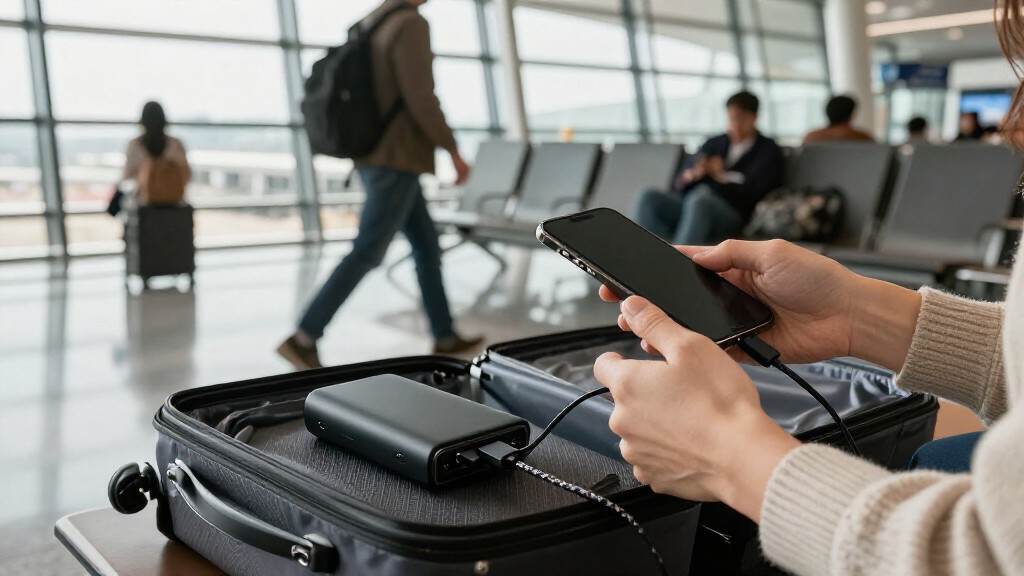
I ranked these power banks around the decisions holiday travelers face: how much charging reserve they need, how quickly the bank can deliver power, how easy it is to pack, and how many separate accessories it can replace. I gave more weight to a useful balance of capacity and output than to the largest capacity number alone, since bulky banks can be awkward for airport days and may be subject to airline restrictions. Built-in cables, wall plugs, and multi-device support counted as convenience advantages, but only when weighed against portability and flexibility.
The ranking favors options with a distinct travel role and enough stated information to judge that role. The Anker 20,000mAh 87W model leads for its mix of capacity, output, and cable convenience; the higher-output Anker 25,000mAh is a better fit for demanding devices but is less suited to minimal packing. Compact 10,000mAh choices rank well for lighter trips, while the 50,000mAh and 60,000mAh models are more specialized because their high capacities can bring airline and carry-weight concerns. I treat claims such as fast charging as a starting point, not a substitute for checking device compatibility and the manufacturer’s full specifications.
Factors to Consider When Choosing Portable Power Banks For Holiday Travel
I’d start with your itinerary and devices, not the largest capacity printed on the box. These factors help you choose a bank that fits the way you travel, the charging access you expect, and the rules that apply to your route.
Match Capacity to Your Charging Gaps
Estimate how long you’ll be away from a wall outlet and which devices need power before choosing a capacity. A phone-only traveler with regular airport or hotel access may prefer a smaller, lighter bank, while a long transit day or multiple devices can justify a larger reserve. Capacity printed on a product is not the same as the amount delivered to a device, since charging involves energy loss and device-specific demands. Avoid buying an oversized bank just because its number looks reassuring; the added weight may be a daily burden. For longer trips, access to outlets can matter more than carrying enough energy for every device from departure to arrival.
Check Output and Device Compatibility
Capacity tells you how much energy a bank stores; output tells you how quickly it can supply that energy. A high-output model can be useful for compatible phones, tablets, or laptops, but the device and cable must also support the required charging standard. A bank advertised with strong output may not deliver that rate to every port or to multiple devices at once, so check the port-by-port details. For phone-only travel, paying extra for laptop-level output may add little practical value. If you plan to charge a laptop, confirm its power needs and whether the bank’s stated output is available from the port you will use.
Choose Between Built-In Cables and Separate Leads
Attached cables and multi-cable designs can simplify packing, especially when family members carry different devices. They also reduce the chance of leaving a charging lead in a hotel room. Their tradeoff is reduced flexibility: a damaged built-in cable may make the convenience feature unusable, and the included connectors may not match every device or future upgrade. A bank with standard ports and a separate, replaceable cable gives you more control but adds another item to pack. Before choosing, check connector types and think about whether you want one all-in-one accessory or a setup you can repair and adapt.
Check Airline Rules Before Packing High-Capacity Banks
Do not assume every power bank can go in checked luggage or that a very large capacity is acceptable on every itinerary. Airlines commonly apply rules based on the battery’s watt-hour rating, and procedures can vary by carrier and route. Check the rating printed on the bank and confirm the current rules with every airline on your trip before departure. Keep power banks in carry-on baggage when required, and avoid packing a model whose capacity or labeling cannot be verified. A high-capacity bank can be useful on the ground but become a poor travel choice if it creates uncertainty at the airport.
Account for Weight, Shape, and Daily Access
A power bank that stays in your day bag all day should be judged by its size and weight as well as its stored capacity. Slim models can fit more easily into a coat pocket or personal item, while larger banks may be better left in a backpack between charging stops. Consider where you will use it: a crowded terminal, a train seat, or an outdoor stop may make an attached cable or a simple, compact shape more convenient. Think about how often you will need to pull the bank out and whether its ports remain accessible while charging. Choosing a bank you are willing to carry can be more useful than choosing one with the largest capacity.
Pay for Features That Replace Something You Carry
Extra features earn their place when they remove a separate item from your travel kit. A built-in wall plug can reduce the need for a charging adapter, multiple cables can help when sharing power, and a flashlight may be useful on a camping or emergency-focused trip. Each addition can also increase bulk or create another part that may not suit your needs. Compare the feature with what you already pack rather than treating a longer feature list as an automatic upgrade. For a short city break, a straightforward bank may be easier to carry; for a varied itinerary, an all-in-one design may justify the added size.
Frequently Asked Questions
Which capacity makes the most sense for a week of holiday travel?
There is no single capacity that fits every week-long trip; your device count and access to outlets matter more than the trip length alone. If you can recharge at your hotel each night and mainly need phone backup during transit, a compact bank may be enough. If you expect long travel days, use a tablet, or share power with another person, a mid-capacity option may offer a more comfortable reserve. Check the bank’s weight and airline eligibility before choosing a larger model. I’d avoid treating a capacity label as an exact count of phone charges.
Is a power bank with built-in cables a better choice for a flight?
Built-in cables can make airport travel simpler by reducing loose accessories and giving you a charging lead when your bag is packed away. They do not affect whether the power bank is allowed on a flight; capacity, labeling, and airline rules still matter. Check that the attached connectors work with your devices and that the cable can reach comfortably while the bank is in your bag or seat pocket. A separate cable is easier to replace if it wears out, so frequent travelers may prefer standard ports for long-term flexibility. Choose the built-in design for convenience, not as a substitute for checking the bank’s specifications.
Can I use a high-output power bank to charge a laptop?
Possibly, but the output figure alone does not confirm laptop compatibility. Check the laptop’s charging requirements, the power bank’s supported charging standard, and the output available from the specific port. Some banks can supply high power only through one port or under certain device combinations. A laptop may also draw power faster than a smaller bank can replenish it, limiting how much extra runtime you get. If laptop charging is a regular travel need, compare both output and capacity rather than relying on either figure by itself.
Should I choose a 50,000mAh or 60,000mAh bank for a long trip?
A very high-capacity bank can provide more stored energy, but it may also be heavier and harder to take on a flight. Airline restrictions are generally tied to watt-hours, so check the labeled rating and your carrier’s current policy before buying or packing one. For many travelers, access to hotel outlets makes a smaller bank more manageable than carrying a large reserve all day. Large models are most suited to trips where charging access is limited and the bank’s rules and weight work for your plans. Do not assume that a bigger capacity automatically means a better travel companion.
Is one high-capacity bank better than carrying two smaller banks?
One larger bank can reduce the number of objects and cables in your bag, while two smaller banks can give you more flexibility to split weight or charge in separate locations. Smaller units may also be easier to keep in a pocket during a day out. On the other hand, two banks mean more items to track and more capacity labels to check against airline rules. The best arrangement depends on whether you value a single charging hub or independent backup units. Compare the combined weight and total capacity, then consider how often you’ll need power away from your main bag.
Conclusion
For most holiday travelers, I’d start with the Anker 20,000mAh 87W Power Bank as the best overall balance of reserve, output, and an attached cable. The best premium pick is the Anker 25,000mAh 165W model for travelers who need stronger output for demanding devices and accept carrying a larger bank. For best value, I’d compare the two-pack Miady Slim 10,000mAh set with the single-bank options: it may suit travelers who want separate compact units, though it is not the choice for maximum output. The best choice for beginners is a straightforward 10,000mAh model such as the Anker PowerCore Slim 10000, provided its charging speed and ports match their devices. For specific needs, pick the INIU 10,000mAh 45W for compact, higher-output charging, or consider a very high-capacity bank only when limited outlet access justifies its extra size and airline checks. My final rule: confirm device compatibility and flight rules before choosing on capacity alone.