
To design effective AI upskilling programs, start by evaluating your team’s current skills and identify gaps. Focus on relevant tools like machine learning and data analysis, tailored to your organization’s needs. Use practical, hands-on activities and varied learning formats to keep employees engaged. Foster a curious, supportive environment that encourages experimentation. Regularly update content and gather feedback to stay aligned with the latest advancements, ensuring your team stays empowered to apply AI confidently. Keep exploring to deepen your understanding.

Get the latest gadgets delivered free — and shop member deals
- Fast, free delivery on millions of items
- Access to Prime Big Deal Days deals on October 6–7
- Prime Video, Amazon Music and more included
Key Takeaways
- Assess current skills and identify gaps to tailor relevant and effective AI training content.
- Focus on practical, real-world tools and concepts aligned with organizational goals.
- Incorporate interactive, hands-on learning methods like workshops and project-based tasks.
- Foster a culture of curiosity, experimentation, and ongoing support to motivate continuous learning.
- Regularly update content and gather feedback to ensure relevance and adaptability to technological advancements.
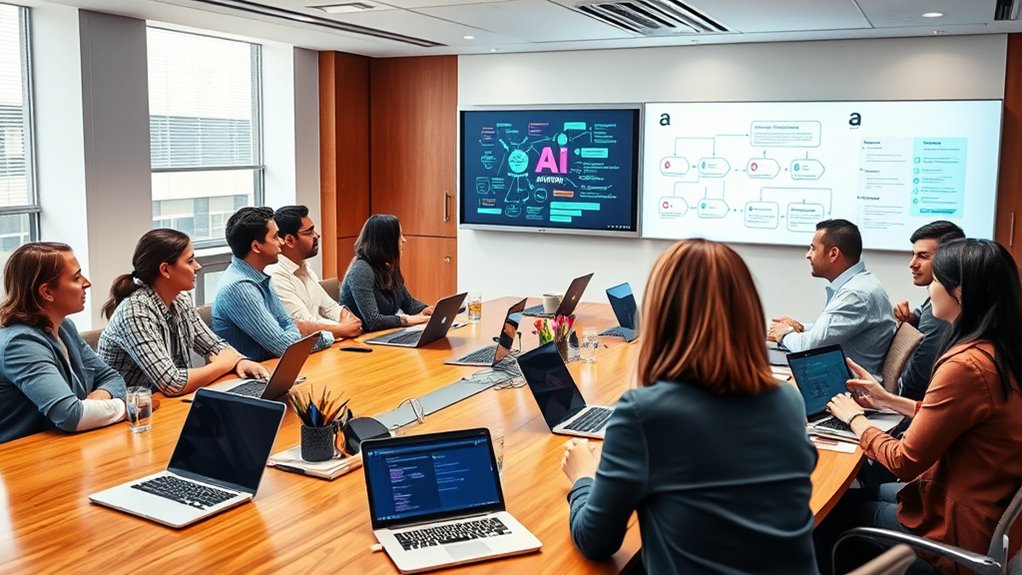
As artificial intelligence continues to transform industries, upskilling employees has become essential for organizations aiming to stay competitive. You recognize that AI is no longer a futuristic concept but a current reality reshaping how work gets done. To keep pace, you need to design effective training programs that not only teach technical skills but also foster a mindset open to continuous learning. Your goal is to create a program that is practical, engaging, and aligned with your organization’s strategic objectives. Start by evaluating your team’s current skill levels and identifying gaps related to AI technologies. This step helps you tailor content specifically to your employees’ needs, ensuring that your training isn’t too generic or overly technical for beginners. Once you understand where your team stands, you can select the most relevant AI tools and concepts to focus on, such as machine learning, data analysis, or automation. The next step is to craft a curriculum that balances theoretical understanding with hands-on experience. You want your employees to not just grasp the concepts but also apply them in real-world scenarios. Incorporate interactive elements like workshops, simulations, and project-based tasks that mirror actual challenges they might face. This approach boosts engagement and accelerates learning retention. Additionally, consider leveraging diverse learning formats—online courses, in-person sessions, or microlearning modules—so employees can learn at their own pace and according to their preferred style. To make the training effective, you should foster a culture of curiosity and experimentation. Encourage your team to ask questions, explore new ideas, and test AI tools in a safe environment where failure is seen as part of the learning process. Providing ongoing support is equally important. Set up mentorship programs, discussion forums, or regular check-ins to reinforce learning and address difficulties. Recognize and celebrate milestones to motivate continued growth. Remember, AI is a rapidly evolving field, so your training program must be adaptable. Regularly update content to include the latest advancements and industry best practices. Incorporating insights from educational data mining can further enhance your training methods by identifying effective learning strategies and personalizing content. You should also solicit feedback from participants to refine your approach and ensure the program remains relevant. Ultimately, your goal is to empower your employees with the skills and confidence to leverage AI effectively. By designing a broad, flexible, and engaging training program, you help your team not only keep pace with technological change but also become proactive contributors to your organization’s innovation and success.
AI training courses for employees
As an affiliate, we earn on qualifying purchases.
As an affiliate, we earn on qualifying purchases.
Frequently Asked Questions
How Can Small Businesses Implement AI Upskilling Effectively?
You can implement AI upskilling effectively by starting with clear goals tailored to your business needs. Offer hands-on workshops and online courses that fit your team’s schedule. Encourage a culture of continuous learning and provide resources like tutorials and mentorship. Collaborate with AI experts or vendors for guidance. Track progress and celebrate milestones to keep motivation high. This approach helps your team confidently adopt AI tools and drive growth.
What Are the Ethical Considerations in AI Employee Training?
You should prioritize transparency and fairness in AI employee training by clearly explaining how AI systems work and their purpose. Respect employee privacy by safeguarding data and avoiding biases that could unfairly impact outcomes. Make sure to involve employees in discussions about AI use and provide ongoing support. Balancing technological advancement with ethical responsibility helps build trust and ensures your training fosters an inclusive, respectful workplace environment.
How Do I Measure ROI on AI Upskilling Programs?
You can measure ROI on AI upskilling by tracking key metrics like productivity gains, employee engagement, and error reduction. Set clear, measurable goals before training begins, then compare performance data pre- and post-program. Use surveys for qualitative feedback and analyze any cost savings or revenue increases. Think of it as planting seeds—you’ll see the fruits in improved efficiency, innovation, and competitive edge over time.
Which AI Skills Are Most in Demand Across Industries?
You should focus on AI skills like machine learning, data analysis, and natural language processing, which are highly sought after across industries. Companies need experts who can develop and interpret AI models, automate processes, and improve decision-making. Cloud computing proficiency and programming languages like Python also remain in high demand. By mastering these skills, you position yourself as a valuable asset in any industry embracing AI transformation.
How Can Remote Teams Be Effectively Trained in AI Skills?
You can effectively train remote teams in AI skills by offering interactive online courses, virtual workshops, and regular webinars. Use collaborative tools like Slack or Teams to facilitate discussion and hands-on practice. Set clear goals and provide real-world projects to reinforce learning. Encourage peer-to-peer learning and provide continuous feedback. By creating an engaging, flexible learning environment, you guarantee remote employees stay motivated and develop essential AI competencies efficiently.
As an affiliate, we earn on qualifying purchases.
Conclusion
By mastering AI upskilling, you’re not just preparing for the future—you’re literally transforming into an unstoppable, super-powered workforce capable of conquering any challenge! With these training programs, you could outperform robots, outthink algorithms, and leave your competitors in the dust. So, immerse yourself wholeheartedly—because once you harness AI skills, there’s no limit to what you can achieve. Get ready to revolutionize your career and become a legend in the world of technology!
As an affiliate, we earn on qualifying purchases.
As an affiliate, we earn on qualifying purchases.
Fall Picks
fall essentials
As an affiliate, we earn on qualifying purchases.