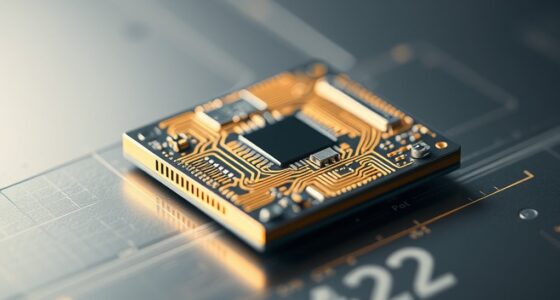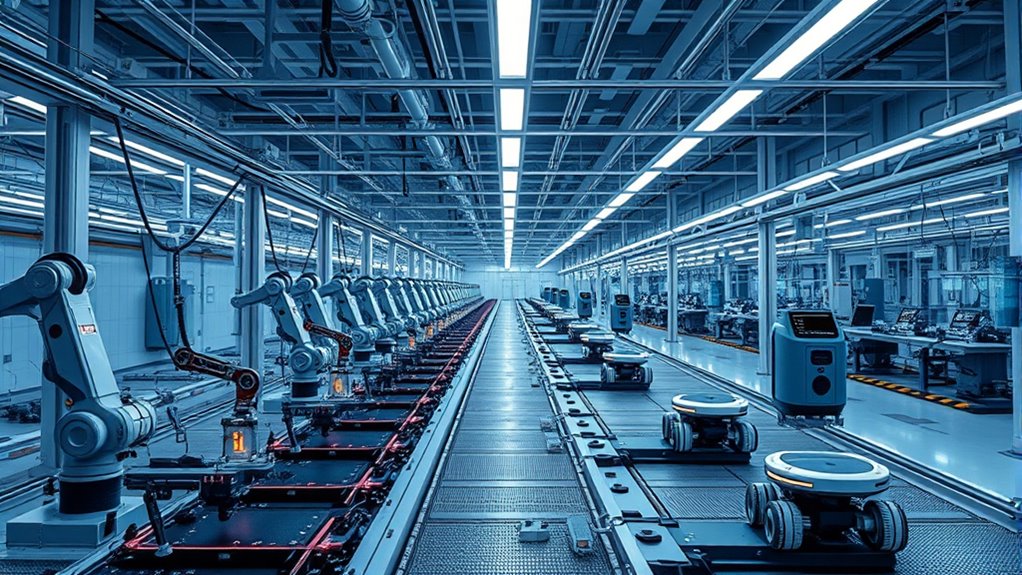

Smart factories use IoT and AI to make manufacturing more intelligent and flexible. IoT devices connect machines and sensors to gather real-time data, helping you spot issues early and minimize downtime. AI analyzes this data to optimize processes, predict maintenance needs, and automate decision-making. This technology also allows quick adjustments to production lines and creates virtual models for testing changes. Keep exploring to discover how these innovations can transform your manufacturing operations.

Get the latest gadgets delivered free — and shop member deals
- Fast, free delivery on millions of items
- Access to Prime Big Deal Days deals on October 6–7
- Prime Video, Amazon Music and more included
Key Takeaways
- IoT devices connect and monitor manufacturing equipment in real-time, enabling proactive maintenance and efficiency improvements.
- AI analyzes IoT data to optimize production processes, predict failures, and enhance decision-making.
- Digital twin technology allows virtual simulations for quick reconfiguration and testing of manufacturing changes.
- Smart factories adapt rapidly to market shifts and customer demands with flexible, data-driven production systems.
- Integrated cybersecurity and ecosystem management ensure secure, seamless operation across supply chains and manufacturing networks.

Have you ever wondered how manufacturing plants are becoming more efficient and flexible than ever before? The answer lies in the rise of smart factories, where the integration of the Internet of Things (IoT) and artificial intelligence (AI) transforms traditional production lines into highly adaptive and intelligent systems. These advancements make it possible for factories to operate with minimal human intervention, optimize processes in real-time, and quickly adapt to changing demands.
In a smart factory, IoT devices are the backbone, connecting machines, sensors, and equipment across the plant. You can imagine sensors embedded in machinery that constantly monitor performance, temperature, vibration, and other essential parameters. This continuous data collection allows you to gain a detailed, real-time understanding of your operations, identifying inefficiencies or potential failures before they escalate into costly downtime. Instead of reacting to problems after they occur, you can proactively address issues, ensuring smoother production flows.
AI plays a key role in analyzing the vast amounts of data generated by IoT devices. Advanced algorithms sift through the information, identifying patterns and predicting outcomes with remarkable accuracy. For you, this means smarter maintenance schedules—predictive maintenance—that prevent unexpected breakdowns and extend equipment lifespan. AI can also optimize scheduling, inventory management, and quality control, reducing wastage and increasing overall productivity. By automating these complex decision-making processes, AI frees you from mundane tasks, allowing you to focus on strategic improvements.
One of the most impressive aspects of smart factories is their flexibility. Through data-driven insights, you can quickly reconfigure production lines to switch between products or accommodate new designs, often without lengthy downtime. This agility enables you to respond swiftly to market trends, customer preferences, or supply chain disruptions. The digital twin technology, a virtual replica of your physical factory, further enhances this adaptability by allowing you to simulate changes and forecast outcomes before implementing them in the real world. Additionally, color accuracy in visual displays and system diagnostics ensures precise monitoring and control, improving overall efficiency.
Security is a key concern, but IoT and AI systems often incorporate advanced cybersecurity measures to protect sensitive data and prevent unauthorized access. As you adopt these technologies, you also gain better control over your entire manufacturing ecosystem, integrating supply chain management, logistics, and even customer feedback into a cohesive, intelligent system.
In essence, smart factories empower you to operate more efficiently, flexibly, and sustainably. They leverage connectivity and intelligence to turn traditional manufacturing into a dynamic, responsive enterprise—one that can thrive in today’s fast-paced, competitive environment.
As an affiliate, we earn on qualifying purchases.
Frequently Asked Questions
How Do Smart Factories Impact Global Supply Chain Resilience?
Smart factories boost your global supply chain resilience by enabling real-time monitoring and rapid response to disruptions. You can predict issues before they escalate, optimize inventory management, and adjust production schedules swiftly. This agility helps you reduce downtime and delays, ensuring smoother operations across borders. By integrating IoT and AI, you stay adaptable and better prepared for unforeseen challenges, strengthening your overall supply chain stability and competitiveness worldwide.
What Are the Cybersecurity Risks Associated With Iot in Manufacturing?
You might think IoT in manufacturing is secure, but it actually introduces significant cybersecurity risks. Hackers can exploit vulnerabilities in connected devices, gaining access to sensitive data or disrupting operations. You need robust security measures, like encryption and regular updates, to protect your systems. Ignoring these risks could lead to costly downtime, data breaches, or intellectual property theft, undermining your factory’s efficiency and reputation.
How Do AI Algorithms Optimize Production Line Efficiency?
AI algorithms optimize your production line efficiency by analyzing real-time data to identify bottlenecks and predict machine failures before they happen. They automatically adjust processes, schedule maintenance, and allocate resources to minimize downtime. By continuously learning from operational patterns, these algorithms help you streamline workflows, improve product quality, and reduce waste, ultimately maximizing output and lowering costs. This proactive approach keeps your production running smoothly and efficiently.
What Is the Cost of Implementing Smart Factory Technologies?
Implementing smart factory technologies can cost anywhere from thousands to millions of dollars, depending on your factory’s size and complexity. You’ll need to invest in sensors, AI systems, and infrastructure upgrades. While the initial expenses might seem high, they often lead to long-term savings through improved efficiency, reduced downtime, and better quality control. Planning your budget carefully and considering phased implementation helps guarantee a smoother, cost-effective progression.
How Do Smart Factories Influence Worker Roles and Skills?
You’ll find your role transformed in a smart factory, where automation and AI revolutionize daily tasks. Instead of manual labor, you’ll focus on overseeing systems, analyzing data, and problem-solving—skills that are now more valuable than ever. Your job becomes more strategic and tech-driven, requiring continuous learning. It’s like stepping into the future today, where adaptability and advanced skills are essential to stay ahead in this rapidly evolving environment.
AI predictive maintenance software
As an affiliate, we earn on qualifying purchases.
As an affiliate, we earn on qualifying purchases.
Conclusion
As you embrace smart factories powered by IoT and AI, you’re revealing a revolution that transforms manufacturing faster than lightning strikes. These technologies aren’t just tools; they’re the heartbeat of a new era, making production more efficient, flexible, and intelligent. By harnessing this innovation, you’re not just keeping up—you’re leading the charge into a future where manufacturing’s potential is limitless, unstoppable, and brighter than ever before. The future of industry is now, and it’s breathtaking.
digital twin manufacturing system
As an affiliate, we earn on qualifying purchases.
As an affiliate, we earn on qualifying purchases.
industrial cybersecurity solutions
As an affiliate, we earn on qualifying purchases.
As an affiliate, we earn on qualifying purchases.
Fall Picks
fall essentials
As an affiliate, we earn on qualifying purchases.