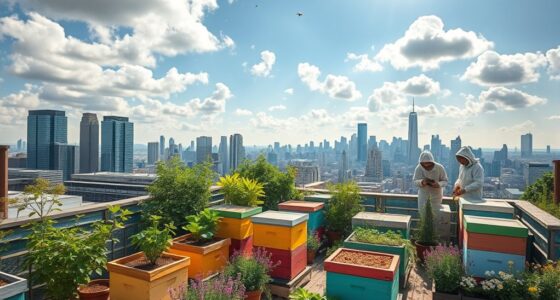
Rewilding your backyard means creating a thriving habitat for pollinators like bees, butterflies, and hummingbirds. You can do this by planting native and diverse flowers that bloom throughout the year, offering continuous nectar and pollen. Reduce or eliminate pesticides, and add natural shelter options like bee hotels. Providing water sources and allowing areas for nesting help support their needs. Keep in mind, patience is key—exploring these steps further will help you build a vibrant, self-sustaining ecosystem.
Key Takeaways
- Plant a variety of native flowers that bloom at different times to provide continuous nectar and pollen sources for pollinators.
- Reduce or eliminate chemical pesticides and herbicides, opting for natural pest control methods to maintain a safe habitat.
- Incorporate shelter options like bee hotels and leave untended areas as refuge spots for pollinators during bad weather.
- Provide clean, shallow water sources with stones or pebbles in shaded areas to support pollinator hydration and safety.
- Practice patience, allowing your habitat to mature naturally and supporting long-term biodiversity and ecosystem health.
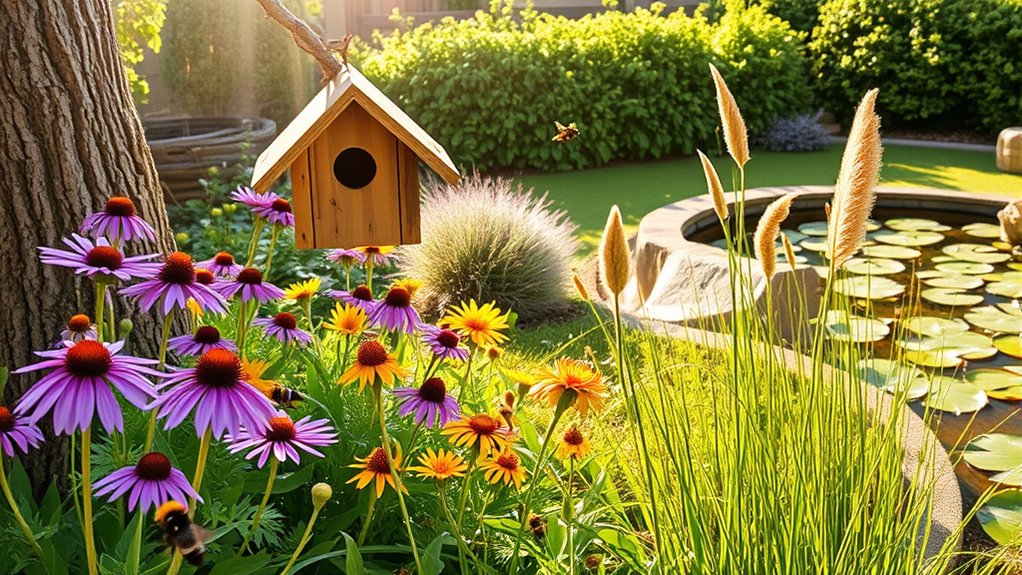
Rewilding your backyard is a simple yet impactful way to support local wildlife and restore natural ecosystems. When you focus on creating habitats for pollinators, you’re helping guarantee the health of your entire garden and contributing to broader environmental stability. Pollinators like bees, butterflies, and hummingbirds are essential for plant reproduction, food production, and biodiversity. By making your backyard more inviting to these creatures, you foster a thriving ecosystem that benefits everyone.
Start by planting a diverse range of native flowers that bloom at different times throughout the year. This provides a continuous source of nectar and pollen, which is indispensable for pollinator survival. Choose a variety of species—wildflowers, flowering shrubs, and perennials—that attract different pollinators. Incorporate plants with varying shapes and colors to appeal to a broad spectrum of species. Native plants are especially effective because local pollinators have evolved alongside them, making them more likely to recognize and feed on these plants.
Plant a variety of native, blooming flowers year-round to support local pollinators.
Reduce or eliminate the use of pesticides and herbicides. These chemicals can be harmful or even lethal to pollinators. Instead, opt for natural pest control methods, such as encouraging beneficial insects like ladybugs and predatory beetles that keep pest populations in check. Leave some areas of your yard slightly untended; these patches can serve as refuge spots where pollinators can rest, hide from predators, or find shelter during bad weather.
Providing water sources is another key step. Small, shallow dishes filled with clean water, topped with stones or pebbles, create safe spots for pollinators to drink without the risk of drowning. Position these water features in shaded areas to keep the water cool and inviting. Additionally, consider installing bee hotels or insect houses made from natural materials. These structures offer safe nesting sites for solitary bees and other beneficial insects that don’t live in hives but are indispensable for pollination.
Finally, be patient and persistent. Rewilding isn’t a quick fix, but as your habitat matures, you’ll notice more pollinators visiting, buzzing, and fluttering about. Over time, your backyard will transform into a lively, self-sustaining ecosystem that supports these critical creatures. Incorporating the role of native plants in your habitat design can significantly enhance its effectiveness. By actively creating and maintaining pollinator habitats, you’re playing a direct role in preserving biodiversity and fostering a healthier planet—all from your own outdoor space.
Frequently Asked Questions
How Do I Attract Specific Pollinator Species to My Backyard?
To attract specific pollinator species, you should plant native flowers they favor, providing nectar and pollen sources. Research their habitat needs and include plants that bloom at different times to guarantee year-round food. Avoid pesticides, and add water sources like shallow dishes or small ponds. Creating shelter such as bee hotels or native grasses also encourages particular pollinators to settle and thrive in your backyard.
What Plants Are Best for Supporting Native Pollinators?
Think of your garden as a buffet for native pollinators. Choose native plants like coneflowers, bee balm, and milkweed—they’re like a welcome mat for bees, butterflies, and hummingbirds. These plants bloom at different times, providing a steady food source throughout the season. By planting a variety, you create a thriving habitat that supports your local pollinator community and boosts your garden’s health.
How Can I Maintain a Rewilded Habitat Year-Round?
To maintain a rewilded habitat year-round, you should regularly monitor and adapt your plantings to guarantee continuous food sources and shelter. Remove invasive species, add native plants suited for each season, and leave dead wood and leaf litter for shelter. Water your habitat during dry periods, and avoid chemical pesticides. By staying attentive and flexible, you’ll support pollinators through every season, ensuring a thriving, resilient ecosystem.
Are There Any Local Regulations for Creating Wildlife Habitats?
Think of your backyard as a tiny kingdom, where rules are the laws that keep the land thriving. You should check with local authorities or wildlife agencies to see if any regulations apply—like building a birdhouse or planting native species. Some areas have restrictions to protect native ecosystems, so getting informed helps you create a harmonious habitat without any legal storms. Always stay within your local guidelines to be a responsible steward.
How Long Does It Take to See Results After Rewilding?
You’ll typically start seeing results within a few months to a year after rewilding your backyard. Initially, native plants will grow and attract pollinators like bees and butterflies. Over time, you’ll notice an increase in biodiversity, with birds, insects, and other wildlife thriving. Consistent care, such as watering and planting seasonal blooms, helps speed up this process. Patience and commitment are key to creating a flourishing habitat.
Conclusion
By rewilding your backyard, you create crucial habitats that support pollinators like bees and butterflies. Did you know that over 30% of the world’s pollinators are at risk of extinction? Your efforts can make a real difference, helping these essential creatures thrive. Plus, you’ll enjoy a more vibrant, lively garden. So, get started today—your backyard can become a haven that benefits both pollinators and your own outdoor experience.