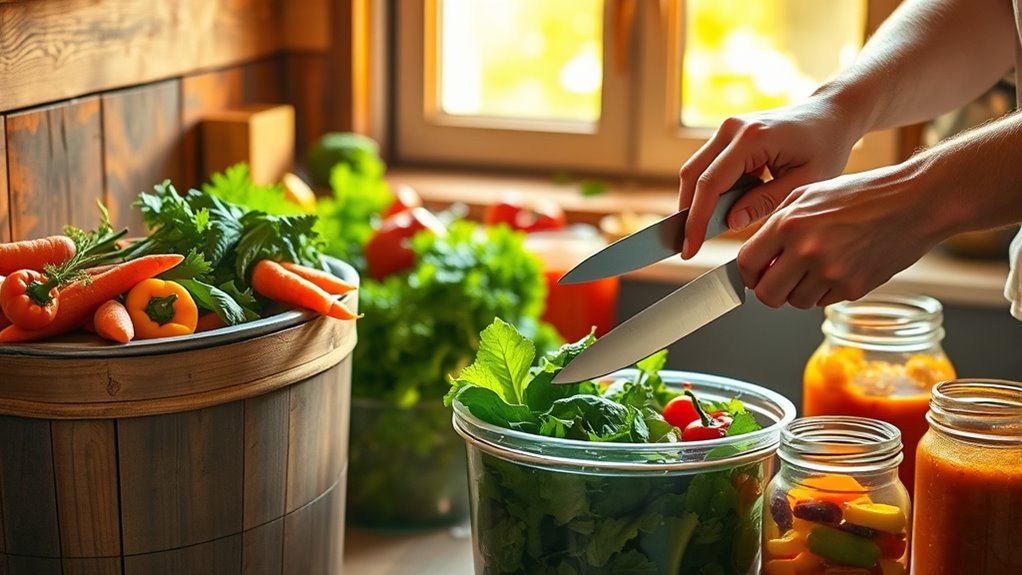

To reduce food waste in your kitchen, plan meals carefully and buy only what you need, supporting waste reduction. Use Airtight containers and organize your fridge to keep ingredients fresh longer. Get creative with leftovers, turning them into new meals, or freeze excess portions for later. Compost food scraps like vegetable peels, and choose imperfect produce. Adopting these sustainable practices can make a big impact—keep exploring to discover more simple ways to cook greener.
Key Takeaways
- Plan meals carefully to avoid impulse buys and ensure ingredients are used before spoilage.
- Store food properly in airtight containers and organize the fridge to extend freshness and reduce waste.
- Get creative with leftovers by transforming them into new dishes like soups, salads, or baked goods.
- Compost food scraps such as vegetable peels and coffee grounds to reduce landfill waste and enrich soil.
- Use energy-efficient appliances and cooking techniques to minimize environmental impact and conserve resources.

Have you ever wondered how your cooking choices impact the environment? Every decision you make in the kitchen, from buying ingredients to serving leftovers, influences the planet. Food production is responsible for a significant share of greenhouse gas emissions, water usage, and waste. By adopting sustainable cooking habits, you can reduce your environmental footprint and contribute to a healthier planet.
Your kitchen choices impact the environment—embrace sustainable habits to reduce waste and protect the planet.
One of the most effective ways to do this is by minimizing food waste. Globally, about one-third of all food produced is wasted, which not only squanders resources but also releases methane—a potent greenhouse gas—when it decomposes in landfills. You can start by planning your meals carefully. Before heading to the grocery store, make a list based on what you genuinely need and will use. This prevents impulse buys that often go uneaten and end up in the trash. When shopping, consider buying imperfect produce; these items are often discarded despite being perfectly edible, and purchasing them supports reducing waste.
In your kitchen, proper storage is essential. Use airtight containers to keep leftovers fresh longer and organize your fridge so older items are used first. When you see food approaching its expiry date, get creative with recipes—turn ripe fruits into smoothies or baked goods, and use vegetable scraps for homemade broth. Composting is another effective step; instead of tossing vegetable peels and coffee grounds, create a compost bin. This reduces landfill waste and produces nutrient-rich soil for your garden.
Cooking smarter also plays a role. Prepare only what you can consume, avoiding oversized portions that tempt you to throw away leftovers. Repurpose leftovers into new meals—day-old bread becomes croutons, cooked rice can be turned into fried rice, and vegetable scraps can be used for soup stock. Freeze excess portions for later, preventing spoilage and ensuring you always have a home-cooked meal ready.
Additionally, be mindful of your energy use in the kitchen. Use energy-efficient appliances, cook with lids on pots to save heat, and opt for cooking methods that conserve energy, like steaming or microwaving. These small changes add up over time and help reduce your carbon footprint. Incorporating sustainable cooking practices into your routine not only benefits the environment but can also inspire others to make eco-friendly choices.
Frequently Asked Questions
How Can I Compost Kitchen Scraps Effectively at Home?
To compost kitchen scraps effectively at home, start by choosing a suitable compost bin and placing it in a convenient spot. Add a mix of green materials like vegetable peels and coffee grounds with brown materials such as leaves or paper. Turn the compost regularly to aerate it and maintain moisture. Avoid adding meat or dairy to prevent odors. With patience, you’ll create nutrient-rich compost for your garden.
What Are Creative Ways to Reuse Leftover Food?
Think of leftover food as a treasure chest waiting to be opened. You can turn stray grains into hearty fried rice, transform wilted veggies into soups or stews, or repurpose bread into croutons or bread pudding. Smoothie overripe fruit into delicious drinks, or use cooked meats in wraps or salads. With a bit of creativity, you’ll breathe new life into leftovers and cut down on waste effortlessly.
Which Storage Methods Best Extend Produce Freshness?
You should store produce properly to keep it fresh longer. Use breathable bags or containers with vents for leafy greens and herbs, and keep root vegetables in a cool, dark place or perforated bags. For berries, use a paper towel-lined container to absorb moisture. Remember to refrigerate most produce promptly, but some like bananas and tomatoes do better at room temperature. Proper storage minimizes spoilage and helps reduce food waste.
How Do I Plan Meals to Minimize Waste?
You can make meal planning enjoyable by creating a flexible shopping list based on your week’s meals, focusing on versatile ingredients. Think ahead about leftovers to avoid excess. Use portioning techniques to prevent over-prepping, and get creative with what’s on hand. This way, you minimize waste effortlessly, save money, and reduce your environmental footprint—all while making your cooking routine more satisfying and sustainable.
Are There Apps to Track and Reduce Food Waste?
Yes, there are apps to help you track and reduce food waste. Apps like No Waste, Too Good To Go, and Winnow use barcode scanning, expiration tracking, and meal planning features to cut down on leftovers and spoilage. You can set reminders for expiry dates, plan meals around what you already have, and even connect with local surplus food programs. These tools make sustainable cooking easier and more efficient for you.
Conclusion
By adopting sustainable cooking habits, you can markedly reduce food waste and help the environment. Did you know that roughly one-third of all food produced globally is wasted? That’s enough to feed the world’s hungry twice over! Every small change you make—like meal planning or using leftovers—adds up. So, take charge in your kitchen, save resources, and make a real difference for our planet. Every step counts toward a more sustainable future.