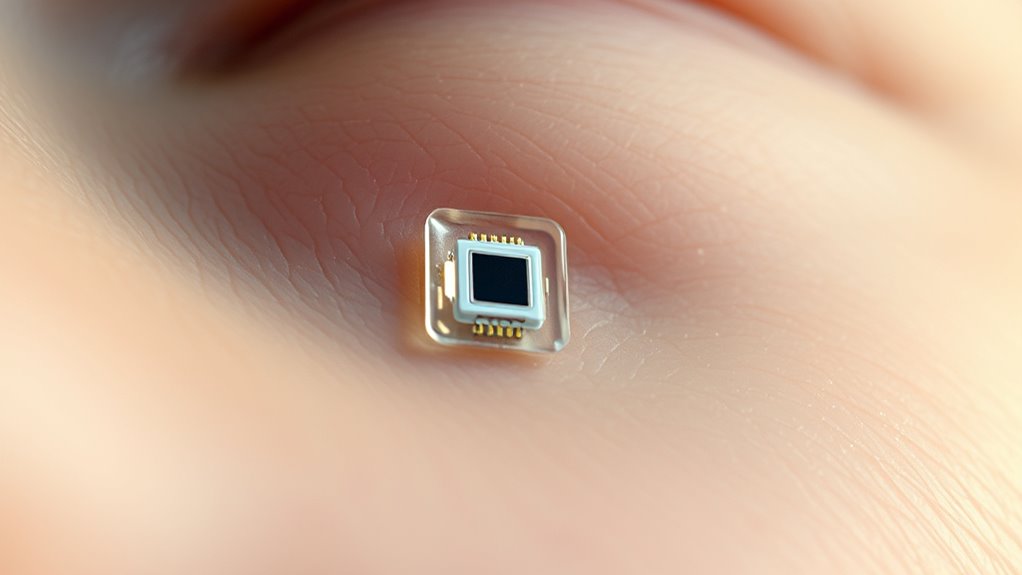

Microchip implants combined with artificial intelligence are transforming how blind patients perceive their surroundings. These advanced devices analyze visual data from external sensors or cameras and convert it into electrical signals that your brain can interpret. They help you recognize objects, navigate safely, and even identify faces, offering a more natural sense of sight. With ongoing innovations, this technology becomes increasingly personalized, opening new possibilities for independence. Keep exploring to discover how these breakthroughs are reshaping lives and senses.

Get the latest gadgets delivered free — and shop member deals
- Fast, free delivery on millions of items
- Access to Prime Big Deal Days deals on October 6–7
- Prime Video, Amazon Music and more included
Key Takeaways
- Microchip implants integrate AI to translate visual data into neural signals, restoring sight for blind patients.
- AI-powered chips analyze real-time visuals, enabling perception of objects, movement, and facial recognition.
- Customizable sensory processing filters noise and emphasizes important stimuli for safer navigation.
- These systems provide real-time navigation, voice feedback, and haptic cues to enhance independence.
- Future integrations may connect with other smart devices, creating seamless sensory networks for richer environmental awareness.
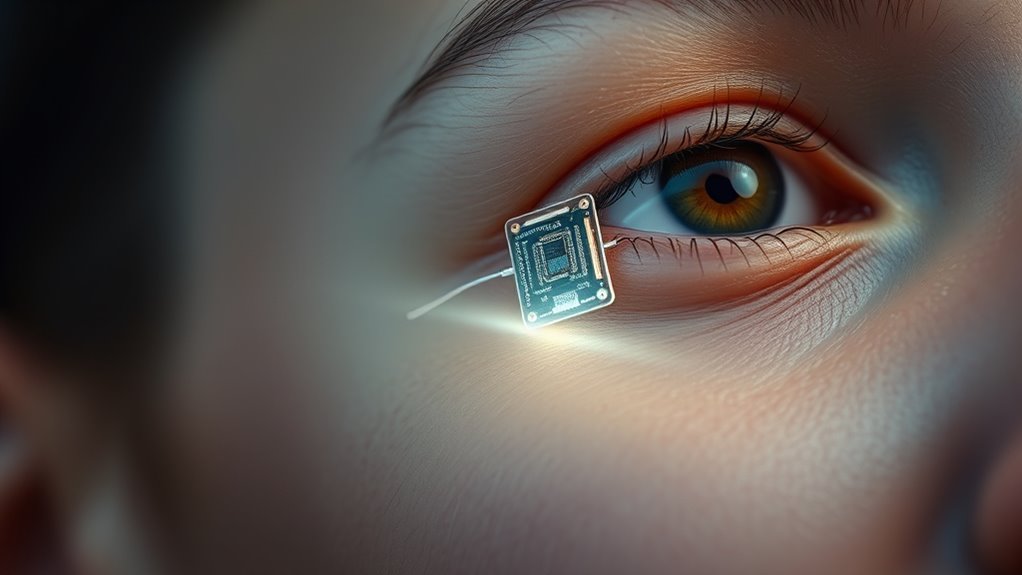
As technology advances, microchip implants are increasingly being integrated with artificial intelligence to transform how we interact with digital systems. For blind patients, this combination offers a groundbreaking way to regain a sense of sight and independence. Instead of relying solely on traditional aids like canes or guide dogs, you could soon experience a more direct connection to visual information through embedded devices that communicate with your brain or nervous system. These microchips are designed to process visual data captured by external cameras or sensors and then translate that information into signals your brain can interpret. This means you might be able to “see” objects, navigate unfamiliar environments, or recognize faces with a level of detail previously thought impossible.
Microchip implants with AI could soon restore sight and independence for blind individuals.
When you opt for such a device, you’re fundamentally bridging the gap between the physical world and your perception. The AI-powered microchip acts as an intermediary, analyzing the visual input in real-time and converting it into electrical impulses tailored to your neural pathways. This process allows you to perceive shapes, colors, and movement, giving you a form of artificial vision that’s more intuitive and immediate than traditional assistive devices. The AI component constantly learns from your interactions, refining its ability to deliver clearer, more relevant sensory information. Over time, this adaptive system becomes more attuned to your environment, helping you navigate complex or dynamic spaces with greater confidence.
The integration of AI also means that the microchip can filter out unnecessary data, reducing sensory overload and making the experience more natural. For example, it might emphasize significant objects or obstacles, alerting you to potential hazards while ignoring irrelevant background noise. This selective processing mimics how your brain naturally filters visual stimuli, making the artificial vision feel less alien and more like an extension of your senses. Moreover, the system can be customized to your specific needs, whether that’s focusing on certain types of objects or adjusting the level of detail you receive. Passive voice detection tools can assist in refining your communication, ensuring clarity and directness.
The convenience and safety benefits are substantial. With real-time updates and AI-driven navigation assistance, you can explore new environments more safely and with less reliance on others. As these implants become more advanced, they’ll likely incorporate features like voice feedback, haptic cues, or even integration with other smart devices, creating a seamless sensory network. For you, this technology isn’t just about seeing; it’s about reconnecting with the world in a way that’s more natural, empowering, and tailored to your unique journey toward independence.
microchip implant for visual impairment
As an affiliate, we earn on qualifying purchases.
As an affiliate, we earn on qualifying purchases.
Frequently Asked Questions
What Are the Potential Long-Term Health Risks of Microchip Implants?
You might face potential long-term health risks from microchip implants, such as infections or inflammation at the implant site. There’s also a chance of tissue damage or immune response over time. Some people worry about the implant’s impact on MRI scans or interference with other electronic devices. While many implants are safe initially, you should stay informed about ongoing research and consult healthcare professionals regularly to minimize risks.
How Affordable Are These Advanced Implant Technologies for Most Patients?
These advanced implant technologies are becoming more affordable as manufacturing costs decrease and competition increases. You might find options that fit within a range of budgets, especially with ongoing research and support from healthcare providers and insurance plans. While some high-end implants can be costly initially, subsidies, grants, or payment plans could make them accessible. Overall, the prices are expected to continue dropping, making these innovations more reachable for most patients.
Can Microchip Implants Be Customized for Individual Sensory Needs?
Yes, microchip implants can be customized to suit your specific sensory needs. Developers can tailor the technology to enhance particular senses or compensate for deficits, ensuring a more personalized experience. You can work closely with specialists to design an implant that targets your unique challenges, making the solution more effective. This customization improves your overall quality of life, helping you regain or augment sensory functions in a way that’s most meaningful for you.
What Are the Privacy Concerns Associated With Ai-Powered Implants?
You might worry that AI-powered implants could compromise your privacy by collecting, storing, or sharing personal data without your consent. These devices could be vulnerable to hacking or unauthorized access, risking exposure of sensitive information. It is crucial to guarantee strict security measures and clear regulations are in place so you maintain control over your data and privacy, preventing misuse or surveillance.
How Accessible Are These Technologies in Developing Countries?
These technologies are generally less accessible in developing countries due to high costs, limited infrastructure, and scarce healthcare resources. You might find that many clinics lack the equipment or expertise needed to implement AI-powered implants. Additionally, affordability remains a significant barrier, making it difficult for most people to benefit from these advancements. Efforts are underway to improve access, but widespread availability is still a work in progress.
As an affiliate, we earn on qualifying purchases.
Conclusion
By embracing microchip miracles and AI advancements, you open doors to a brighter, boundless future. Bridging barriers, boosting abilities, and breaking boundaries, this blend of technology and tenacity transforms trials into triumphs. As you navigate this new normal, remember: innovation ignites inspiration, empowering every eye to see beyond boundaries. Together, technology and tenacity turn tantalizing theories into tangible, transformative truths—touching lives and transforming futures with fearless fidelity.
neural interface for blind navigation
As an affiliate, we earn on qualifying purchases.
As an affiliate, we earn on qualifying purchases.
assistive technology for blindness
As an affiliate, we earn on qualifying purchases.
As an affiliate, we earn on qualifying purchases.
Fall Picks
fall essentials
As an affiliate, we earn on qualifying purchases.