
Battery backup capacity often confuses you because it’s measured in units like VA or Wh, which don’t directly show how long your devices will run. Many assume higher capacity means longer backup time, but actual runtime depends on how much power your devices use. Understanding the difference between energy stored and backup duration can be tricky. Stick around, and you’ll find out how to interpret these ratings and make smarter choices for your energy needs.

Get the latest gadgets delivered free with Prime
- Fast, free delivery on millions of items
- Prime Video, Amazon Music and more included
- Member-only deals all year
Key Takeaways
- Battery capacity measures stored energy, not how long a device will run during an outage.
- Different units (VA, Wh, kWh) can cause confusion about actual backup duration.
- Power consumption of connected devices impacts how long the backup lasts, not just capacity.
- Backup systems and solar batteries are rated differently, leading to misunderstandings.
- Many people confuse energy storage capacity with backup runtime, which depends on load and capacity.

Many people find themselves confused about what battery backup capacity really means, especially when shopping for uninterruptible power supplies (UPS). The term sounds straightforward, but in reality, it’s more nuanced. When you’re considering options, you might see specifications that mention how long the UPS can keep your devices running or how much power it can supply. However, what often trips people up is understanding how this relates to solar power systems and energy storage. Both concepts involve storing electricity, but their requirements and capacities are measured differently, which adds to the confusion.
Battery backup capacity isn’t just about how many devices you can keep powered; it’s also about how long those devices can run during a power outage. For example, a UPS might have a capacity rated in volt-amps (VA) or watt-hours (Wh), which indicates how much energy it can hold and deliver. But this doesn’t directly translate to how long your specific devices will run because it depends on their power consumption. If you want your essential devices to keep running for hours, you need to match the battery capacity with their total power draw. This is similar to energy storage in solar power systems—where batteries store excess solar energy for later use. Here, capacity is vital because it determines how much energy you can store and for how long you can use it when the sun isn’t shining. Additionally, understanding the capacity ratings of these systems helps you plan effectively for your energy needs. Knowing the difference between system capacities and actual runtime can prevent misunderstandings when selecting a backup power solution.
Battery capacity determines how long devices can run during outages, depending on their power consumption.
Furthermore, being aware of the energy capacity in both solar batteries and backup systems allows you to better estimate how much backup time you will have based on your typical energy consumption. The confusion deepens when you realize that energy storage systems—whether in a solar setup or backup battery—are often rated differently. Solar batteries, for instance, are rated by their total capacity in kWh, which directly relates to how much energy you can store and draw over time. Meanwhile, the backup capacity of a UPS might be given in runtime estimates, which are based on specific load conditions. It’s tempting to compare these numbers directly, but they serve different purposes. The key is understanding that a higher capacity means more stored energy, whether in a solar battery or a UPS, and that it’s the relationship between capacity and your device’s power needs that really matters. By understanding these distinctions, you can make more informed decisions when designing your energy system. Recognizing the importance of capacity measurement helps clarify how different systems are rated and what that means for your backup needs.
In essence, the confusion arises because battery backup capacity involves multiple factors—energy storage, device load, runtime, and the type of system you’re using. When you’re looking at solar power and energy storage, you see the importance of capacity to meet your energy needs over time. With UPS systems, it’s about how long they can sustain your devices during outages. Recognizing these distinctions helps clear up the mystery, making it easier to choose the right system for your needs.
As an affiliate, we earn on qualifying purchases.
Frequently Asked Questions
How Is Battery Backup Capacity Measured?
Battery backup capacity is measured in watt-hours (Wh) or amp-hours (Ah), reflecting how much energy the battery can store. You need to take into account battery chemistry because it affects voltage and efficiency, and your power consumption determines how long it lasts during an outage. Fundamentally, higher capacity means longer backup time; understanding these measurements helps you choose the right battery for your needs.
Why Do Different Devices Have Different Backup Durations?
Think of devices as different athletes, each with unique strengths. Your device’s backup duration varies because of its battery chemistry and power efficiency. Some batteries hold more energy or use it more efficiently, just like an athlete with better stamina or technique. This means some devices last longer during a power outage, while others drain quickly. So, the mix of chemistry and efficiency determines how long your backup can keep things running smoothly.
Does Higher Capacity Always Mean Better Backup Performance?
Higher capacity doesn’t always mean better backup performance because battery life depends on power efficiency, not just size. If a device uses energy more efficiently, it can run longer even with a smaller capacity. So, focus on both capacity and power efficiency when choosing a backup system. A larger battery might seem better, but without good power efficiency, it won’t necessarily give you longer backup time.
How Does Battery Age Affect Backup Capacity?
Imagine you’re a vintage radio—over time, your battery lifespan shortens, and capacity degradation kicks in. As your battery ages, its backup capacity decreases, meaning it can’t hold as much charge as when new. This is because chemical reactions inside the battery slow down, reducing overall performance. So, even if your backup system is rated high, an aged battery won’t perform as well, limiting your backup time.
Can Capacity Be Increased by Adding More Batteries?
Yes, you can increase backup capacity by adding more batteries, but it depends on your battery chemistry and the system’s design. Connecting batteries in parallel raises capacity, yet it’s vital to take into account charging cycles, as more batteries mean more cycles and potential wear. Always guarantee proper balancing and compatibility; otherwise, you risk reducing overall lifespan and performance. Proper planning maximizes your backup system’s efficiency and longevity.
As an affiliate, we earn on qualifying purchases.
Conclusion
Think of battery backup capacity as a lighthouse guiding you through the fog. At first, its numbers might seem unclear, but once understood, they illuminate your path to reliable power. Just like a lighthouse’s beam cuts through darkness, knowing your backup capacity guarantees you’re never lost in the storm of outages. Embrace the symbols, and you’ll confidently navigate the world of batteries, turning confusion into clarity—guiding your home safely through any night.
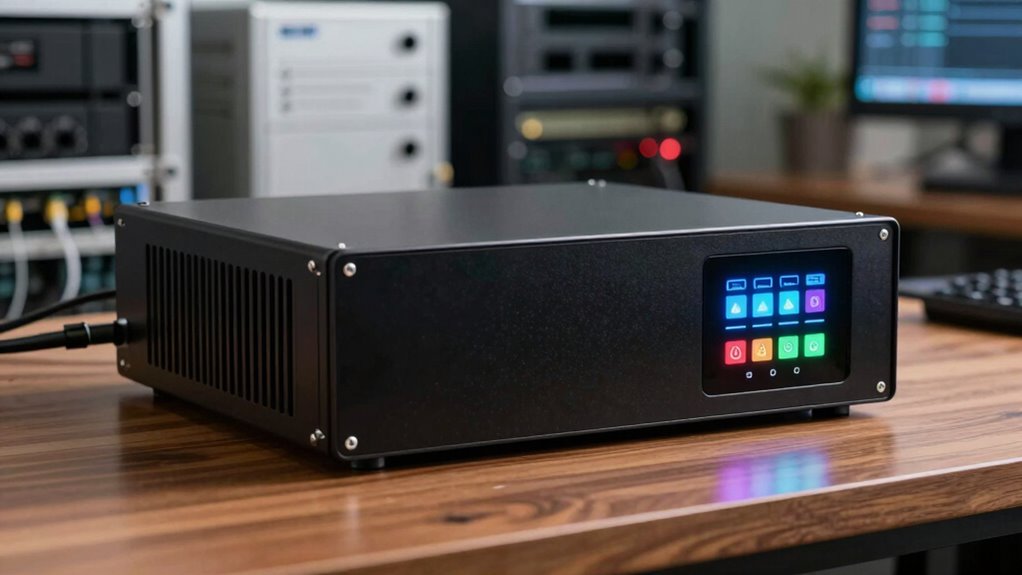
uninterruptible power supply with watt-hour rating
As an affiliate, we earn on qualifying purchases.
As an affiliate, we earn on qualifying purchases.
As an affiliate, we earn on qualifying purchases.
Columbus Day / Indigenous Peoples' Day Picks
long weekend sales
As an affiliate, we earn on qualifying purchases.