Return-to-office mandates are forever changing office design by emphasizing safety, flexibility, and collaboration. You’ll see open layouts with designated zones for social distancing, hybrid work spaces, and multi-functional areas like quiet zones and lounges. Ergonomic and wellness features are prioritized to support health and comfort. Technology is integrated for seamless hybrid work and teamwork. If you want to discover how these changes shape the future of work, keep exploring these innovative trends.

Get the latest gadgets delivered free — and shop member deals
- Fast, free delivery on millions of items
- Access to Prime Big Deal Days deals on October 6–7
- Prime Video, Amazon Music and more included
Key Takeaways
- Return-to-office mandates drive the shift toward open, flexible layouts that promote collaboration while ensuring safety and social distancing.
- Emphasis on health and safety leads to design features like barriers, touchless tech, and improved airflow.
- Ergonomic and wellness-focused furniture are prioritized to support employee health and productivity in new work environments.
- Integration of advanced technology and adaptable spaces facilitates hybrid work models and remote collaboration.
- Long-term trends favor multifunctional, future-proof office designs that balance safety, flexibility, and employee well-being.
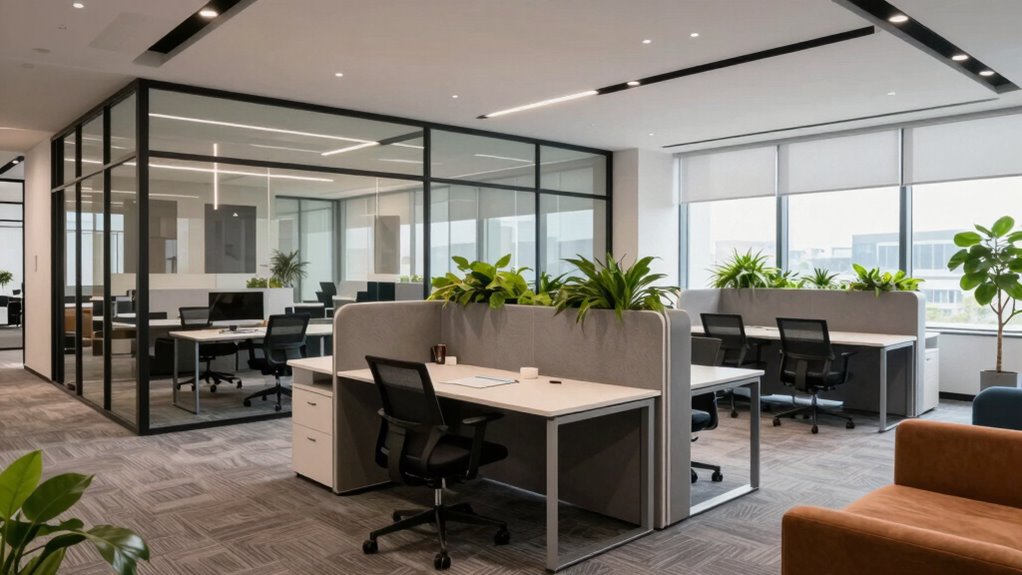
As companies begin to bring employees back to the office, the shift isn’t just about reopening doors—it’s about rethinking space and design to foster collaboration, safety, and productivity. The traditional office setup no longer suffices; instead, you’re likely to see a focus on open plan layouts that encourage interaction while maintaining flexibility. Open plan spaces eliminate barriers, making it easier for teams to communicate and share ideas spontaneously. This design fosters a sense of community and transparency, which can boost morale and creativity. However, with health concerns still prevalent, these open spaces are now being thoughtfully reconfigured to include zones that allow for social distancing without sacrificing the collaborative atmosphere.
At the same time, ergonomic furniture has become a cornerstone of new office designs. You’ll notice more adjustable chairs, sit-stand desks, and supportive accessories that prioritize comfort and health. The shift toward ergonomic furniture isn’t just about comfort; it’s about supporting employee well-being and productivity. The integration of ergonomic principles into workspace design underscores the importance of physical health in a productive work environment. When your workspace promotes good posture and reduces strain, you’re likely to experience fewer health issues and greater focus throughout the day. Employers recognize that investing in ergonomic furniture isn’t just a luxury but a necessity, especially as longer hours and hybrid work models become routine. Additionally, incorporating wellness strategies can further enhance employee health and satisfaction in these redesigned spaces. This emphasis on health-conscious design is shaping the future of workplaces to prioritize long-term employee well-being.
The return-to-office mandates are also prompting a reevaluation of how space is used. Instead of traditional cubicles and individual offices, you might find more multi-functional areas designed for different activities—quiet zones for focused work, collaborative hubs for team projects, and casual lounges for informal meetings. This multipurpose approach encourages versatility, allowing employees to choose environments that best suit their tasks. It’s about creating a dynamic workspace that adapts to your needs, rather than forcing you into a one-size-fits-all setup. Additionally, incorporating projector technology into shared spaces can enhance presentations and collaborative work, further supporting flexible and engaging environments. This shift toward adaptable spaces is also influenced by the need to optimize space utilization and accommodate diverse work styles effectively.
Safety remains a key concern, influencing layout choices and furniture arrangements. You’re likely to see more barriers, designated pathways, and touchless features integrated into the design. Open plan layouts are being redesigned with careful attention to airflow and distancing guidelines, and ergonomic furniture is positioned to optimize both safety and comfort. These changes aren’t temporary; they’re shaping the future of office design, emphasizing flexibility, health, and collaboration. As you navigate this evolving environment, the focus remains on creating a space where safety and productivity coexist seamlessly, redefining what an office can be in the post-pandemic world.
ergonomic office chair adjustable
As an affiliate, we earn on qualifying purchases.
As an affiliate, we earn on qualifying purchases.
Frequently Asked Questions
How Do RTO Mandates Impact Employee Productivity?
Return-to-office mandates can boost your employee productivity by fostering better engagement and collaboration. As employees return, they feel more connected and motivated, which enhances their performance. Personalizing workspaces makes them feel more comfortable and valued, further increasing engagement. When employees are engaged and have personalized spaces, they’re more likely to stay focused, motivated, and productive — ultimately benefiting both the individual and your organization.
What Technology Is Needed for Hybrid Office Environments?
You need smart desks and virtual collaboration tools for hybrid office environments. Smart desks automatically adjust to your preferences, making it easy to switch between workspaces. Virtual collaboration platforms enable seamless communication, whether you’re in the office or remote. These technologies guarantee connectivity, boost productivity, and create a flexible workspace that adapts to everyone’s needs, making hybrid work more efficient and engaging.
How Do RTO Policies Affect Company Culture?
Think of RTO policies like a vintage jukebox—you can’t always get the tune right unless everyone’s on the same page. These policies directly impact company morale, as employees may feel valued or undervalued, depending on flexibility. They also pose leadership challenges, requiring managers to foster connection and trust remotely. When well-managed, RTO policies strengthen culture; if not, they risk creating disconnect and disengagement.
Are Flexible Workspaces More Cost-Effective?
Flexible workspaces are more cost-effective because they promote space optimization, allowing you to maximize existing office areas and reduce the need for large, dedicated spaces. This approach leads to significant cost savings on rent, utilities, and maintenance. By adjusting workspace layouts based on current needs, you can efficiently accommodate your team without overspending, making flexible workspaces a smart choice for managing expenses while supporting a dynamic work environment.
How Do RTO Trends Vary Across Industries?
You’ll notice RTO trends vary vastly across industries. Tech firms prioritize open, collaborative spaces, while finance firms focus on secure, private environments. Retail and hospitality adapt with flexible layouts, and healthcare emphasizes compliance with regional regulations. Industry-specific adaptations meet regional compliance, shaping office designs uniquely. You’ll find that understanding these nuanced needs helps tailor spaces that foster productivity, comply with laws, and reflect each industry’s distinct culture.
As an affiliate, we earn on qualifying purchases.
Conclusion
As you adapt to new office designs, remember that return-to-office mandates are reshaping workspaces like a river carving a canyon—steadily and inevitably. Embrace these changes, knowing they’re crafted to foster collaboration, flexibility, and well-being. Just as a river finds its path, your office will evolve into a space that supports both productivity and comfort. By staying open to innovation, you’ll navigate these transformations successfully and thrive in the future of work.
As an affiliate, we earn on qualifying purchases.
As an affiliate, we earn on qualifying purchases.
Fall Picks
fall essentials
As an affiliate, we earn on qualifying purchases.