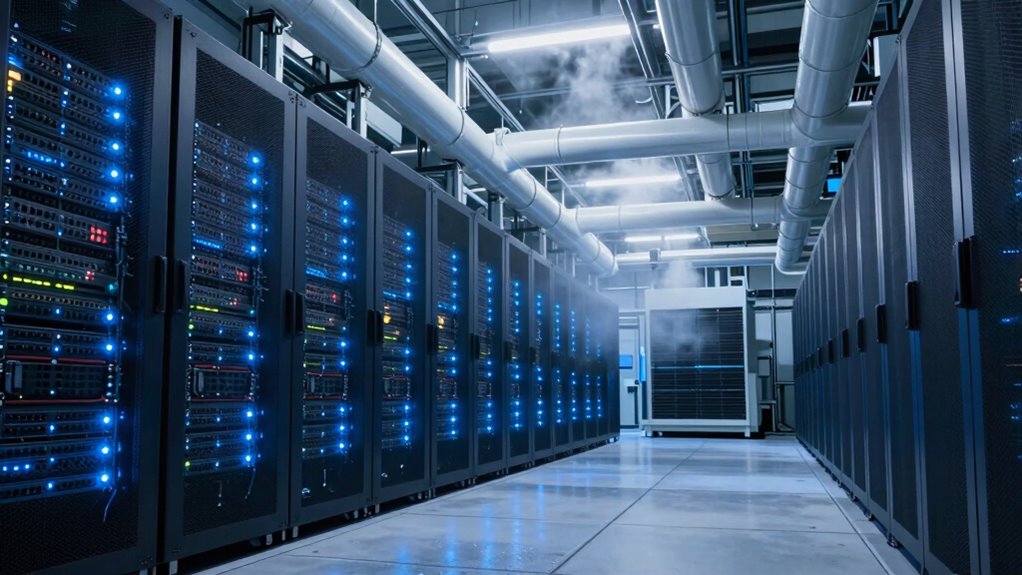
You can’t ignore the energy challenge facing data centers, as they consume huge amounts of electricity for servers and cooling, causing environmental concerns. Traditional cooling methods are energy-intensive, but innovative solutions like liquid cooling and natural airflow can cut consumption markedly. Moving to renewable energy sources further reduces their carbon footprint. To understand how these strategies can transform the industry and what you can do about it, keep exploring the innovative solutions shaping a greener future.
Key Takeaways
- Data centers consume vast amounts of electricity, primarily for server operation and energy-intensive cooling systems.
- Traditional cooling methods significantly contribute to high energy consumption and environmental impact.
- Transitioning to renewable energy sources and sustainable cooling can substantially reduce data center carbon footprints.
- Implementing energy management systems optimizes power use and promotes efficiency in data center operations.
- Industry innovations like liquid cooling and smart grids are essential to address the escalating energy demand.
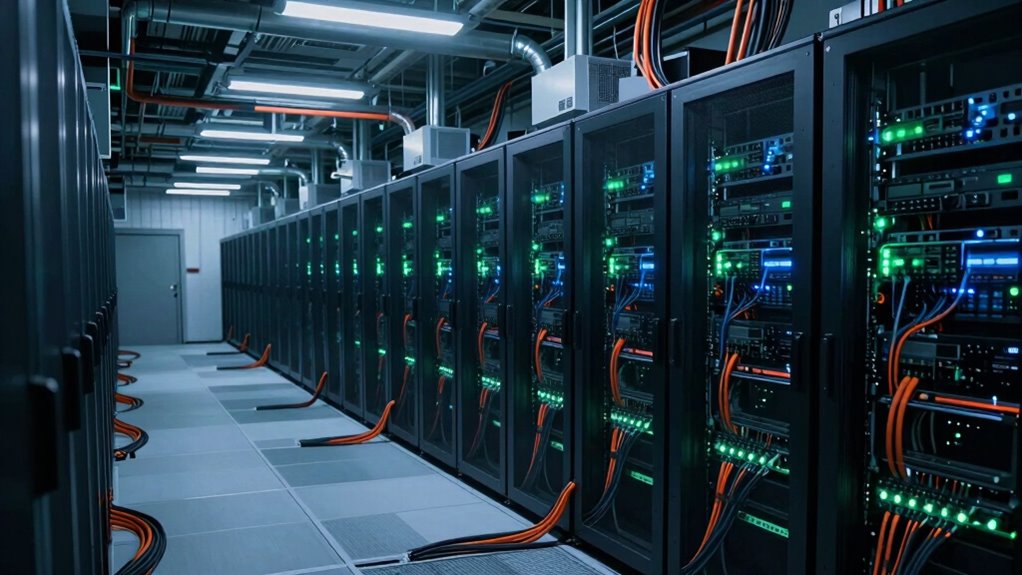
Have you ever wondered how much energy your data center consumes? It’s a staggering amount—data centers worldwide account for a significant portion of global electricity use. This energy demand isn’t just about powering servers; it also encompasses cooling systems that prevent overheating. Traditional cooling methods are energy-intensive, often relying on vast amounts of electricity to keep equipment at ideal temperatures. That’s why sustainable cooling has become a critical focus for the industry. By implementing innovative cooling solutions like liquid cooling or free-air cooling, data centers can drastically reduce their energy footprint. These methods leverage natural resources or advanced technology to minimize power consumption, making operations more efficient and environmentally friendly.
You might think that renewable power is the ultimate solution to this energy problem. And you’re right—transitioning to renewable sources like wind, solar, or hydroelectric power can markedly lower the carbon footprint of data centers. Many companies are already investing in renewable energy contracts or building on-site renewable facilities to power their operations. This shift not only helps meet sustainability goals but also ensures a more reliable and stable energy supply. As the grid becomes greener, the environmental impact of data center operations diminishes, aligning with global efforts to combat climate change. However, integrating renewable power isn’t just about flipping a switch; it requires infrastructure upgrades and strategic planning to match energy supply with fluctuating demand.
Despite these advancements, the challenge remains: how do you balance the demand for high-performance computing with the need for energy efficiency? As data centers grow in size and capacity, their energy consumption accelerates. Cutting-edge energy management systems now analyze real-time data to optimize power usage, reducing waste and improving efficiency. These systems can prioritize renewable energy use during peak times and implement intelligent cooling strategies that adapt to changing conditions. The key is to treat energy management as an integrated part of the data center’s design, rather than an afterthought. By focusing on sustainable cooling solutions and expanding renewable power sources, you can address the energy problem head-on, making your data center not just more efficient, but also more sustainable. Incorporating energy-efficient technology into infrastructure upgrades can further enhance these efforts.
Additionally, advancements in projector technology within the industry showcase how innovative solutions can enhance visual experiences while reducing energy consumption, demonstrating that sustainability can be integrated across different tech sectors. This isn’t just about saving costs; it’s about taking responsibility for the environment and ensuring the future of digital infrastructure. The energy problem in data centers is urgent, but through innovation and commitment, you can be part of the solution—reducing carbon emissions, conserving resources, and paving the way for a more sustainable digital world. Recognizing the importance of energy efficiency in all facets of tech can lead to more comprehensive sustainability efforts across industries. Furthermore, implementing smart grid technology can help optimize energy distribution and reduce waste at a broader scale.
A growing focus on renewable energy integration is essential for transforming data center operations into more sustainable practices.
Liquid Cooling For Data Centers (HVAC Industrial Books)
As an affiliate, we earn on qualifying purchases.
As an affiliate, we earn on qualifying purchases.
Frequently Asked Questions
How Does Renewable Energy Impact Data Center Sustainability?
Renewable energy greatly boosts data center sustainability by enabling renewable integration, reducing reliance on fossil fuels. When you prioritize renewables, you lower carbon emissions and improve sustainability metrics, making your operations more eco-friendly. This shift not only helps meet regulatory standards but also enhances your company’s reputation. By actively investing in renewable sources, you guarantee long-term energy resilience and demonstrate your commitment to sustainable practices in a competitive tech landscape.
What Are Emerging Technologies Reducing Energy Consumption?
Smart solutions surge forward with AI optimization and cooling innovations, dramatically reducing data center energy consumption. You harness AI-driven algorithms to streamline server operations, minimizing waste and maximizing efficiency. Cooling innovations like liquid cooling and free-air cooling slash energy use by replacing traditional methods. Embrace these emerging technologies, and you’ll cut costs, conserve resources, and champion sustainability, proving that innovation is key to a greener, more efficient digital future.
How Do Data Center Locations Affect Energy Efficiency?
You realize that data center locations considerably impact energy efficiency through geographic climate and cooling infrastructure. If you choose cooler climates, you can reduce reliance on energy-intensive cooling systems, lowering overall energy consumption. Additionally, optimizing cooling infrastructure by leveraging natural cooling methods, like outdoor air or water-based systems, boosts efficiency. As a result, selecting locations with favorable climates and investing in advanced cooling can make your data center more energy-efficient and environmentally friendly.
What Role Do Government Policies Play in Energy Reduction?
You should know that government policies substantially influence energy reduction efforts, with nearly 60% of tech companies citing policy incentives as essential. By implementing regulatory standards, governments can push data centers to adopt greener practices. These policies motivate companies to invest in energy-efficient technologies, reduce emissions, and cut costs. Your advocacy for stronger policies can help accelerate industry-wide change, making our energy future more sustainable.
How Can Consumers Influence Data Center Energy Practices?
You can influence data center energy practices by increasing your consumer awareness and advocating for sustainable tech choices. Your behavioral change, like supporting companies with green initiatives or reducing unnecessary online activity, sends a strong message. When consumers prioritize eco-friendly options, it pressures providers to adopt greener practices. Your choices and voice matter, helping to drive industry-wide improvements in energy efficiency and sustainability in data centers.

Energy Management Systems: Operation and Control of Electric Energy Transmission Systems (Electric Energy Systems and Engineering Series)
Used Book in Good Condition
As an affiliate, we earn on qualifying purchases.
As an affiliate, we earn on qualifying purchases.
Conclusion
You can’t ignore the data center energy problem—it’s the silent storm brewing beneath our digital age. As we chase faster speeds and bigger storage, we risk draining our planet’s liveliness. The question isn’t just about efficiency; it’s about our responsibility to safeguard the future. Will we continue to turn a blind eye, or will we harness innovation as our lighthouse? Remember, in the race for progress, sustainability must be our guiding star.

ADVANCING DATA CENTER SUSTAINABILITY: Through Artificial Intelligence and Renewable Biological Power Sources
As an affiliate, we earn on qualifying purchases.
As an affiliate, we earn on qualifying purchases.

FLOWBREEZE Windowless Portable Air Conditioner, 26" Small Evaporative Air Cooler for Room No Window, 3-Speed Settings, 4 Modes, 7H Timer, Remote Control, 4 Ice Packs, Quiet AC Unit for Bedroom, Black
✔️ No Window/Exhaust Needed: Compact design for rooms without windows (Bedroom, Office, Dorm).
As an affiliate, we earn on qualifying purchases.
As an affiliate, we earn on qualifying purchases.