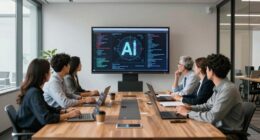

To prepare for AI-driven workplace transformation, you need to embrace continuous learning and develop new skills like data analysis and digital literacy. Stay open to change, adapt quickly to new tools, and cultivate flexibility in your roles. Focus on building collaboration and emotional intelligence, as these remain essential. Understanding ethical considerations also helps you stay responsible in AI use. Keep evolving with technology, and you’ll be ready for the future — if you explore further, you’ll discover even more ways to succeed.
Key Takeaways
- Develop proficiency in AI tools, data analysis, and digital literacy to stay competitive in AI-augmented workplaces.
- Cultivate adaptability and a growth mindset to embrace rapid role changes and new technologies.
- Focus on enhancing collaboration, emotional intelligence, and interpersonal skills alongside technical expertise.
- Prioritize continuous learning, reskilling, and staying informed about ethical standards for responsible AI use.
- Leverage auxiliary tools, like projectors, to improve communication, collaboration, and visual clarity in evolving work environments.

As artificial intelligence continues to advance, workplaces are rapidly transforming, making it essential for you to prepare. The integration of AI into daily operations isn’t a distant future; it’s happening now, reshaping how tasks are performed and how organizations operate. To stay competitive and relevant, you need to understand what this shift means for your role and how to adapt effectively. AI is automating repetitive tasks, freeing up your time to focus on more strategic, creative, and interpersonal responsibilities. This means that your ability to leverage AI tools will become a vital skill, and developing proficiency in these technologies can set you apart in your career.
AI is transforming workplaces now—adapting and mastering these tools is key to staying competitive.
You should also recognize that AI’s impact extends beyond efficiency. It’s changing workplace dynamics, influencing decision-making processes, and creating new opportunities for innovation. For instance, data-driven insights generated by AI can help you make more informed choices, but only if you’re comfortable interpreting complex data outputs and understanding their implications. Consequently, acquiring skills in data analysis, machine learning, and digital literacy isn’t optional anymore; it’s fundamental to thriving in this new environment. Embracing continuous learning becomes your best strategy. Companies are investing heavily in reskilling programs, and you should take advantage of these opportunities to stay ahead of the curve.
Another essential aspect is adaptability. The workplace of the future will be less predictable and more fluid, with roles evolving rapidly as AI takes on new tasks and responsibilities. You need to cultivate a mindset that embraces change and sees it as an opportunity rather than a threat. Flexibility in your skills and willingness to explore new tools and methodologies will help you remain valuable. Collaboration will also become more important, as AI often facilitates enhanced teamwork and communication across functions. Building strong interpersonal skills and emotional intelligence will complement your technical expertise, making you more effective in AI-augmented environments.
Finally, ethical considerations around AI should not be overlooked. As you work alongside these systems, you’ll need to be aware of privacy issues, bias, and the broader societal impacts of automation. Staying informed about ethical standards and advocating for responsible AI use will position you as a conscientious professional. Preparing for this future isn’t just about acquiring new skills; it’s about cultivating a mindset that’s open to change, ethically aware, and committed to lifelong learning. The more proactive you are today, the better equipped you’ll be to navigate and thrive in the AI-driven workplace of tomorrow. Additionally, understanding how projectors support visual clarity and collaboration can provide insights into leveraging technology effectively in different environments.
Top picks for "future work prepar"
Open Amazon search results for this keyword.
As an affiliate, we earn on qualifying purchases.
Frequently Asked Questions
How Will AI Impact Job Security Across Different Industries?
AI will likely threaten some jobs while creating others. You might see automation replace repetitive tasks in industries like manufacturing and customer service, but new roles will emerge in tech, data analysis, and AI management. To stay secure, you should upskill continuously, embrace change, and adapt to new technologies. Your flexibility and willingness to learn will be key in steering job security across different industries amid AI advancements.
What Skills Will Be Most Valuable in an Ai-Driven Workplace?
You’ll find that adaptability and critical thinking become your most valuable skills in an AI-driven workplace. While some worry about automation replacing jobs, developing emotional intelligence, creativity, and problem-solving abilities will set you apart. These skills enable you to work alongside AI, leverage its strengths, and innovate. Embracing continuous learning helps you stay ahead, ensuring you remain relevant and valuable regardless of technological shifts.
How Can Companies Ensure Ethical AI Implementation?
You can guarantee ethical AI implementation by establishing clear guidelines aligned with your company’s values, involving diverse teams in decision-making, and prioritizing transparency. Regularly audit AI systems for bias and fairness, and provide ongoing training for employees on ethical considerations. Foster open communication about AI’s impact, and stay updated on evolving regulations. By taking these steps, you create a responsible AI environment that builds trust and minimizes risks.
What Role Will Humans Play Alongside AI in Decision-Making?
You might think AI will replace humans entirely, but that’s not the case. Humans will play a crucial role in decision-making by providing ethical judgment, contextual understanding, and emotional intelligence that AI can’t replicate. Your insights and intuition will complement AI data analysis, ensuring decisions are well-rounded. Embracing this partnership enhances accuracy and accountability, making your contribution essential in an AI-driven workplace.
How Will AI Influence Workplace Culture and Employee Well-Being?
AI will shape your workplace culture by fostering collaboration and innovation, but it can also create stress or feelings of redundancy if not managed well. You’ll need to adapt by embracing new tools and maintaining open communication. Prioritize employee well-being by setting boundaries and promoting work-life balance, ensuring that AI enhances your experience rather than diminishes it. Your proactive approach will help create a positive, resilient work environment.
Conclusion
As you embrace the AI-driven workplace, remember you’re steering a ship through uncharted waters. By staying adaptable, continuously learning, and fostering collaboration, you’ll navigate this transformation smoothly. Think of AI as your compass guiding you toward new opportunities, not as a storm to fear. With an open mind and proactive attitude, you’ll turn this change into a voyage of growth and innovation, steering confidently into the future of work.