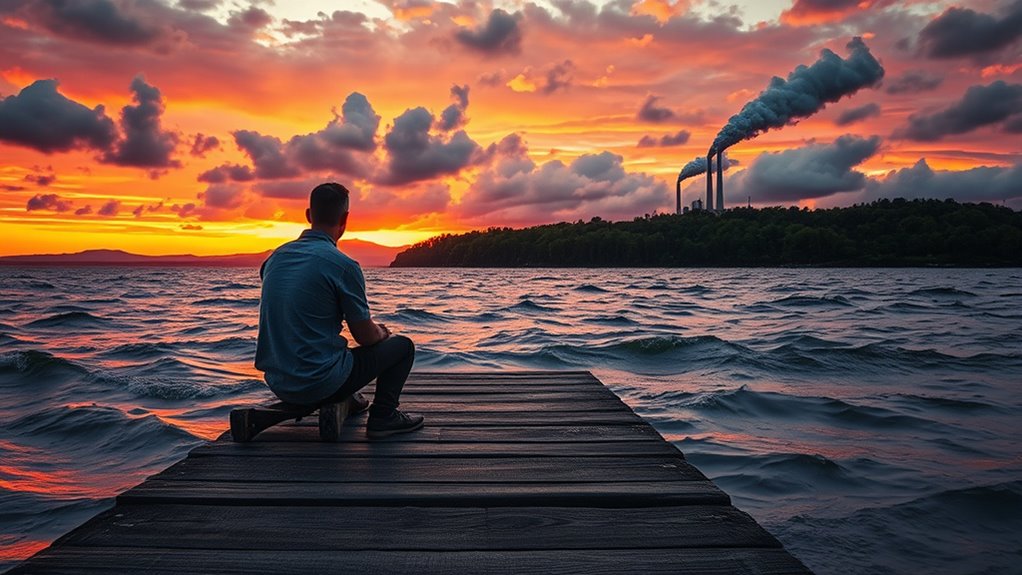

Eco-anxiety is a real emotional response to the climate crisis, making you feel overwhelmed, guilty, or hopeless. You might find yourself constantly worrying about environmental problems or feeling frustrated by the lack of immediate change. To manage this stress, channel your concerns into positive actions, connect with others, and focus on self-care. Recognizing that you’re not alone can help, and exploring ways to cope further can bring relief and hope.
Key Takeaways
- Eco-anxiety is a valid emotional response involving worry and helplessness about environmental issues.
- Managing eco-anxiety involves channeling concerns into positive actions and seeking supportive communities.
- Limiting media exposure and practicing self-care, such as mindfulness, can reduce feelings of overwhelm.
- Connecting with others and sharing feelings normalize experiences, reducing isolation and fostering collective resilience.
- Recognizing small, consistent efforts can restore hope and empower individuals to contribute to environmental change.

Have you ever felt overwhelmed by the state of the environment, as if the planet’s future is slipping out of your control? That feeling of helplessness, often called eco-anxiety, can hit hard when you see news about rising temperatures, melting ice caps, or devastating wildfires. It’s natural to feel concerned, but when these worries start to dominate your thoughts, they can turn into stress that affects your daily life. Eco-anxiety isn’t just about feeling sad or worried; it’s a real emotional response to the climate crisis that many people experience today. Recognizing that your feelings are valid is the first step toward managing them.
You might find yourself constantly checking news updates or feeling guilty for not doing enough. It’s common to feel a sense of frustration or despair, especially when the scale of environmental problems seems overwhelming. But it’s essential to remember that you’re not alone, and your emotions are shared by many. Instead of letting these feelings fester, try to channel that concern into positive actions, no matter how small. Even making changes in your daily routine—like reducing waste, conserving energy, or supporting sustainable brands—can restore a sense of agency. These actions remind you that you can contribute to change, no matter how big or small.
Developing a balanced perspective is indispensable. While staying informed is important, constant exposure to negative news can intensify anxiety. Limit your media intake if you notice it’s making you feel worse, and seek out stories of progress and solutions. Connecting with others who share your concerns can also be comforting. Joining local environmental groups or online communities can give you a sense of solidarity and purpose. Sharing your feelings openly helps to normalize your experience and can reduce feelings of isolation.
Practicing self-care is essential when managing eco-anxiety. Make time for activities that bring you joy and relaxation—whether it’s exercise, hobbies, or spending time with loved ones. Mindfulness and meditation can help you stay grounded amid worries about the future. Remember, it’s okay to set boundaries around your environmental activism; you don’t have to carry the weight of the world alone. Taking care of your mental health isn’t just beneficial for you; it also keeps you resilient and motivated to continue making a difference.
Ultimately, understanding that eco-anxiety is a common and manageable response can empower you. You don’t have to be perfect or have all the answers. Small, consistent steps toward sustainability and mental well-being can help you regain a sense of hope and control. By acknowledging your feelings and taking deliberate actions, you can navigate eco-anxiety rather than be overwhelmed by it. The future depends on collective effort, and your well-being is an essential part of that effort. Additionally, awareness of AI security vulnerabilities reminds us that technological advancements must be paired with responsible safety measures to ensure they benefit society without introducing new risks.
Top picks for "anxiety understand manag"
Open Amazon search results for this keyword.
As an affiliate, we earn on qualifying purchases.
Frequently Asked Questions
Can Eco-Anxiety Lead to Physical Health Issues?
Yes, eco-anxiety can lead to physical health issues. When you’re overwhelmed by climate worries, you might experience symptoms like headaches, fatigue, or trouble sleeping. Chronic stress from eco-anxiety can also weaken your immune system, making you more prone to illnesses. It’s important to find healthy ways to cope, like practicing mindfulness, staying active, and connecting with others, to protect your physical health while addressing your concerns.
Are There Specific Therapies Effective for Eco-Anxiety?
While some might think therapy isn’t necessary, specific approaches can help you manage eco-anxiety effectively. Cognitive-behavioral therapy (CBT) helps reframe negative thoughts, reducing stress. Mindfulness-based therapies can ground you in the present, easing worry about the future. Acceptance and Commitment Therapy (ACT) encourages embracing your feelings while taking meaningful action. These therapies empower you to cope better, fostering resilience amid climate concerns.
How Does Eco-Anxiety Differ Across Age Groups?
You might notice eco-anxiety manifests differently across age groups; younger people often feel overwhelmed by future uncertainties, while older individuals may experience grief over environmental loss. Teens and young adults tend to voice activism, whereas seniors might grapple with feelings of helplessness. Recognizing these differences helps you tailor coping strategies, ensuring support resonates with your age-specific concerns, fostering resilience, and encouraging constructive action amidst climate worries.
Can Eco-Anxiety Impact Sleep Patterns?
Eco-anxiety can definitely impact your sleep patterns. Studies show that 60% of people experiencing climate-related stress report trouble falling asleep or staying asleep. When you worry about the environment, your mind stays active at night, making it hard to relax. You might find yourself lying awake, ruminating on climate issues. To improve sleep, try mindfulness or disconnect from news before bedtime to calm your mind.
Are There Community Programs to Help Manage Eco-Anxiety?
Yes, community programs can help you manage eco-anxiety. Many local groups offer support through workshops, outdoor activities, and peer counseling, giving you a space to share concerns and learn coping strategies. Look for environmental organizations, mental health services, or climate action groups in your area. Participating in these programs can provide comfort, connection, and practical tools to handle your eco-related stress more effectively.
Conclusion
As you breathe in the crisp, fresh air of a changing world, remember you’re not alone in this journey. The storm of eco-anxiety may swirl around you, but within it lies your strength to act and adapt. Picture yourself planting seeds of hope, nurturing resilience amid the chaos. Embrace your feelings, harness your courage, and know that even in the darkest clouds, a glimmer of light can guide you toward hope and healing for the planet.