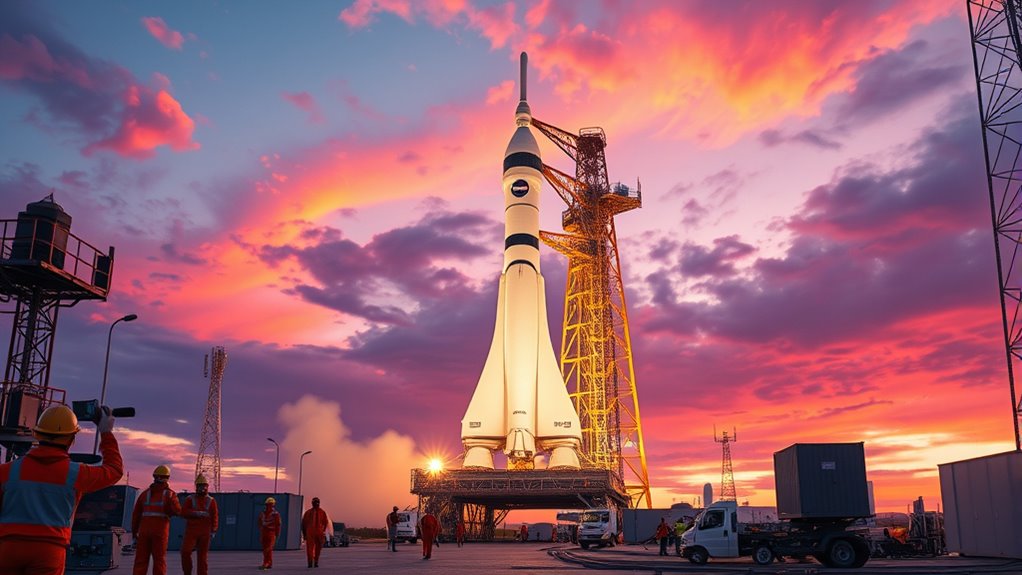

In late 2025, you can expect exciting space missions from NASA, SpaceX, and other international agencies aiming to explore the Moon, Mars, and beyond. These launches will include lunar landings to establish bases, new Mars orbiters and rovers studying the planet’s geology, and probes targeting asteroids and icy moons to uncover the solar system’s origins. If you want to learn more about the technological advances and future goals behind these missions, there’s plenty to discover.

Get the latest gadgets delivered free with Prime
- Fast, free delivery on millions of items
- Prime Video, Amazon Music and more included
- Member-only deals all year
Key Takeaways
- NASA and SpaceX plan lunar landings in late 2025 to establish sustainable bases and test new habitat technologies.
- Multiple Mars missions, including orbiters and landers, will arrive to study the planet’s geology, climate, and potential for past life.
- Probes targeting asteroids, comets, and icy moons of Jupiter and Saturn aim to understand solar system origins and assess threats.
- Advanced propulsion systems and autonomous landing technologies will be deployed on various deep-space exploration missions.
- International collaborations will advance lunar and Martian exploration, marking a pivotal year in human space exploration efforts.
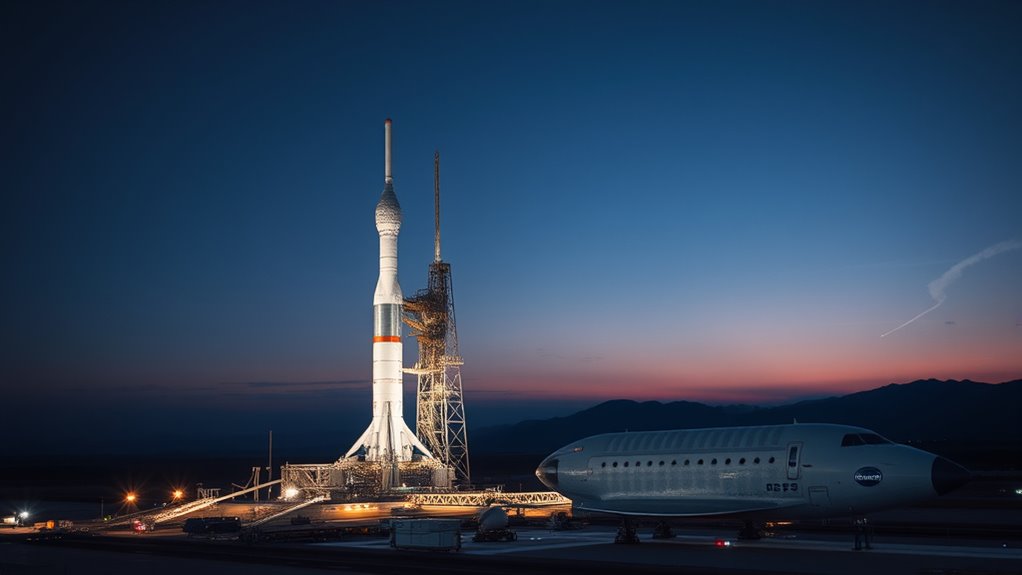
As 2025 draws to a close, space agencies and private companies are launching some of their most ambitious missions yet. This year has been packed with groundbreaking launches and significant milestones, and the final months promise even more excitement. You might find yourself captivated by the upcoming missions designed to explore new frontiers, test innovative technologies, and deepen our understanding of the universe. These launches are not just about setting records; they’re about expanding human knowledge and paving the way for future exploration.
One of the most anticipated missions is a series of lunar landings set for late 2025. Agencies like NASA and private firms such as SpaceX are aiming to establish sustainable bases on the Moon’s surface. These efforts are driven by the goal of creating a permanent human presence, with plans to test life-support systems, develop local resource utilization, and prepare for crewed missions to Mars. You might follow these developments closely, as they represent a pivotal step toward long-term space habitation. The lunar missions also serve as proving grounds for new propulsion systems and habitat designs that could revolutionize future deep-space exploration.
Lunar landings aim to establish sustainable bases, test new tech, and pave the way for future Mars exploration.
Meanwhile, Mars remains a primary focus for many space programs. Several missions are scheduled to arrive at the Red Planet by the end of 2025, including orbiters and landers. These spacecraft will study Mars’ climate, geology, and potential for past life. They’ll collect samples, analyze soil composition, and test new entry and landing techniques. If you’re tracking these missions, you’ll notice how they’re pushing technological boundaries, from autonomous landing systems to advanced scientific instruments. The data gathered could reveal secrets about Mars’ history and inform future human missions, making this a pivotal year for Martian exploration.
In addition to lunar and Martian missions, the year is also marked by ambitious projects venturing into the outer solar system. Several probes are on their way to study asteroids, comets, and even the icy moons of Jupiter and Saturn. These missions aim to understand the origins of our solar system and assess potential threats from near-Earth objects. As these spacecraft traverse the vast emptiness of space, they carry the hopes of uncovering clues about the universe’s earliest days. Their success could redefine our understanding of planetary formation and the potential for life beyond Earth. Advances in propulsion technology are enabling these long-distance journeys, opening new horizons for exploration.
Throughout late 2025, you’ll witness humanity’s relentless push into the cosmos. Each launch, each milestone, brings us closer to a future where space becomes an extension of our world. As these missions unfold, you’ll see how technology advances, international collaboration grows, and the dream of exploration turns increasingly into reality. This year’s end is shaping up to be a pivotal chapter in space history, and you’re right there at the edge of discovery.
Frequently Asked Questions
What Are the Long-Term Goals of These Space Missions?
Your long-term goals for these space missions include advancing scientific knowledge, exploring new planets, and establishing a sustainable human presence beyond Earth. You aim to develop new technologies, improve space travel safety, and foster international collaboration. These efforts also seek to open resources, understand climate change impacts, and inspire innovation. Ultimately, you want to expand humanity’s reach into the cosmos and guarantee a resilient future for generations to come.
How Will These Missions Impact Future Space Exploration?
Imagine you’re part of a team studying Mars samples brought back by a 2025 mission. These missions will push technological boundaries and deepen our understanding of space environments. You’ll see advancements in propulsion, life support, and robotics, which will make future exploration more efficient and safer. Ultimately, these efforts will inspire new discoveries, paving the way for human settlements and revealing the universe’s secrets, just like in sci-fi stories.
What Are the Potential Risks Associated With Upcoming Launches?
You should be aware that upcoming launches carry risks like technical failures, which could lead to delays or mission loss. There’s also the danger of debris or accidents during launches that might impact nearby communities or ecosystems. Additionally, unpredictable weather can force postponements, and human errors could cause safety breaches. Staying informed and prepared helps mitigate these risks, ensuring safety and success for everyone involved in space exploration efforts.
How Are International Collaborations Influencing Mission Planning?
International collaborations create a mesmerizing, cohesive, and coordinated cosmos of cooperation, profoundly shaping your mission planning. By bridging borders, sharing skills, and exchanging expertise, you gain greater guidance and greater gains. This global goodwill fuels focus, fosters flexibility, and fortifies frameworks, making missions more manageable and meaningful. Collaborative contacts cultivate creativity, cut costs, and conquer challenges, ensuring your space endeavors are more innovative, inclusive, and impactful across the universe.
What Technological Advancements Are Being Utilized for These Missions?
You’ll see cutting-edge advancements like reusable rockets that cut costs and improve sustainability. AI-powered systems streamline mission operations, making navigation and data analysis faster. Miniaturized satellites, or CubeSats, enable more frequent launches and cost-effective research. Additionally, new propulsion technologies, such as ion thrusters, offer greater efficiency for deep-space travel. These innovations, combined with international cooperation, enhance mission success, safety, and scientific output, pushing the boundaries of space exploration.
Conclusion
As you watch these late 2025 launches, remember they’re like rockets igniting new frontiers, pushing boundaries just like explorers of old. One mission’s success might be the spark that lights a new chapter in space exploration. With over a dozen key milestones planned, you’re witnessing history in the making—like a cosmic dance where each step brings us closer to understanding the universe. Get ready; the future of space is launching soon, and you’re right there in the front row.
Fall Picks
fall essentials
As an affiliate, we earn on qualifying purchases.