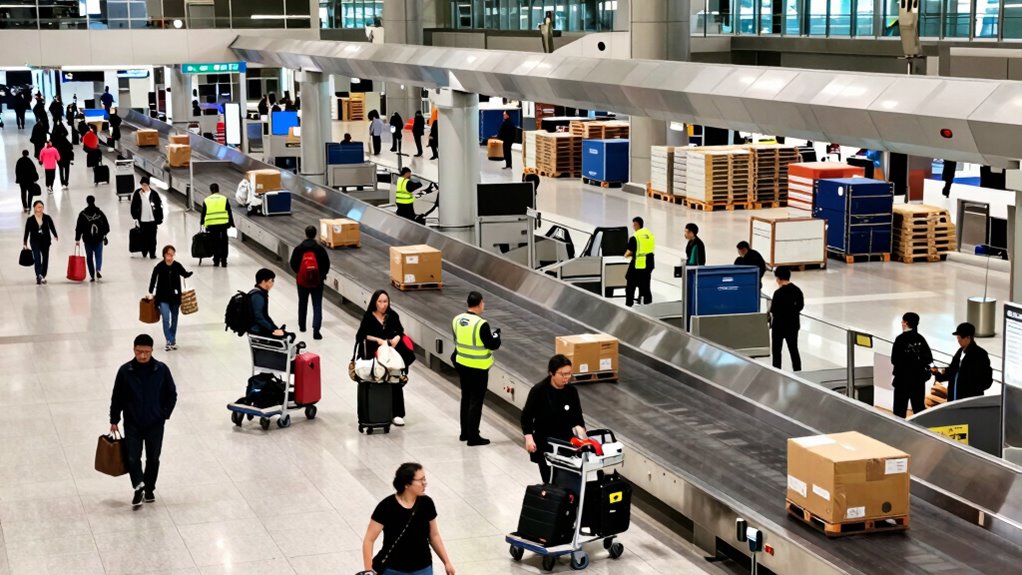

Airport chaos often signals deeper supply chain issues like customs delays and poor cargo management, which create cascading disruptions. When customs officers are overwhelmed or short-staffed, shipments get held up, leading to backlogs and empty shelves. Inefficient cargo organization worsens delays, causing congestion that spreads across the entire network. These systemic weaknesses cause ripple effects for manufacturers, retailers, and consumers alike. If you keep exploring, you’ll uncover how technology and systemic reforms can help prevent these widespread disruptions.

Get the latest gadgets delivered free with Prime
- Fast, free delivery on millions of items
- Prime Video, Amazon Music and more included
- Member-only deals all year
Key Takeaways
- Airport chaos often stems from systemic supply chain issues like customs delays and poor cargo management.
- Delays at airports reflect broader vulnerabilities in global trade and logistics networks.
- Inefficient technology integration exacerbates congestion, causing ripple effects across supply chains.
- Customs hold-ups and cargo bottlenecks at airports are symptoms of systemic supply chain weaknesses.
- Addressing airport chaos requires strengthening overall supply chain resilience and systemic processes.

The ongoing disruptions in global supply chains have led to widespread chaos at airports, causing delays and shortages that affect everyday life. When shipments get stuck or delayed, it’s often because of customs delays—those complicated procedures that can hold up cargo for days or even weeks. Customs officers need to inspect, verify, and clear goods, but when they’re overwhelmed or short-staffed, the process slows to a crawl. This backlog doesn’t just delay a package; it sends ripples through the entire supply chain, making it hard for companies to meet delivery deadlines. You might not see it directly, but these customs delays are a major reason why shelves remain empty or why urgent shipments arrive late.
Cargo management becomes a critical challenge during these times. If airlines and freight handlers can’t efficiently organize and prioritize incoming cargo, chaos ensues. When cargo management systems are overwhelmed, flights get delayed, containers pile up, and the flow of goods stalls. Sometimes, this results in planes waiting on tarmacs longer than expected or cargo being diverted to other hubs. Poor cargo management amplifies the effects of customs delays, creating a bottleneck that’s tough to alleviate. You may notice this as longer wait times for your online orders or missing items from your favorite stores. It’s not just about slow trucks or congested roads; it’s about how well airports handle the influx of delayed cargo and how quickly they can reroute or process shipments. Additionally, technology integration can play a vital role in streamlining these processes and reducing delays. Implementing smarter cargo tracking solutions can help identify bottlenecks early and improve overall efficiency. Recognizing the importance of system integration is crucial for addressing these systemic issues effectively.
This interconnected web of issues reveals how airport chaos is often a disguised supply chain story. When one link in the chain weakens—say, customs processing slows down or cargo management falters—it causes a domino effect. Goods that should arrive in days end up taking weeks, and the ripple effects reach manufacturers, retailers, and consumers alike. You might think delays are isolated incidents, but they’re often symptoms of larger systemic problems. Airports are the gateways that connect global markets, and when those gateways clog up, it’s a clear sign that the entire supply chain is under stress. Recognizing this helps put into perspective why airport chaos isn’t just about busy runways or staffing shortages; it’s about how well the complex machinery of global trade keeps moving smoothly—and how easily it can grind to a halt. Improving supply chain resilience can help mitigate these disruptions and keep things flowing more reliably.
Products Worth Considering

Anker SOLIX C200 DC Portable Power Station, 192Wh, 200W

Jackery Explorer 300 Portable Power Station, 292Wh

Bose SoundLink Flex Bluetooth Speaker (2nd Gen), Portable Waterproof Speaker, Black
As an affiliate, we earn on qualifying purchases.
Frequently Asked Questions
How Do Supply Chain Disruptions Impact Airport Operations Globally?
Supply chain disruptions directly impact airport operations worldwide by causing delays, congestion, and reduced efficiency. When supply chains lack resilience, cargo handling slows down, and passenger services suffer. You’ll notice increased wait times and operational bottlenecks. Implementing cargo automation helps streamline processes, reducing reliance on manual labor and mitigating disruption effects. This guarantees smoother airport operations, even amid global supply chain challenges, keeping goods and passengers moving seamlessly.
What Role Do Customs and Regulations Play in Airport Delays?
Customs procedures and regulatory compliance greatly influence airport delays. When you’re handling international shipments, customs procedures can slow down clearance if documentation is incomplete or inspections are required. Strict regulatory compliance ensures safety and legality but can add processing time, especially during peak periods or if regulations change unexpectedly. These factors create bottlenecks, delaying cargo and passenger flow, ultimately contributing to airport congestion and disruption of schedules.
How Can Airports Improve Resilience Against Supply Chain Issues?
To improve resilience against supply chain issues, you should focus on strengthening supply chain resilience and implementing risk mitigation strategies. Airports can diversify suppliers, adopt real-time tracking systems, and enhance collaboration with logistics partners. Building flexible processes allows quicker adaptation to disruptions. Investing in technology and staff training also minimizes delays, ensuring smoother operations and better handling of unpredictable disruptions, ultimately safeguarding airport efficiency and reducing chaos.
What Are Common Bottlenecks in Airport Logistics During Crises?
During crises, you’ll often face bottlenecks like overwhelmed ground handling and security screening. Ground handling delays slow down baggage and cargo processing, creating backups that ripple through the system. Security screening becomes overwhelmed as passenger flow surges, leading to longer wait times and missed connections. These bottlenecks strain the entire airport logistics network, highlighting the need for streamlined processes and contingency plans to maintain efficiency during disruptions.
How Does Passenger Passenger Traffic Influence Cargo Handling Efficiency?
Ironically, when passenger volume soars, cargo throughput often slows down. You might think more passengers mean faster logistics, but increased passenger traffic strains airport resources, leading to delays in cargo handling. Heavy passenger flights congest terminal operations, making it harder to efficiently process freight. So, higher passenger traffic doesn’t just fill seats; it can bottleneck cargo flow, disrupting supply chains and causing unexpected delays in deliveries.
Conclusion
So, savvy traveler, see how supply chain snafus subtly shape airport scenes. When shipments stall and schedules scramble, it’s more than mere misfortune—it’s a mirror of mismanaged logistics. By understanding these interconnected causes, you can better grasp the chaos and perhaps even navigate it with more patience and preparedness. Remember, behind the bustling borders and busy baggage, a delicate dance of distribution and delay dictates the disorder. Supply chains silently steer the airport’s unpredictable parade.