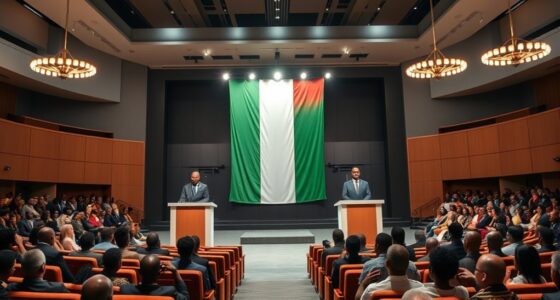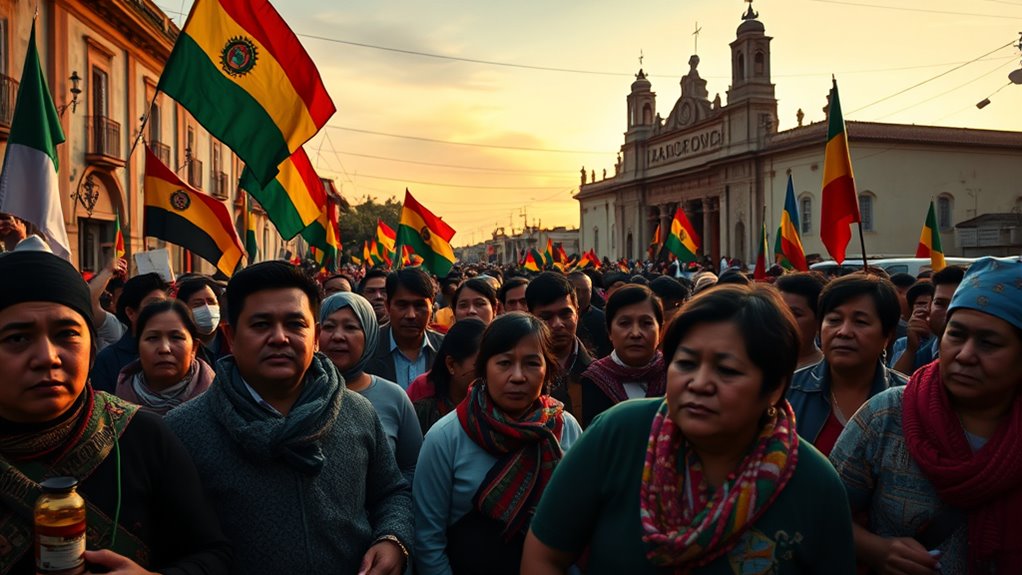

The 2025 presidential runoff in Bolivia is a crucial event that will determine the country’s direction. You’ll see a battle between candidates with contrasting visions—one prioritizes economic growth and infrastructure, while the other champions social justice, indigenous rights, and environmental protection. The outcome will influence Bolivia’s social fabric, regional standing, and future policies. If you want to understand how these choices could shape Bolivia’s next chapter, there’s more to contemplate.

Get the latest gadgets delivered free — and shop member deals
- Fast, free delivery on millions of items
- Access to Prime Big Deal Days deals on October 6–7
- Prime Video, Amazon Music and more included
Key Takeaways
- The runoff determines Bolivia’s future direction, highlighting deep regional and ideological divisions.
- It pits economic liberalization against social justice and indigenous rights.
- The outcome will influence environmental policies and resource management.
- Voter participation is crucial in shaping policies on social reforms and national identity.
- The election’s result impacts Bolivia’s regional standing and long-term political stability.

As Bolivia heads into the 2025 presidential runoff, the nation faces a pivotal moment that will shape its future political landscape. You might feel the tension in the air, knowing that the upcoming vote isn’t just about choosing a leader; it’s about defining the country’s direction for years to come. The first round revealed deep divisions, with each candidate representing contrasting visions for Bolivia’s economy, social policies, and indigenous rights. Now, as you prepare to cast your ballot, you realize that your choice could influence everything from economic stability to social justice, and even Bolivia’s stance on regional issues.
You’re aware that the runoff pits two strong contenders, each with their own supporters and agendas. One candidate emphasizes economic growth, promising to attract investment and modernize infrastructure, but often at the expense of traditional indigenous communities and environmental concerns. The other champions social reforms, indigenous rights, and environmental preservation, appealing to those who seek a more inclusive and sustainable future. The battle is not just about policies but also about values—whether Bolivia leans more toward economic liberalization or social justice.
What’s at stake extends beyond individual policies; it’s about the country’s identity. Bolivia has a rich history of indigenous resistance and social activism, which has shaped its political discourse. The upcoming vote could either reinforce this legacy or shift the country toward a more centralized, neoliberal approach. You might worry about the implications for indigenous communities, which have historically faced marginalization, and the environment, particularly regarding resource extraction industries that threaten natural resources and local livelihoods.
Voter turnout and engagement will play an essential role. Many Bolivians feel a sense of urgency, understanding that their participation can determine whether reforms are advanced or rolled back. The election also reflects broader regional trends, where populist and democratic forces clash, raising questions about Bolivia’s place in South America’s political landscape. As you consider your vote, you realize that the stakes aren’t just national but regional as well.
Ultimately, this runoff offers you the opportunity to influence Bolivia’s trajectory. It’s a chance to support policies that align with your values—whether that means advocating for social justice, economic stability, or environmental sustainability. The outcome will resonate across communities, affecting daily lives and the country’s future identity. As you prepare to vote, remember that your voice is indispensable in shaping Bolivia’s next chapter, and the decision you make will echo far beyond election day.
Top picks for "bolivia presidential runoff"
As an affiliate, we earn on qualifying purchases.
Frequently Asked Questions
How Will International Observers Influence the Election Outcome?
International observers can substantially influence the election outcome by monitoring fairness and transparency. When you see their presence, it reassures you that the process is credible, which can boost voter confidence. Their reports and evaluations might sway public opinion, either encouraging trust in the results or raising concerns about irregularities. Ultimately, their oversight helps guarantee the election’s legitimacy, making it harder for any misconduct to go unnoticed or unchallenged.
What Are the Main Economic Implications of the Runoff?
You know what they say, “a rising tide lifts all boats.” The runoff could boost Bolivia’s economy by restoring investor confidence and stabilizing markets if a clear, stable leader emerges. Conversely, prolonged uncertainty might deter investment, weaken the local currency, and slow growth. As a result, the election’s outcome directly influences economic stability, job creation, and Bolivia’s ability to attract foreign aid and trade partnerships.
How Might Regional Differences Affect Voter Preferences?
You’ll find that regional differences greatly influence voter preferences, as rural areas often support traditional candidates and prioritize agriculture and resource policies. Urban centers tend to favor progressive platforms that focus on social issues and infrastructure. These contrasting priorities shape the overall election outcome, with local economic interests and cultural identities driving voters’ choices. Understanding these regional divides helps you grasp how diverse perspectives impact Bolivia’s electoral landscape.
What Role Do Social Media Campaigns Play in This Election?
Social media campaigns play a vital role in shaping your opinions and mobilizing voters like you. They spread key messages quickly, target specific regions, and influence perceptions through videos, posts, and ads. You might think traditional media is enough, but social media’s interactive nature makes it more personal and immediate. This can sway your vote by reinforcing your beliefs or challenging your views, ultimately impacting the election’s outcome.
Are There Any Legal Challenges Expected Before the Runoff?
You should expect some legal challenges before the runoff, as candidates and parties scrutinize the election results and process. These disputes might involve allegations of irregularities or disputes over vote counts, leading to court cases or protests. Staying informed and monitoring official statements will help you understand how these challenges unfold. Being aware of potential legal issues can also give you insight into the election’s fairness and stability.
Conclusion
As you watch Bolivia’s 2025 presidential runoff unfold, remember that the stakes are high and the outcome could shape the nation’s future. This election isn’t just about choosing a leader; it’s about steering the country through turbulent waters. Keep in mind, sometimes the darkest clouds bring the brightest rain—meaning change often comes after tough times. Stay engaged, because the choices made now will resonate long after the ballots are counted.
Fall Picks
fall essentials
As an affiliate, we earn on qualifying purchases.