
Advanced materials can transform your building into a smarter, more sustainable space by enabling energy-efficient insulation, smart responses to environmental changes, and integration with renewable systems. They allow walls and roofs to generate or store energy, while phase-change materials help regulate temperature naturally. These innovations reduce energy costs and carbon footprints, making buildings more resilient and eco-friendly. To discover how these cutting-edge materials can inspire your project, explore further details ahead.
Get ready for Prime Big Deal Days — try Prime free
Exclusive member deals on October 6–7, plus fast free delivery. Cancel anytime.
As an affiliate, we earn on qualifying purchases.
Key Takeaways
- Smart materials dynamically respond to environmental changes, optimizing energy use and enhancing building efficiency.
- Integration of renewable energy technologies into building surfaces enables self-sufficient, energy-generating structures.
- Advanced insulating and phase-change materials reduce artificial heating and cooling needs, lowering operational energy.
- Self-healing and durable materials extend building lifespan, reducing maintenance and environmental impact.
- Multifunctional, environmentally responsive materials promote eco-friendly construction and sustainable urban development.
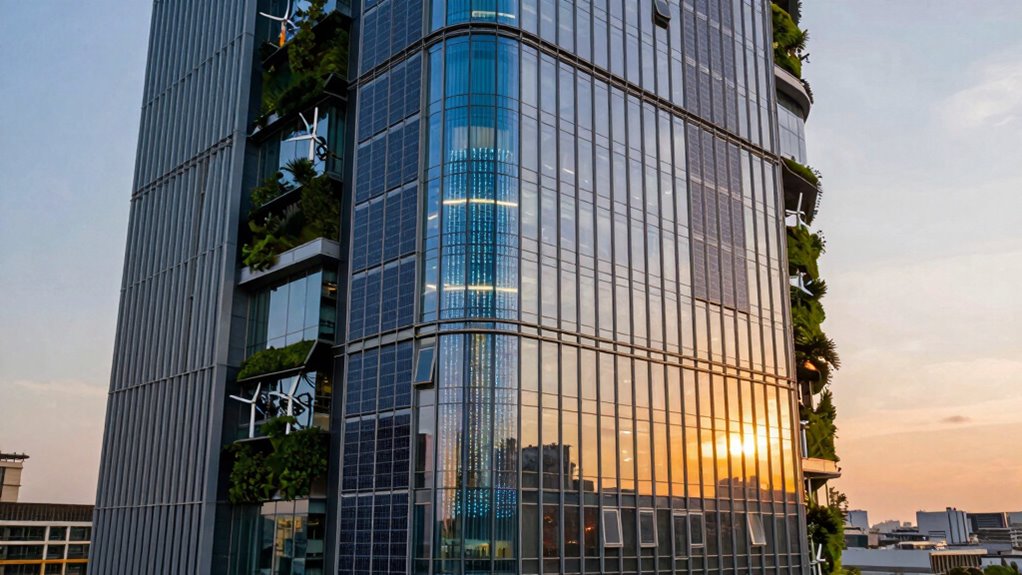
As cities grow more crowded and climate concerns intensify, the demand for smarter, greener buildings has never been greater. You’re at the forefront of this shift, where advanced materials play a pivotal role in transforming urban landscapes. These innovative materials are not just about sustainability—they’re about revolutionizing how buildings operate, making them more efficient, adaptive, and environmentally friendly. When you incorporate renewable energy technologies into building designs, these materials can serve as both insulators and energy collectors, turning walls and roofs into solar panels or energy storage units. This integration reduces reliance on fossil fuels and cuts down greenhouse gas emissions, aligning your buildings with a future where energy is more sustainable.
Innovative materials revolutionize buildings as energy collectors and insulators, promoting sustainability and reducing reliance on fossil fuels.
Structural innovation is central to this evolution. You’ll discover that new materials enable you to design lighter, stronger, and more flexible structures. For example, high-performance composites can replace traditional concrete and steel, allowing for more daring architectural forms while reducing material use. This not only cuts costs but also minimizes the environmental footprint of construction projects. Furthermore, these advanced materials can adapt to changing conditions, self-healing when damaged, or adjusting their properties based on temperature or humidity. Such capabilities make your buildings smarter, more resilient, and better equipped to withstand climate challenges. Additionally, research into self-healing materials continues to expand, promising even greater durability in future construction. Incorporating advanced material properties can further enhance the durability and longevity of your structures, ensuring they remain effective over time. Using smart materials also enables buildings to respond dynamically to environmental changes, improving overall efficiency. Advances in sustainable materials further support these developments, making eco-friendly construction more feasible and widespread.
You’ll also find that smart materials can improve energy efficiency within the building itself. For instance, thermochromic coatings change color based on temperature, helping regulate indoor climate naturally. Insulating materials with phase-change properties absorb or release heat as needed, reducing the need for artificial heating or cooling. As a result, your buildings consume less energy, lowering operational costs and carbon footprints. When these materials are combined with renewable energy sources like solar or wind power, your buildings become nearly self-sufficient, generating and storing their own energy.
Additionally, advanced materials open new possibilities for integrating renewable energy systems seamlessly into building design. Structural innovation allows you to create flexible, multifunctional surfaces that serve as both aesthetic features and energy generators. This fusion of form and function means your buildings not only stand out visually but also contribute actively to a sustainable environment. Incorporating advanced materials can further enhance the durability and longevity of your structures, ensuring they remain effective over time. As you adopt these cutting-edge materials, you’re helping pave the way for urban environments where buildings aren’t just passive structures but active participants in combating climate change. In essence, these innovations empower you to build smarter, greener cities that are more resilient, efficient, and aligned with the urgent need for sustainability.
advanced insulating materials for buildings
As an affiliate, we earn on qualifying purchases.
As an affiliate, we earn on qualifying purchases.
Frequently Asked Questions
How Do Advanced Materials Impact Building Maintenance Costs?
Advanced materials help you reduce building maintenance costs through durability enhancement, making structures more resistant to wear and tear. By using innovative materials, you’ll need fewer repairs and replacements, saving money over time. These materials also require less upkeep, leading to lower ongoing expenses. Overall, integrating advanced materials increases your building’s longevity while cutting costs, making maintenance more efficient and sustainable for your property.
Are Advanced Materials Suitable for Retrofit Projects?
Yes, advanced materials are suitable for retrofit projects. You can upgrade your building with innovative insulation that improves energy efficiency and smart facade systems that enhance aesthetics and functionality. These materials are designed to integrate seamlessly into existing structures, making your retrofit more sustainable and cost-effective. By incorporating such advanced solutions, you’ll modernize your building, reduce operational costs, and contribute to a greener environment.
What Are the Environmental Impacts of Producing These Materials?
Producing advanced materials impacts the environment, but sustainable manufacturing practices help minimize this. You should consider the lifecycle assessment of these materials, which evaluates their environmental footprint from raw material extraction to disposal. By prioritizing eco-friendly processes, you reduce emissions, waste, and resource depletion. Although manufacturing can be resource-intensive, ongoing innovations aim to make production more sustainable, ensuring these materials contribute positively to greener, smarter buildings in the long run.
How Do Advanced Materials Perform in Extreme Weather Conditions?
Advanced materials excel in extreme weather conditions by enhancing weather resilience and material durability. You’ll find that these innovative materials withstand heavy rain, high winds, and temperature fluctuations better than traditional options. Their improved resilience means your building remains protected and functional longer, even in harsh environments. This durability not only minimizes maintenance costs but also guarantees safety and sustainability in the face of climate extremes.
Can Advanced Materials Be Integrated With Existing Building Systems?
Yes, advanced materials can be integrated with existing building systems. You’ll find that their material durability guarantees longevity, making upgrades worthwhile. Plus, many advanced materials are designed for aesthetic integration, allowing you to enhance your building’s appearance without sacrificing style. This seamless compatibility helps improve energy efficiency and sustainability, making your building smarter and greener while maintaining its visual appeal.
phase change thermal insulation panels
As an affiliate, we earn on qualifying purchases.
As an affiliate, we earn on qualifying purchases.
Conclusion
As you explore these innovative materials, you realize how their potential seamlessly aligns with your goals for smarter, greener buildings. It’s almost as if the very advances meant to improve our environment are quietly shaping your future projects. When you incorporate these materials, you’re not just building structures—you’re creating a legacy of sustainability and intelligence. The coincidence is clear: technology and nature working hand in hand to transform your vision into reality, one smart building at a time.
smart energy-generating building materials
As an affiliate, we earn on qualifying purchases.
As an affiliate, we earn on qualifying purchases.
self-healing construction materials
As an affiliate, we earn on qualifying purchases.
As an affiliate, we earn on qualifying purchases.
Evergreen bestsellers Picks
bestsellers
As an affiliate, we earn on qualifying purchases.