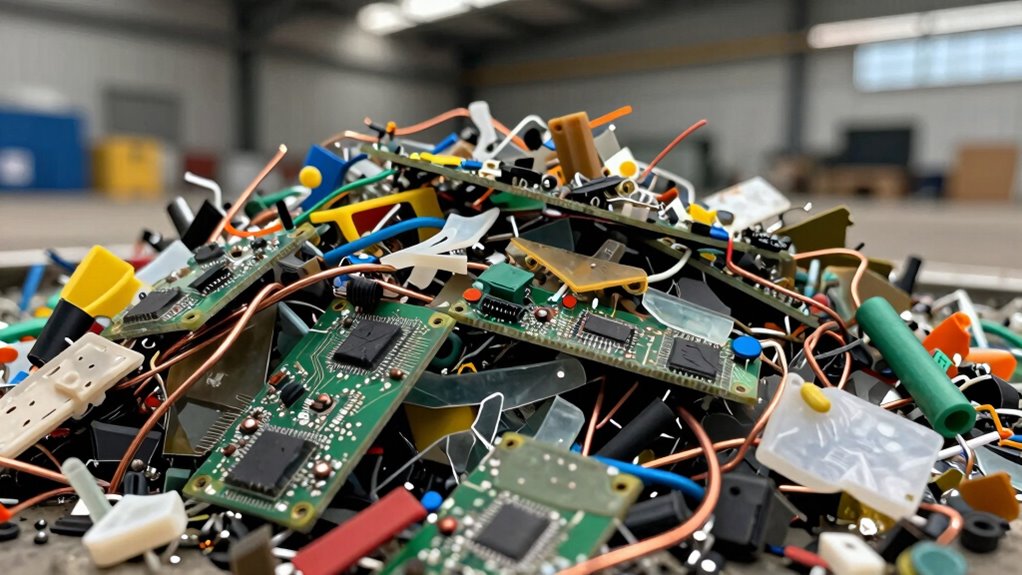

Recycling critical minerals can considerably ease global supply pressures by reducing reliance on environmentally taxing mining and unpredictable markets. Advances in sorting and processing boost recovery from electronics and batteries, creating sustainable resource flows. Strong policies and technological innovations support local recycling efforts, strengthening supply chain resilience. This shift not only protects ecosystems but also fosters economic growth. To understand how these strategies work together to build a more sustainable future, keep exploring the solutions shaping this essential industry.

Get the latest gadgets delivered free — and shop member deals
- Fast, free delivery on millions of items
- Access to Prime Big Deal Days deals on October 6–7
- Prime Video, Amazon Music and more included
Key Takeaways
- Recycling critical minerals reduces dependency on environmentally taxing and geopolitically risky mining operations.
- Advances in recycling technology improve recovery rates and purity, enhancing supply resilience.
- Developing regional recycling infrastructure creates economic opportunities and strengthens local supply chains.
- Recycling minimizes environmental impacts like habitat destruction, water pollution, and carbon emissions.
- A circular approach to critical minerals ensures long-term availability for sustainable technological and energy needs.
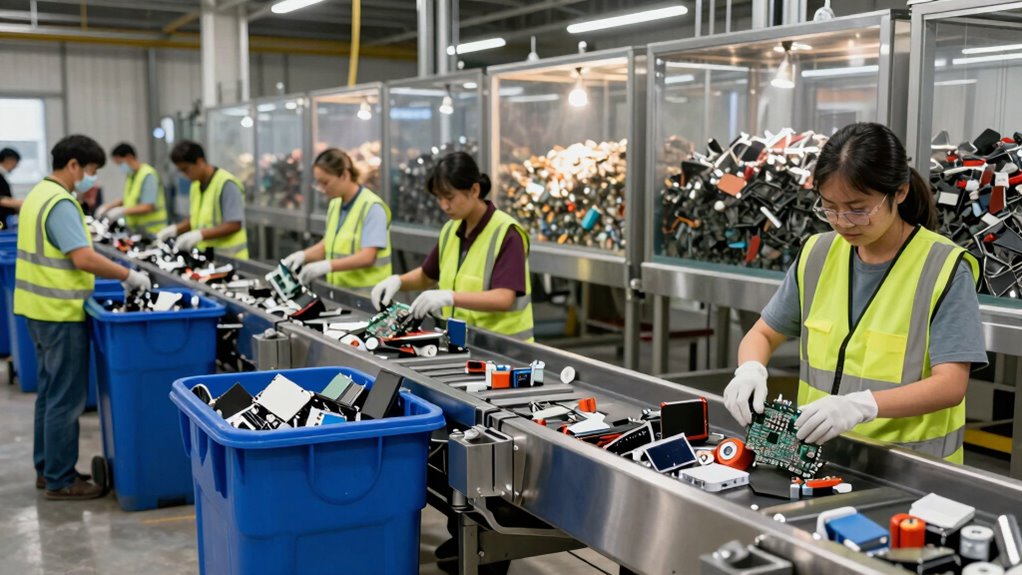
Critical minerals are essential for modern technology and renewable energy solutions, yet their supply is often limited and environmentally taxing to extract. This scarcity creates vulnerabilities in global supply chains, making it imperative to find sustainable ways to meet demand. Recycling critical minerals offers a promising solution, not only easing pressure on natural resources but also strengthening supply chain resilience. When you recycle these materials, you reduce reliance on mining, which can be unpredictable due to geopolitical tensions, environmental concerns, and fluctuating market prices. This reliance on conventional extraction methods underscores the importance of advancing recycling technologies to improve efficiency and recovery rates. It’s a strategic move that helps guarantee a more stable and secure supply of vital elements needed for everything from electric vehicles to wind turbines.
Recycling critical minerals strengthens supply chains and reduces environmental impacts of resource extraction.
Technological innovation plays a central role in transforming critical minerals recycling into a viable, large-scale practice. Advances in sorting, processing, and refining technologies enable you to recover higher purity levels from used electronics, batteries, and industrial waste. These innovations make recycling more efficient and cost-effective, encouraging industries to adopt circular practices. As you integrate new methods, you’re supporting a shift away from linear consumption models, where resources are used once and discarded. Instead, recycling fosters a closed-loop system that maximizes resource utility and minimizes environmental impact. Additionally, increasing public awareness and policy support are vital for scaling up recycling initiatives and creating incentives for sustainable resource management. Emphasizing public engagement can further accelerate adoption and investment in recycling infrastructure.
Moreover, recycling critical minerals can create new economic opportunities, encouraging industries to invest in research and infrastructure. For you, this means a more resilient supply chain that’s less vulnerable to disruptions. When you develop local or regional recycling capabilities, you help reduce the dependence on foreign sources, which can be subject to political instability or export restrictions. This localization of supply chains enhances your country’s or company’s ability to maintain steady production levels, especially during global crises or commodity shortages. Supporting these efforts with targeted policies can accelerate the adoption of recycling practices and attract investment.
In addition, the environmental benefits are significant. Recycling reduces the need for invasive mining operations, which often cause habitat destruction, water pollution, and high carbon emissions. By reprocessing used products, you contribute to a more sustainable resource cycle, helping to combat climate change and preserve ecosystems. As technological innovation continues to improve recycling efficiency, it becomes increasingly possible to recover critical minerals at scale, making the entire supply chain more sustainable and resilient. Supporting the development of specialized recycling facilities and advancing color accuracy in sorting technologies can further boost recovery rates and purity. Furthermore, integrating waste management practices into the recycling process enhances overall efficiency and environmental impact reduction.
Ultimately, the story of critical minerals recycling is about more than just resource recovery. It’s a pathway toward a more secure, environmentally responsible, and innovative future. By embracing recycling technologies and strengthening supply chain resilience, you’re helping to guarantee that essential minerals remain available for generations to come, all while reducing environmental impacts and fostering economic growth.
critical minerals recycling electronics
As an affiliate, we earn on qualifying purchases.
As an affiliate, we earn on qualifying purchases.
Frequently Asked Questions
How Cost-Effective Is Critical Minerals Recycling Compared to Mining?
You’ll find that critical minerals recycling can be quite cost-effective, especially when considering economic viability and market incentives. Recycling reduces reliance on expensive mining operations and can lower extraction costs. With increasing market incentives for sustainable practices, recycling becomes more economically attractive, encouraging investment. While initial setup costs can be high, ongoing recycling processes often prove cheaper over time, making them a viable alternative to traditional mining methods.
What Are the Main Technological Barriers to Recycling Critical Minerals?
You face technological barriers like achieving high material purity and developing efficient automated separation methods. Automating separation processes is challenging because critical minerals often exist in complex mixtures, making it hard to isolate them without contamination. Ensuring high purity levels is essential for reuse, but current techniques struggle to consistently produce clean, usable materials. Overcoming these barriers requires innovative processes that can effectively automate separation and guarantee the purity needed for recycling purposes.
Which Countries Are Leading in Critical Minerals Recycling Efforts?
Back in the day, you’d think recycling was just a pipe dream, but now countries like Japan, South Korea, and the EU are leading with strong policy incentives and growing public awareness. These nations invest heavily in innovative recycling technologies and promote sustainable practices, making them pioneers in critical minerals recycling efforts. Their proactive approach shows how policy and awareness can turn recycling into an essential resource strategy, easing global pressure.
How Does Recycling Impact the Supply Chain Stability for Electric Vehicles?
Recycling boosts supply chain resilience by reducing dependence on raw material sourcing, ensuring a steadier supply of critical minerals for electric vehicles. When you incorporate recycled materials, you help stabilize the supply chain, making it less vulnerable to geopolitical issues or shortages. This sustainable approach not only secures necessary resources but also shortens the time and costs involved, ultimately supporting the growth and reliability of electric vehicle manufacturing.
What Environmental Benefits Are Associated With Critical Minerals Recycling?
Recycling critical minerals is like planting seeds for a greener future. It reduces the environmental impact by decreasing the need for mining, which often harms ecosystems. Ecological benefits include conserving water, lowering greenhouse gas emissions, and minimizing habitat destruction. By recycling, you help protect biodiversity and promote sustainability, ensuring that valuable resources don’t drain our planet’s health. It’s an essential step toward a cleaner, more resilient environment.
battery recycling for critical minerals
As an affiliate, we earn on qualifying purchases.
As an affiliate, we earn on qualifying purchases.
Conclusion
Just like a skilled gardener recycles nutrients to grow a healthier garden, recycling critical minerals can nourish our planet and ease global pressure. Imagine a world where your old electronics are transformed into new resources, reducing the need for mining. With over 60% of critical minerals potentially recoverable from waste, you hold the power to turn yesterday’s discarded devices into tomorrow’s sustainable solutions. Together, we can cultivate a greener, more resilient future.
recycling equipment for electronic waste
As an affiliate, we earn on qualifying purchases.
As an affiliate, we earn on qualifying purchases.
critical minerals recovery technology
As an affiliate, we earn on qualifying purchases.
As an affiliate, we earn on qualifying purchases.
Halloween Picks
halloween
As an affiliate, we earn on qualifying purchases.