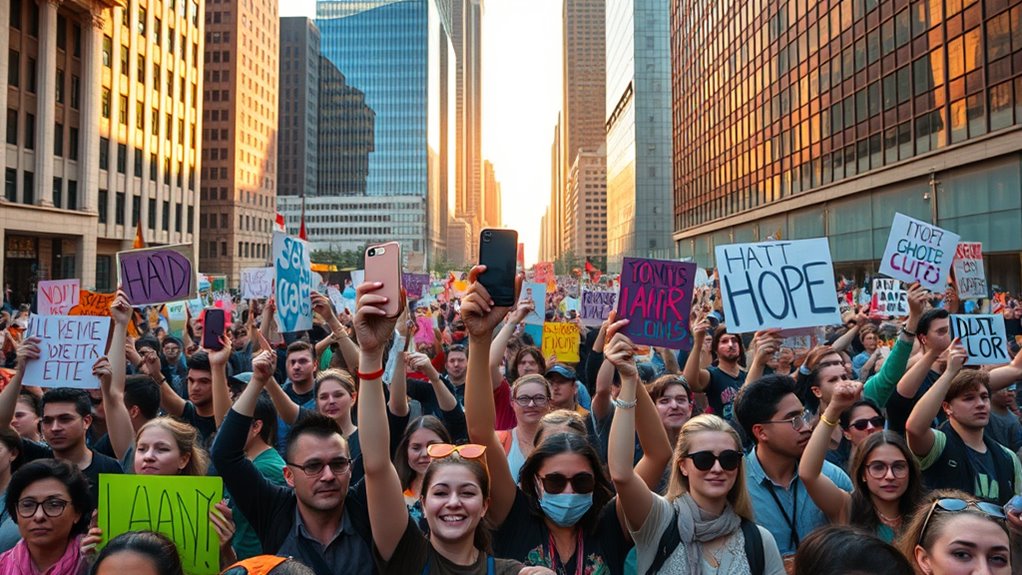

Around the world, Gen Z protests are pushing for systemic change on issues like climate justice, racial equality, and political reform. You’ll see them using social media to organize, amplify their messages, and create impactful campaigns. Their demands are clear—whether calling for a Green New Deal, ending fossil fuel subsidies, or defunding police. Despite facing crackdowns, these protests grow stronger, shaping future social and political landscapes. Explore further to discover how their efforts continue to influence society.
Key Takeaways
- Gen Z protests globally focus on climate action, racial justice, gender equality, and political reform, demanding systemic change.
- They utilize social media and digital platforms for organization, awareness, and mobilizing international demonstrations.
- Movements often articulate clear demands like the Green New Deal, ending fossil fuel subsidies, and police defunding.
- Outcomes include policy shifts, increased public awareness, corporate commitments, and influencing legislation.
- Despite crackdowns, protests persist, reshaping societal engagement and pushing for inclusive, sustainable future policies.
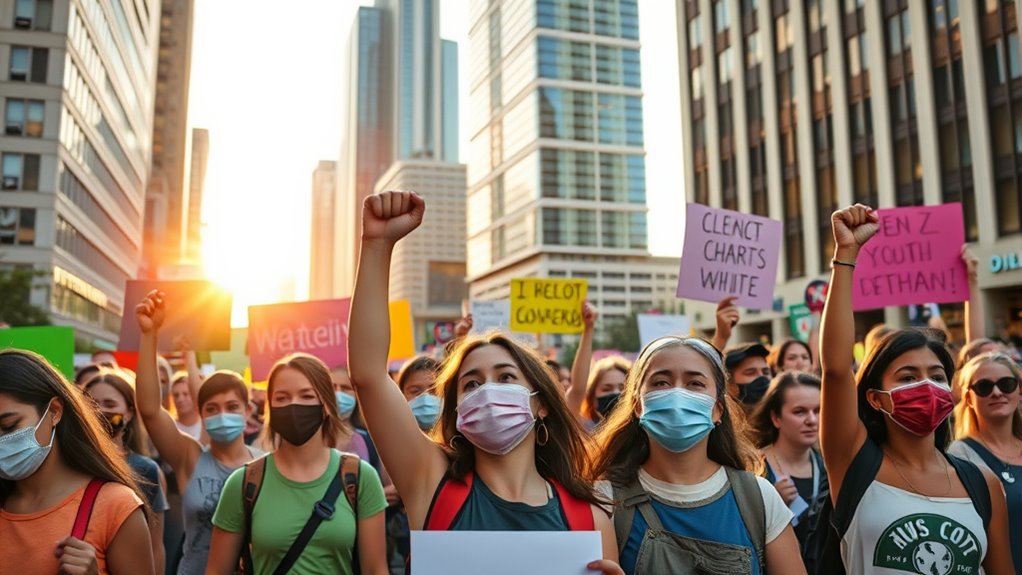
In recent years, Generation Z has emerged as a powerful force in global protests, demonstrating their commitment to social and environmental causes. You’ve likely seen their voices amplified through social media, where hashtags and viral videos rally millions across borders. This generation isn’t just participating; they’re leading movements that challenge outdated systems and push for meaningful change. Their protests often stem from a deep sense of urgency about issues like climate change, racial injustice, gender equality, and political corruption. You can’t ignore how effectively they harness digital platforms to organize, spread awareness, and sustain momentum. When they hit the streets, it’s not just about making noise; it’s about demanding accountability and tangible action from governments, corporations, and institutions.
What sets Generation Z apart is their uncompromising stance and clarity of purpose. They’re not content with superficial reforms or empty promises. Instead, they articulate clear demands—whether it’s a Green New Deal, defunding the police, or abolishing fossil fuel subsidies. Their protests are often characterized by creative expressions, from art installations to social media campaigns, which help them reach a wider audience. You see students, young workers, and even entire communities coming together, united by the belief that change is necessary and urgent. Their activism isn’t limited to one country; it spans continents, highlighting shared concerns but also tailored local issues. For example, in countries with authoritarian regimes, protests focus on fighting oppression and censorship, while in others, the emphasis might be on climate policies or economic inequality. Additionally, the ability to organize digital activism plays a crucial role in their success.
The outcomes of these protests are mixed but promising. Some have resulted in policy shifts, increased awareness, or corporate commitments to sustainability. Take climate strikes, where schoolchildren and students have pressured governments into declaring climate emergencies or committing to renewable energy targets. In other cases, protests have ignited debates, reshaped public discourse, or inspired new laws. However, challenges remain. Authorities sometimes respond with crackdowns, arrests, or misinformation campaigns designed to suppress these movements. Despite this, the resilience of Gen Z protesters keeps the momentum alive. Their demands aren’t just fleeting trends—they’re part of a broader push for systemic change. You can see how this generation’s activism is reshaping the landscape of social and political engagement, pushing traditional boundaries and forcing older generations to listen and respond. Their protests may still be evolving, but their impact is undeniable, signaling a shift toward more inclusive, sustainable, and just societies.
Frequently Asked Questions
How Do Gen Z Protests Compare to Previous Generations’ Movements?
You’ll notice that Gen Z protests are more digitally driven, organized, and inclusive than previous generations’ movements. You might find they prioritize social justice, climate change, and mental health issues, often using social media to amplify their message quickly and widely. Unlike past protests, your generation’s activism is more decentralized, spontaneous, and global, making it more accessible and immediate. This shift helps you feel more connected and empowered to create change.
What Role Does Social Media Play in Organizing These Protests?
Social media plays a vital role in organizing Gen Z protests by allowing you to quickly share information, coordinate actions, and rally supporters worldwide. You can easily spread awareness through platforms like Twitter, TikTok, and Instagram, making it simple to mobilize crowds and amplify your message. Social media also helps you stay connected, share live updates, and invoke a sense of urgency, making protests more accessible and impactful.
Are Gen Z Protests Effective in Influencing Policy Changes?
You bet your TikTok account they influence policy! When you take to the streets or fire off tweets, you’re not just making noise—you’re forcing politicians to listen. Your protests put issues like climate change and social justice on the agenda, sometimes sparking real change. Sure, it might seem like a digital whimper, but your activism shakes up the status quo, proving that even the youngest voices can roar loud enough to matter.
How Do Protests Vary Across Different Countries and Cultures?
You notice that protests differ across countries and cultures based on local issues, political systems, and societal values. In some places, protests are peaceful and focus on dialogue, while elsewhere, they involve more direct action. Cultural norms shape how openly you can express dissent, and government responses vary from acceptance to repression. Understanding these differences helps you see how Gen Z’s activism adapts to each environment, influencing outcomes uniquely.
What Are the Long-Term Impacts of Gen Z Activism Worldwide?
You’ll see that Gen Z activism leads to meaningful change over time, shaping policies and societal norms. Your generation’s efforts often inspire other age groups, boost awareness, and push governments to act on issues like climate change and social justice. By staying engaged and vocal, you help create a lasting impact, fostering a more inclusive, sustainable future. Your activism can ignite ongoing movements that influence generations to come.
Conclusion
Your voice is shaping history like never before. As Gen Z protests ripple across the globe, they challenge the status quo with a power that can topple giants and ignite change faster than lightning. These young activists aren’t just making noise—they’re rewriting the future. So, stay inspired and watch closely, because if this movement keeps growing, it might just be the biggest revolution humanity has ever seen. The world won’t be the same after this.