
The next fight over internet infrastructure is shifting underground, where fiber optic cables are becoming critical. You’ll see companies and governments racing to deploy and upgrade these high-capacity lines, making networks faster and more secure. Underground fiber is harder to tap into and less vulnerable to weather, giving it a strategic edge. As technology advances, this underground battle shapes how you stay connected, and if you keep exploring, you’ll discover how these changes impact your digital future.

Get the latest gadgets delivered free with Prime
- Fast, free delivery on millions of items
- Prime Video, Amazon Music and more included
- Member-only deals all year
Key Takeaways
- The battle for control over underground fiber optic infrastructure is intensifying due to its strategic importance.
- Countries and companies are racing to deploy faster, more extensive underground fiber networks to dominate digital connectivity.
- Underground fiber offers enhanced security and resilience against disruptions compared to satellite or wireless options.
- Upgrading existing infrastructure with next-generation fiber technology is a key focus in the ongoing infrastructure race.
- The fight beneath the surface will shape future internet speed, security, and control over digital ecosystems.
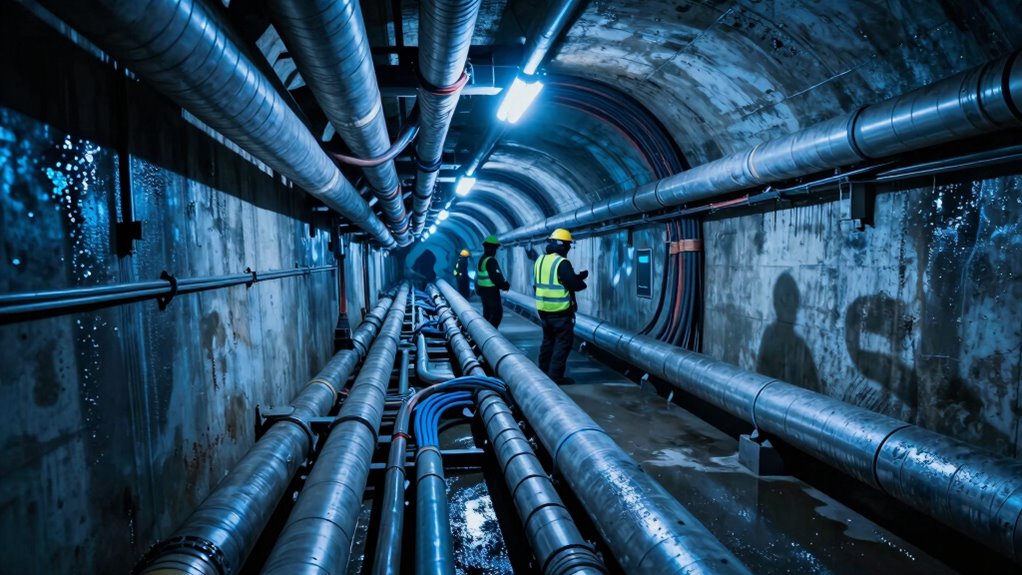
As the world becomes increasingly connected, the battle over the next major internet infrastructure intensifies, with tech giants, governments, and startups all vying to shape the future of digital communication. While many focus on wireless or satellite networks, underground fiber optics remain a critical battleground. Fiber optics, with their ability to transmit vast amounts of data at lightning-fast speeds, are the backbone of modern internet infrastructure. They’re already buried beneath cities and rural areas alike, providing the high-capacity links that keep your online activities smooth and reliable. But as demand skyrockets, the push to expand and upgrade these underground cables intensifies. Companies and governments are racing to lay new fiber optic lines, aiming to outpace competitors and connect even the most remote regions. These cables are less vulnerable to weather or interference than satellite networks, making them the preferred choice for stable, high-speed connections.
However, satellite networks remain an essential part of the equation. They offer the flexibility to reach areas where laying fiber isn’t feasible or cost-effective, such as remote islands or mountainous regions. Satellites can deliver connectivity quickly and without the need for disruptive underground installation. Still, they face limitations in bandwidth and latency, which makes fiber optics more attractive for data-heavy applications. The competition isn’t just about who can deploy more infrastructure faster; it’s about who can offer the most reliable, high-capacity, and secure network. Underground fiber optics are harder to tap into or disrupt, giving them an advantage in terms of security and resilience. Meanwhile, satellite networks are evolving, with newer generations promising lower latency and higher throughput, but they still can’t match the raw capacity of fiber cables. Additionally, advancements in fiber optic technology are constantly improving the efficiency and reach of underground networks.
You might not see the underground work happening beneath your city streets, but it’s happening nonetheless. This fight over infrastructure is about more than just internet speeds — it’s about control over digital ecosystems, economic dominance, and national security. Governments are investing heavily in underground fiber projects to safeguard their digital sovereignty, while tech companies see fiber as the key to accessing future innovations like smart cities and autonomous vehicles. As this underground infrastructure race heats up, you’ll benefit from faster, more reliable connections, but the battle for the future of digital communication remains fiercely contested beneath the surface. This fight — between fiber optics and satellite networks — isn’t just technical; it’s a strategic struggle that will shape how you connect, work, and communicate for years to come. The ongoing development of next-generation fiber optics continues to unlock new possibilities for higher speeds and wider coverage, reinforcing their crucial role in the future of connectivity.
fiber optic cable installation kit
As an affiliate, we earn on qualifying purchases.
As an affiliate, we earn on qualifying purchases.
Frequently Asked Questions
How Deep Underground Will New Internet Infrastructure Be Installed?
You’ll find new fiber optics and subterranean networks installed roughly 3 to 6 feet underground, depending on local regulations and the type of terrain. This depth helps protect the infrastructure from surface disturbances like construction or weather. Technicians carefully bury the fiber optics to guarantee stability and minimize damage. As a result, underground installations remain durable, reliable, and less vulnerable to external threats, ensuring continuous internet connectivity.
What Safety Measures Are in Place for Underground Deployments?
Just like the Batcave’s secret defenses, your underground network benefits from strict security protocols, safeguarding critical infrastructure. You’re protected by advanced detection systems, reinforced barriers, and regular safety audits. Yet, maintenance challenges persist, requiring specialized equipment and trained personnel to navigate tight spaces and prevent hazards. These measures guarantee your underground internet stays resilient, secure, and operational, even amid the complexities and risks of deep-earth deployment.
Who Owns the Underground Internet Infrastructure?
You own the underground internet infrastructure if you’ve installed or control it, but legal challenges and privacy concerns complicate ownership. Governments and private companies often face disputes over rights and access, especially when underground networks cross property lines or involve sensitive data. You need to be aware of regulations and privacy laws to avoid legal issues. Ownership isn’t always clear-cut, and ongoing debates could impact how you manage or expand underground internet systems.
How Will Underground Cables Withstand Environmental Hazards?
Did you know that underground cables are designed to last over 25 years? Their environmental resilience is impressive, with robust insulation and protective coatings that withstand moisture, temperature fluctuations, and seismic activity. Cable durability is key here, as engineers use advanced materials to prevent damage from environmental hazards like flooding or soil movement. These innovations guarantee your internet remains reliable, even when Mother Nature throws her worst at underground infrastructure.
What Are the Costs Compared to Traditional Above-Ground Infrastructure?
You’ll find that underground infrastructure generally has higher initial costs due to excavation and installation, but it offers long-term savings through reduced maintenance and fewer weather-related damages. In a cost analysis, underground cables tend to be more expensive upfront, yet they minimize environmental impact by avoiding disruptions to surface ecosystems and communities. Over time, this balance of costs and environmental benefits makes underground options increasingly attractive, especially for resilient, sustainable network development.
underground fiber optic cable tester
As an affiliate, we earn on qualifying purchases.
As an affiliate, we earn on qualifying purchases.
Conclusion
As you walk through a city street, it’s easy to overlook the underground cables humming beneath your feet. Coincidentally, this hidden network could become the next battleground for internet infrastructure. Just as you depend on fast, reliable connections, others might soon realize that the fight for those underground lines isn’t just about technology — it’s about control and access, quietly shaping your digital world without you even noticing.
As an affiliate, we earn on qualifying purchases.
As an affiliate, we earn on qualifying purchases.
Halloween Picks
halloween
As an affiliate, we earn on qualifying purchases.